
Can Edibles Help With Daily Anxiety: What Works
Table of Contents
- Do Edibles Actually Help With Daily Anxiety
- How THC and CBD Affect Anxiety at the Cellular Level
- How Long Do Edibles Last for Anxiety Relief
- How to Manage Edible-Induced Anxiety and Prevent Spikes
- Nanotech THC vs Traditional Edibles: Why Extraction Matters
- Dosage, Timing, and Micro-Dosing Protocols for Anxiety
- When Edibles Aren't Enough: Medication Interactions and When to Seek Help
- Conclusion
- Frequently Asked Questions
Last Updated: October 4, 2026
Do Edibles Actually Help With Daily Anxiety
Can edibles help with daily anxiety? The short answer is yes, but the relationship between cannabis edibles and anxiety relief is more nuanced than many people realize. THC and CBD interact with your body's endocannabinoid system in ways that can either reduce anxiety or amplify it, depending on dosage, individual sensitivity, and the specific cannabinoid profile.
The real challenge is finding the right dose and product type. Too much THC triggers anxiety; too little has no effect. Traditional edibles have unpredictable onset (45 minutes to 2 hours), which is why many users abandon them after a bad experience.
Nanotech THC delivery systems offer faster, more consistent absorption, solving the unpredictability problem.
How THC and CBD Affect Anxiety at the Cellular Level
THC and CBD interact with your endocannabinoid system, a regulatory network with receptors in your brain, nervous system, and immune cells, to influence how your nervous system responds to stress.
THC's relationship with anxiety is biphasic. Low doses reduce anxiety by activating CB1 receptors in threat-perception areas of the brain. Higher doses overstimulate these same receptors, triggering anxiety, paranoia, and panic.
CBD works differently. It modulates serotonin signaling and reduces nervous system inflammation without producing a psychoactive high. For daily anxiety, CBD is often more reliable than THC because it lacks the dose-dependent reversal effect.
Response to both cannabinoids depends on individual neurochemistry, baseline anxiety, previous exposure, and genetics all influence outcomes.
How Long Do Edibles Last for Anxiety Relief
Traditional edibles take 45 minutes to 2 hours to take effect and last 4 to 8 hours, with peak intensity at 2 to 3 hours.
This unpredictability is a dealbreaker for professionals and parents who need relief on schedule.
Nanotech THC changes this. Nano-sized particles increase absorption speed, allowing effects in 15 to 30 minutes with consistent duration (4 to 6 hours), making relief predictable and plannable.
How to Manage Edible-Induced Anxiety and Prevent Spikes

Edible-induced anxiety occurs from overconsumption, rapid consumption, or THC sensitivity, causing racing thoughts, chest tightness, paranoia, and dread.
Prevention starts with micro-dosing: 2.5 to 5 mg of THC. Many assume they need 10-20 mg, but this leads to overconsumption and anxiety.
If you do experience edible-induced anxiety, here's what actually helps:
- Stay hydrated. Dehydration amplifies anxiety symptoms. Drink water consistently before, during, and after consumption.
- Move to a calm environment. Remove yourself from stimulating situations. Dim lighting, quiet spaces, and familiar surroundings help your nervous system downregulate.
- Use grounding techniques. The 5-4-3-2-1 method (name 5 things you see, 4 you can touch, 3 you hear, 2 you smell, 1 you taste) interrupts the anxiety spiral by anchoring you to present sensory experience.
- Avoid caffeine and stimulants. They compound the anxiety response.
- Journal or talk it through. Externalizing the anxiety, writing it down or speaking it aloud, reduces its grip on your nervous system.
Nanotech THC vs Traditional Edibles: Why Extraction Matters
Traditional edibles use standard extraction; cannabinoids remain full-size and must be broken down in your digestive system, making absorption slow and variable.
Nanotech extraction breaks cannabinoids into particles 1/1000th the size, increasing surface area and allowing faster absorption, faster onset, consistent effects, fewer surprises.
For anxiety management, consistency reduces anxiety itself, predictable onset and duration allow planning and eliminate uncertainty.
Dosage, Timing, and Micro-Dosing Protocols for Anxiety
Finding your optimal dose requires systematic experimentation.
The Anxiety-Focused Micro-Dosing Protocol
Week 1: Baseline Assessment (2.5 mg THC)
Begin with 2.5 mg of THC in a single dose.
Consume on an empty stomach or 2 hours after eating. Set a timer and track for 3 hours:
- Anxiety level (1-10 before, then every 30 minutes)
- Onset time
- Physical sensations
- Mental state
- Duration (peak and fade times)
Repeat the same 2.5 mg dose three times across the week at the same time of day.
Decision Point After Week 1:
- Anxiety dropped 2+ points, felt calm: Stay at 2.5 mg; move to Week 2.
- No change: Increase to 5 mg next week.
- Anxiety increased or paranoia occurred: Try CBD-dominant product or reduce to 1.25 mg.
- Mild but pleasant effects: 2.5 mg may be your sweet spot.
Week 2-3: Consistency Phase (Same Dose, Daily)
Once you've identified an effective dose, take it at the same time daily for 14 days.
Continue tracking daily anxiety (morning and evening), sleep, mood, and any urge to increase dose.
Week 4: Stress-Test Phase (Real-World Application)
Introduce your edible into real anxiety-triggering situations (work meetings, social events). Track performance under actual stress.
Dose Adjustment Decision Tree
| Observation | Action | Rationale |
|---|---|---|
| Anxiety drops 2-3 points, no side effects | Maintain current dose | You've found your baseline. |
| Anxiety drops 1 point or less | Increase by 2.5 mg next week | Dose is subtherapeutic. |
| Anxiety increases or paranoia occurs | Reduce by 50% or switch to CBD | You're THC-sensitive; lower dose or different cannabinoid profile. |
| Effects fade by hour 4, anxiety returns | Try nanotech formulation or increase dose slightly | Duration may be too short for your needs. |
| Tolerance develops (dose stops working after 3-4 weeks) | Take a 3-5 day break, then resume | Tolerance is normal; brief breaks reset sensitivity. |
Timing Optimization for Daily Anxiety
Once you've found your dose, timing becomes your second lever. Most anxiety sufferers fall into one of three patterns:
- Morning anxiety: Take your dose with breakfast. Effects peak by mid-morning, covering the workday commute and early meetings.
- Afternoon slump: Take your dose at 2-3 PM. Effects peak by 3:30-4 PM, covering the post-lunch energy dip and late-day stress.
- Evening/social anxiety: Take your dose 45 minutes before the triggering event (dinner with family, social gathering, evening work calls).
Do not take edibles within 4 hours of bedtime unless sleep is your goal; residual effects can interfere with next-day clarity.
Tracking Template
Use a simple spreadsheet or journal:
- Date | Dose (mg) | Time Consumed | Baseline Anxiety (1-10) | Onset Time | Peak Anxiety (1-10) | Duration | Side Effects | Notes
After 4 weeks of data, patterns emerge.
Common Mistakes to Avoid
- Increasing too quickly (wastes data, risks anxiety)
- Inconsistent timing (prevents learning)
- Mixing products (confounds results)
- Ignoring external factors (stress, sleep, caffeine, food)
When to Seek Professional Adjustment
If after 4 weeks your anxiety hasn't improved or side effects persist, consult a healthcare provider or cannabis-knowledgeable therapist.
When Edibles Aren't Enough: Medication Interactions and When to Seek Help
Critical Medication Interactions: What You Need to Know
SSRIs (Selective Serotonin Reuptake Inhibitors)
Common SSRIs include sertraline (Zoloft), fluoxetine (Prozac), paroxetine (Paxil), and escitalopram (Lexapro).
The interaction: THC and CBD inhibit CYP3A4 and CYP2C19 enzymes, which metabolize SSRIs.
What to do: Consult your prescribing doctor before starting edibles.
Benzodiazepines (Anxiolytics and Sleep Aids)
Common benzodiazepines include alprazolam (Xanax), lorazepam (Ativan), clonazepam (Klonopin), and diazepam (Valium).
What to do: Combining edibles with benzodiazepines is high-risk.
Other Medications That Interact With Edibles
- Antipsychotics (e.g., risperidone, olanzapine): THC can worsen psychotic symptoms in some people; CBD may have antipsychotic properties but can also interact with metabolism.
- Mood stabilizers (e.g., lithium): Cannabis may affect lithium levels; regular monitoring is necessary.
- Blood pressure medications (e.g., beta-blockers, ACE inhibitors): THC can lower blood pressure; combining may cause excessive hypotension.
- Anticonvulsants (e.g., phenytoin): Both cannabis and anticonvulsants are metabolized by CYP3A4; interaction is possible.
- Stimulants (e.g., methylphenidate for ADHD): THC can amplify stimulant effects, increasing heart rate and anxiety.
If you're on any psychiatric or cardiovascular medication, assume there's a potential interaction until proven otherwise.
How to Have the Conversation With Your Doctor
Many people avoid telling their doctor about cannabis use due to stigma or fear of judgment.
What to say:
"I'm considering using low-dose cannabis edibles to help manage my anxiety.
What information your doctor should provide:
- Whether your specific medications interact with THC or CBD.
- Whether your dose needs adjustment if you add cannabis.
- What side effects to watch for.
- How often to follow up (usually within 2-4 weeks of starting).
- Whether cannabis is appropriate for your anxiety type (some anxiety disorders respond better to cannabis than others).
When Edibles Aren't Suitable
- Panic disorder (cannabis can trigger panic; therapy/medication more evidence-based)
- GAD with rumination (THC amplifies rumination; CBD may help)
- Social anxiety with avoidance (edibles reinforce avoidance; therapy essential)
- Active substance use disorder (cannabis complicates recovery)
- Personal/family history of psychosis (THC can trigger episodes)
Warning Signs
- Escalating doses (tolerance developing)
- Frequency creep (morning and night use)
- Avoiding triggers instead of managing them
- Worsening baseline anxiety after 4-6 weeks
- Using edibles for emotions beyond anxiety (boredom, sadness, stress)
If you notice these patterns, pause edible use and consult a mental health professional.
Never combine edibles with alcohol or other depressants (opioids, sedating antihistamines, muscle relaxants) without understanding the interaction. The combination amplifies CNS depression, impairs judgment, and increases overdose risk. If you're taking any depressant medication or substance, edibles require extra caution.
When to Seek Professional Help
Therapy, particularly cognitive-behavioral therapy (CBT) and exposure therapy, has strong evidence for anxiety disorders (The Efficacy of Cognitive Behavioral Therapy: A Review of Meta-analyses).
Conclusion
Can edibles help with daily anxiety? Yes, when you understand the science, find your optimal dose, and use products formulated for consistency. The challenge most people face isn't whether edibles work, but whether they can manage the unpredictability of traditional products and the risk of overconsumption triggering anxiety instead of relieving it.
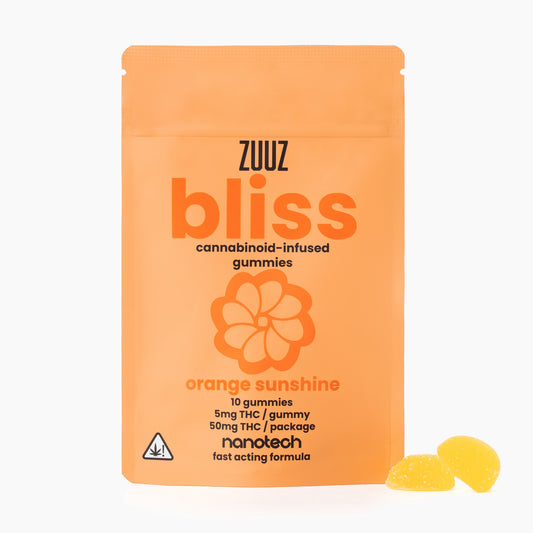
ZUUZ addresses this through nanotech extraction for faster, predictable effects. The formulation is third-party lab tested with a 60-day money-back guarantee. Start with the Gummy Starter Pack (5 mg per gummy).

Frequently Asked Questions
What's the difference between THC and CBD edibles for managing daily anxiety?
THC activates cannabinoid receptors in the endocannabinoid system, which can reduce situational stress but may increase anxiety at higher doses. CBD works differently, it doesn't directly bind to these receptors but instead supports the nervous system's natural relaxation response without psychoactive effects. For daily anxiety, many people find CBD gentler for consistent use, while low-dose THC (micro-dosing at 2.5-5mg) works better for occasional stress relief. The right choice depends on whether you want psychoactive effects and your sensitivity to cannabinoids.
How do I know if edibles will help my anxiety or make it worse?
Start with a low dose (2.5-5mg THC or CBD) in a safe environment where you can observe your response. Anxiety from edibles usually stems from too-high doses, fast onset times that feel overwhelming, or the biphasic effect, where relaxation shifts to anxiety as the dose metabolizes. Nanotech extraction methods like ZUUZ uses reduce this risk by providing smoother, more predictable absorption. If you've had bad experiences with traditional edibles, the faster and more controlled onset of nanotech-extracted products may prevent the anxiety spike entirely.
Can I take edibles with my anxiety medication?
This depends on your specific medication. Some common anxiety medications (SSRIs, benzodiazepines) can interact with THC and CBD, potentially increasing sedation or affecting how your body metabolizes the medication. Always consult your doctor or pharmacist before combining edibles with prescription anxiety treatments. They can assess your individual situation and advise whether edibles are safe alongside your current regimen. Never stop or reduce anxiety medication without medical guidance.
Why do some edibles cause anxiety the next day while others don't?
Edible-induced anxiety the following day usually results from three factors: the biphasic effect (where anxiety emerges as THC levels drop), poor bioavailability (inconsistent absorption leading to unpredictable peaks), or residual THC affecting sleep quality. Traditional edibles use standard extraction, which can cause slow, uneven absorption, creating a prolonged metabolic window where anxiety is more likely. Nanotech extraction improves bioavailability, meaning faster onset and more predictable metabolism, reducing the likelihood of delayed anxiety or harsh comedowns. Proper dosage titration and avoiding higher doses also prevents this effect.