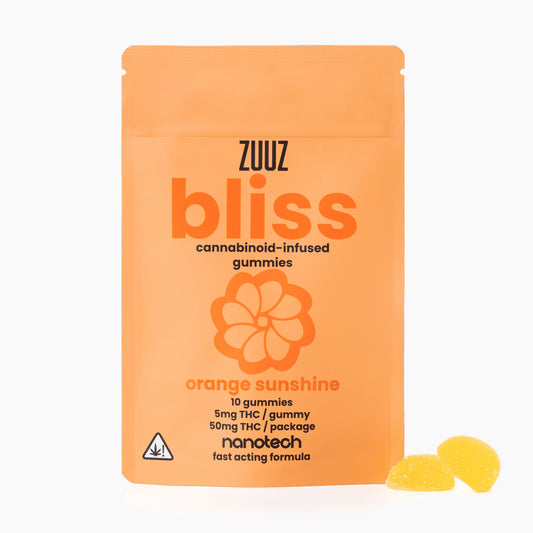

Water-Soluble THC Edibles: Are They More Bioavailable?
Table of Contents
- Water-Soluble THC vs. Regular Edibles: What the Bioavailability Data Shows
- How Traditional THC Edibles Are Absorbed (and Why It Takes So Long)
- Nanoemulsified THC Absorption: How Particle Size Changes the Equation
- Water-Soluble THC Onset Time: What to Expect and Why It Varies
- THC Edible Bioavailability: Evidence Quality and the Limits of Current Research
- Water-Soluble THC vs. Regular Edibles: Head-to-Head Comparison
- Food Effects, Individual Variability, and Dosing Safety
- Conclusion: Making an Informed Choice About Water-Soluble THC
- Frequently Asked Questions
Last Updated: October 12, 2026
Water-Soluble THC vs. Regular Edibles: What the Bioavailability Data Shows
Water-soluble THC edibles are designed to absorb faster than traditional oil-based edibles, but the honest answer to whether they are more bioavailable is more nuanced than most marketing suggests. At ZUUZ, we build our tarts and gummies around nanotech extraction specifically because the absorption question matters, and because the difference between "hits faster" and "absorbs more" is one most product pages blur together. This guide from ZUUZ breaks down what the current science actually supports, where the evidence is thin, and how to read a label without getting fooled.
The short version: water-soluble formulations can reach the bloodstream faster and more predictably, but "bioavailable" gets used loosely. Absorption, bioavailability, onset, and perceived intensity are four different things, and confusing them is the single most common mistake we see in this category.
Absorption, Bioavailability, Onset, and Intensity Are Not the Same Thing
These four terms get used interchangeably in cannabis marketing, and that sloppiness is why so many buyers feel misled. Here is the clean distinction:
- Absorption is how much THC crosses from your gut into your bloodstream.
- Bioavailability is the percentage of the dose you swallowed that actually reaches systemic circulation unchanged and active.
- Onset is how long until you feel anything.
- Intensity is how strong the effect feels, which depends on dose, your metabolism, and how much you ate.
A product can hit fast without delivering more total THC. That is the gap the marketing rarely admits.
How Traditional THC Edibles Are Absorbed (and Why It Takes So Long)
Traditional THC edibles are absorbed through the digestive system, and that route is slow by design. You swallow the edible, it lands in the gastrointestinal tract, and the cannabinoids have to be released from the food matrix before they can cross the intestinal membrane into the bloodstream.
Because THC is lipid-soluble, it dissolves readily in fat but poorly in the watery environment of the gut. That mismatch is the core problem. A conventional edible often needs a fatty food vehicle to absorb well, which is why the same gummy can hit differently depending on whether you ate it on an empty stomach or after a meal.
Once absorbed, THC travels to the liver, where first-pass metabolism converts a large share of it into 11-hydroxy-THC, a more potent metabolite. That conversion helps explain why edibles feel different from inhaled THC, and why the effect can feel stronger and last longer than expected.
Nanoemulsified THC Absorption: How Particle Size Changes the Equation
Nanoemulsified THC absorption works by shrinking the cannabinoid particles so they disperse in water rather than sitting in oil. A nano-emulsion uses an emulsifier to break oil-based cannabinoids into droplets small enough to stay suspended in an aqueous formulation. Smaller particle size means more surface area, which generally means faster uptake through the intestinal membrane.
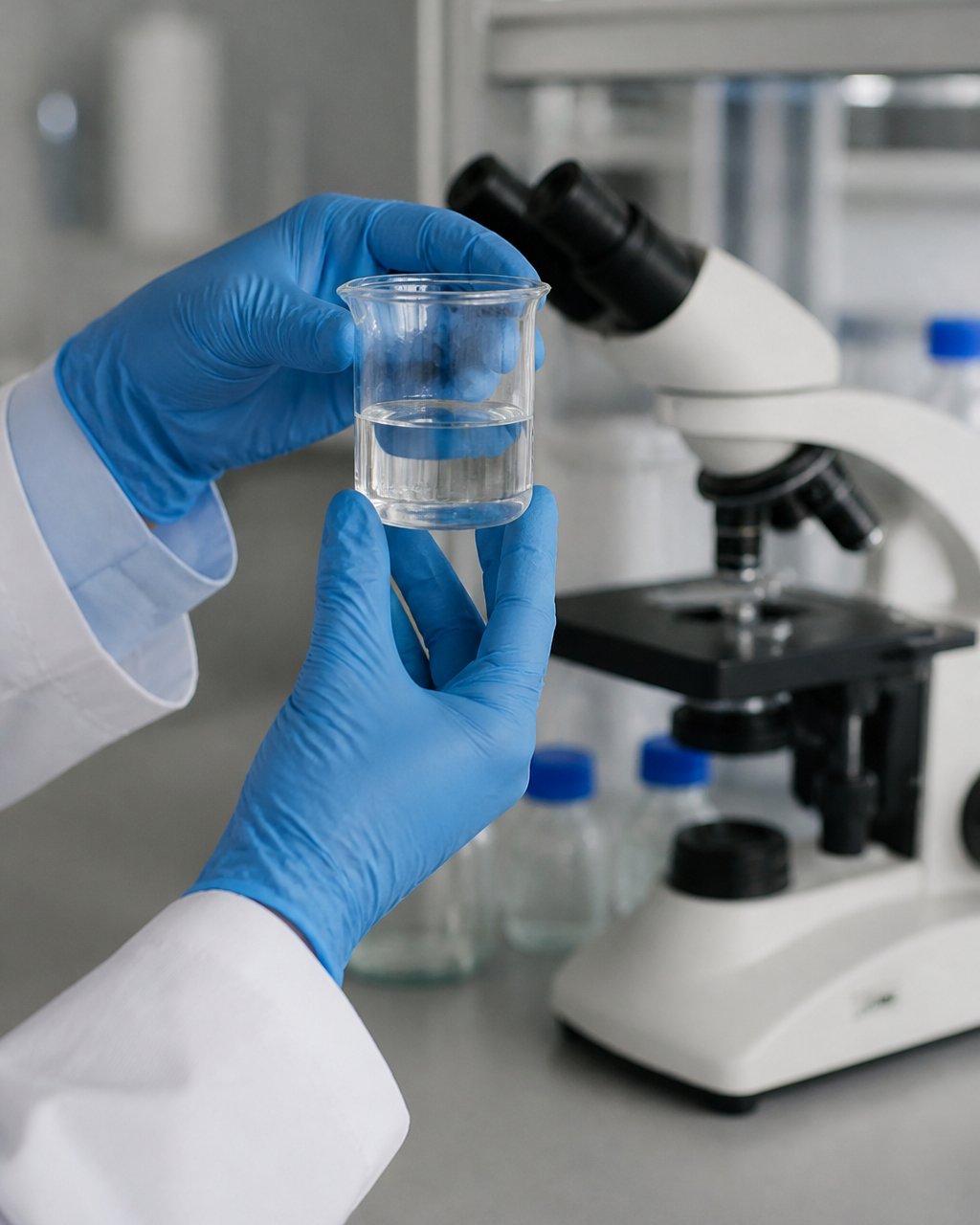
This is the same principle behind water-soluble formulations. Instead of relying on fat content in your stomach to carry the THC, the cannabinoids are already prepared to mix with the watery environment of your digestive system. The result is a delivery method that tends to produce a faster, more consistent onset.
Water-Soluble THC Onset Time: What to Expect and Why It Varies
Water-soluble THC onset time is typically shorter than a conventional edible, often in the range of 15 to 45 minutes rather than the 60 to 120 minutes many people expect from a standard gummy. That faster time to effect is the headline benefit, and it is the one most users actually notice.
But onset still varies widely between people. Body weight, metabolism, tolerance, and what you ate all shift the timeline. Someone who ate a heavy meal may feel a water-soluble product more slowly than someone who took it on a light stomach, even though the formulation is faster on paper.
The practical takeaway: a faster formulation narrows the window, it does not eliminate it. Give any new edible at least 90 minutes before deciding it "didn't work," then adjust your dose from there.
THC Edible Bioavailability: Evidence Quality and the Limits of Current Research
THC edible bioavailability claims deserve more skepticism than they usually get, and the reason is structural, not just commercial. Bioavailability is a pharmacokinetic measurement, not a marketing adjective, and the way it is studied shapes what any number can actually tell you.
What a bioavailability study actually measures. In human pharmacokinetic research, investigators draw blood at set intervals after a dose and plot plasma concentration of THC and its metabolites over time (Randomized, double-blind, placebo-controlled study about the effects of cannabidiol (CBD)...).
Why estimates from different formulations are not directly comparable. A bioavailability percentage is only meaningful relative to the specific reference, dose, formulation, fed or fasted state, and population studied. A nanoemulsion tested at 5 mg in fasted participants cannot be lined up against an oil-based edible tested at 20 mg after a high-fat meal and treated as an apples-to-apples multiplier.
What the human evidence does and does not show. The mechanism behind nanoemulsification, smaller droplets, more surface area, faster dispersion in the aqueous gut environment, is well established in pharmaceutical and food-science literature for poorly water-soluble compounds generally.
The distinction that matters most. Faster onset and higher perceived intensity are not proof of higher total systemic bioavailability. A formulation can raise Cmax and shorten Tmax, you feel it sooner and harder, while delivering a similar or even lower AUC than a slower product. Conversely, a product with a modest Cmax but a long, flat curve can deliver more total exposure.
What remains genuinely uncertain. The field still lacks large, independent, dose-controlled human trials that isolate formulation as the only variable. Questions about how nanoemulsified THC interacts with first-pass metabolism, whether faster absorption changes the ratio of THC to 11-hydroxy-THC reaching circulation, and how much individual variation swamps formulation effects are all open. That uncertainty is not a reason to dismiss water-soluble products, it is a reason to read claims carefully and to judge a product by transparent dosing and lab testing rather than by a bioavailability number.
Water-Soluble THC vs. Regular Edibles: Head-to-Head Comparison
A side-by-side comparison is only useful if the terms are defined and the numbers are framed honestly. Two problems undercut most comparison charts in this category: the labels are not interchangeable, and the timing figures are ranges, not guarantees.
First, the terminology problem. "Water-soluble," "water-dispersible," and "nanoemulsified" get used as if they mean the same thing. They do not. Genuinely water-soluble THC, a molecule that dissolves in water at the molecular level, is not what most edible products actually contain.
What you can actually verify from a label. Look for: total THC per serving in milligrams; whether the product states a droplet or particle size range; the emulsifier used; whether it is a nanoemulsion or a true solution; and third-party lab results for potency and contaminants.
A cautious comparison framework. The table below compares the two categories on the factors that shape experience, with the caveat that all timing figures are typical ranges observed across users, not fixed properties of the formulation.
| Factor | Water-Dispersible / Nanoemulsified | Conventional Oil-Based Edible |
|---|---|---|
| Typical onset | Often 15-45 min | Often 60-120 min |
| Typical time to peak | Shorter, often 30-90 min | Longer, often 90-180 min |
| Typical duration | Moderate, often 3-5 hrs | Longer, often 4-8 hrs |
| Absorption route | Aqueous dispersion in gut | Requires fat for best uptake |
| Food dependence | Lower, but not zero | High, fatty meal improves uptake |
| Consistency across doses | Generally more predictable | More variable |
| Label transparency | Often vague on particle size | Usually states dose only |
| Evidence for bioavailability advantage | Mechanistically plausible, head-to-head human data limited | Well-characterized but slow |
How to read this without overclaiming. The onset and duration ranges overlap. A fast-metabolizing person taking a conventional edible after a light meal may feel it in 45 minutes; a slow-metabolizing person taking a water-dispersible product after a heavy meal may wait 90.
Dose is not equivalent across categories. Do not assume 5 mg of a nanoemulsified product equals 5 mg of a conventional edible in effect.
Food Effects, Individual Variability, and Dosing Safety
Food effects and individual variability are the two factors that override formulation more than anything else. A water-soluble edible taken after a heavy meal can still be slow; a conventional edible taken on an empty stomach can still surprise you.
Dosing safety comes down to a few habits that matter more than the product type:
- Start low. A 5mg dose is a reasonable first step for most beginners.
- Wait the full 90 minutes before taking more.
- Keep a written log of dose, timing, and how you felt.
- Avoid stacking doses because the first one "felt weak" too early.
Individual metabolism, tolerance, and body composition all shift how a given milligram lands. That is why consistency in formulation matters as much as consistency in dose.
Conclusion: Making an Informed Choice About Water-Soluble THC
The real question is not whether water-soluble THC is "more bioavailable" in the abstract. It is whether the formulation gives you the faster, more predictable experience you actually want. For most people, that means looking for a product that publishes its dose clearly, uses a real nano-emulsification process, and does not lean on vague bioavailability multipliers.
That is exactly the standard we hold ourselves to at ZUUZ. Our tarts and gummies use a nanotech extraction method for faster, smoother absorption, and every batch is third-party lab tested. Our Wild Cherry tarts deliver 5mg of nanotech THC per tart with 100mg of tart cherry juice, zero sugar, and beginner-friendly dosing you can stack. If you are tired of edibles that hit too hard or not at all, try ZUUZ and get a consistent, feel-good experience backed by our 60-day money-back guarantee.

Frequently Asked Questions
Are water-soluble THC edibles more bioavailable than regular edibles?
Early research suggests water-soluble THC may have higher oral bioavailability than traditional oil-based edibles, but the evidence is still limited. Most studies are small, and results vary based on formulation, dose, and individual metabolism. The bigger practical difference is faster onset. Water-soluble THC can start working in 15 to 30 minutes, while regular edibles often take 60 to 120 minutes. That speed makes dosing more predictable, even if total bioavailability is similar.
How long does water-soluble THC take to kick in?
Most users report feeling effects within 15 to 45 minutes after taking water-soluble THC, compared to 60 to 120 minutes for traditional edibles. The faster onset happens because nanoemulsified particles are small enough to absorb through the gastrointestinal tract more quickly. Individual factors like whether you've eaten, your metabolism, and your tolerance still affect timing. Start with a low dose and wait at least 90 minutes before taking more.
Does water-soluble THC produce stronger effects than regular edibles?
Not necessarily stronger, but often more consistent. Water-soluble THC may deliver a higher percentage of the dose into the bloodstream, which can make effects feel more reliable. However, perceived intensity depends on dose, tolerance, and how your liver metabolizes THC into 11-hydroxy-THC. Some users find water-soluble products feel smoother with fewer harsh comedowns, but this varies. The key difference is predictability, not raw potency.
What should I look for on a water-soluble THC product label?
Check for the total milligrams of THC per serving, the type of emulsifier used (such as nano-emulsion technology), and whether the product is third-party lab tested. Lab testing confirms potency and screens for contaminants. Also look for terms like nanoemulsified or aqueous formulation, which indicate smaller particle sizes designed for faster absorption. Avoid products that don't list THC content clearly or make vague bioavailability claims without testing data.