
Melatonin or THC for Sleep: Which Works Better?
Table of Contents
- Melatonin or THC for Sleep: How the Two Compare
- Melatonin and the Sleep-Wake Cycle
- THC for Sleep: Benefits and Risks
- How Long Do THC Gummies Last?
- Melatonin and THC Interaction: Can You Take Them Together?
- THC Every Night for Sleep: Tolerance, Dependence, and Stopping
- Which One Fits Your Sleep Problem?
- Frequently Asked Questions
Last Updated: October 6, 2026
Melatonin or THC for Sleep: How the Two Compare
If you've ever stared at the ceiling at 2 a.m. wondering whether to reach for a melatonin tablet or a THC gummy, you're asking one of the most common questions in sleep wellness right now.
This guide from ZUUZ breaks down how each one works, what the evidence actually shows, and which one fits your specific sleep problem.
The distinction matters because most people treat these two as interchangeable sleep aids. Confusing the two leads to the wrong product for the wrong problem, and that's before you factor in dosing, timing, and next-day grogginess.
Melatonin and the Sleep-Wake Cycle
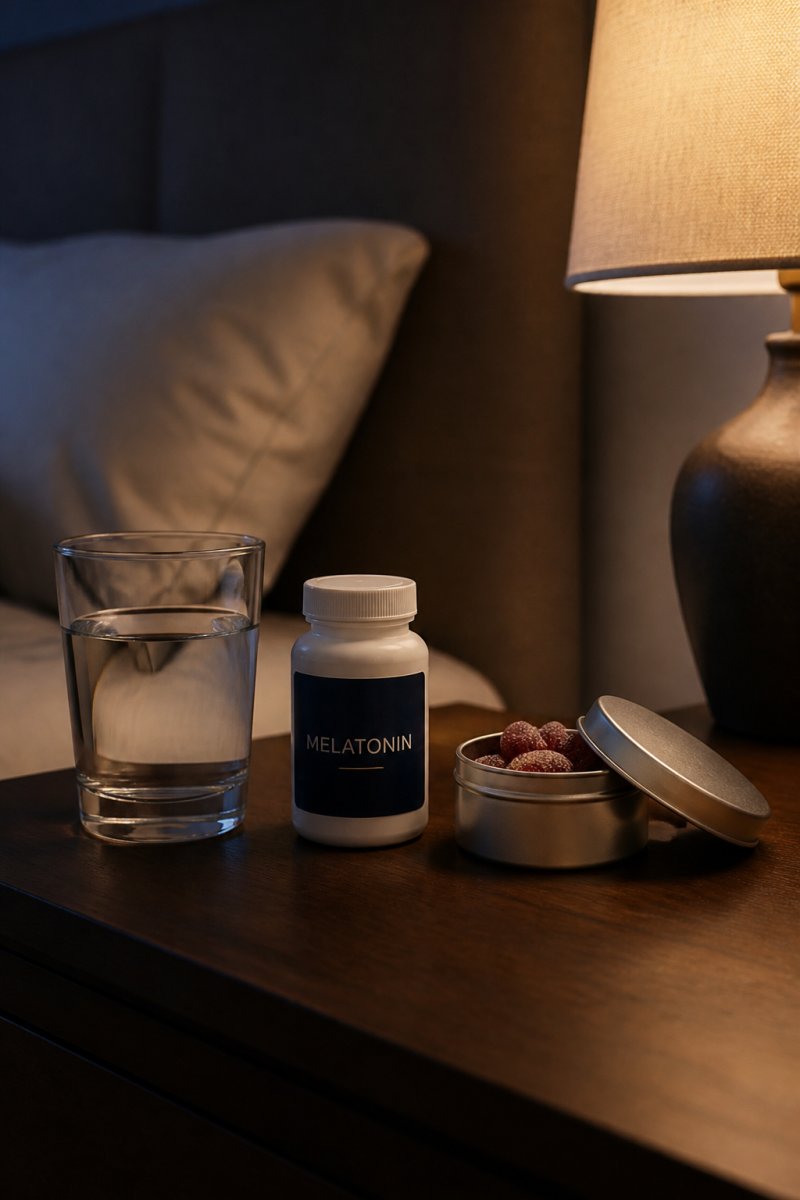
Melatonin is a hormone released by the pineal gland that regulates your circadian rhythm, the internal clock governing when you feel alert and when you feel drowsy.
According to the National Center for Complementary and Integrative Health overview of melatonin, melatonin supplements are most useful for shifting sleep timing, such as jet lag or delayed sleep phase, rather than for treating chronic insomnia on their own.
How Melatonin Affects Sleep Onset and Duration
Melatonin primarily shortens sleep onset latency, the time it takes to fall asleep, especially when your body clock is out of sync. It does this by advancing your circadian timing, not by sedating you. That's a critical distinction.
A common mistake is taking too high a dose. Many people assume more melatonin means deeper sleep. In practice, lower doses often work as well or better, and higher doses are more likely to cause next-day grogginess and vivid dreams.
- Best for: jet lag, shift work, delayed sleep phase
- Typical timing: 30-60 minutes before target bedtime
- Watch for: daytime drowsiness if taken too late
THC for Sleep: Benefits and Risks
THC binds to cannabinoid receptors (CB1 and CB2) in the brain and nervous system, producing relaxation, sedation, and in some users, euphoria. Many people report that THC helps them fall asleep faster and stay asleep, which is why THC edibles have become a popular sleep aid. But the evidence behind that reputation is weaker and more mixed than the marketing suggests.
How Strong Is the Evidence, Really?
It helps to grade the evidence the way a clinician would:
- Melatonin for circadian timing (jet lag, shift work, delayed sleep phase): Moderate to strong. This is the use case with the most consistent research support.
- Melatonin for chronic insomnia: Weak to moderate. Effects on sleep onset are modest, often measured in minutes rather than hours.
- THC for sleep onset: Weak. Small studies and self-report surveys suggest benefit, but objective sleep measures often show less improvement than users perceive.
A common pattern in the research: people feel like they slept better on THC while objective measures (polysomnography, actigraphy) show disrupted sleep architecture. That gap between perception and measurement is the single most important thing to understand before choosing THC as a sleep aid.
What THC Does to Sleep Architecture
Sleep architecture refers to the structure of your sleep cycles, including deep sleep (slow-wave) and REM sleep. THC tends to increase time spent in deep sleep initially but suppresses REM sleep, the stage tied to memory consolidation and emotional processing.
According to the Sleep Foundation's analysis of cannabis and sleep, regular THC use is associated with reduced REM sleep and a higher likelihood of tolerance, meaning you need more over time for the same effect. Reduced REM can show up as:
- Flatter mood the next day
- Trouble consolidating what you learned
- Vivid or intense dreams during withdrawal nights
Dose and Timing Matter More Than Most People Realize
THC is not a one-size-fits-all sleep aid, and the difference between a helpful dose and an unpleasant one is often small:
- Low dose (roughly 2.5-5 mg): Often reported as relaxing without heavy sedation. A reasonable starting point for sleep-focused use.
- Moderate dose (5-10 mg): More noticeable sedation, higher risk of next-day grogginess and impaired coordination.
- High dose (10 mg+): Increased risk of anxiety, racing heart, and paradoxical wakefulness, the opposite of what you wanted.
Timing matters too. Edibles can take 30 to 90 minutes to kick in, so taking one "right before bed" often means the peak effect arrives after you've already fallen asleep, or wakes you later. Many users find that taking an edible 60 to 90 minutes before target bedtime produces a smoother wind-down than taking it at lights-out.
THC vs. CBD: Not Interchangeable
CBD does not produce the psychoactive "high" that THC does, and the evidence for CBD as a standalone sleep aid is even thinner than for THC. Many commercial "sleep" products combine both, which makes it hard to know which compound is doing what. If you're comparing options, treat THC, CBD, and melatonin as three distinct tools rather than variations on the same theme.
How Long Do THC Gummies Last?
THC gummies typically take 30 to 90 minutes to kick in and last 4 to 8 hours, depending on dose, your metabolism, and the product's formulation.
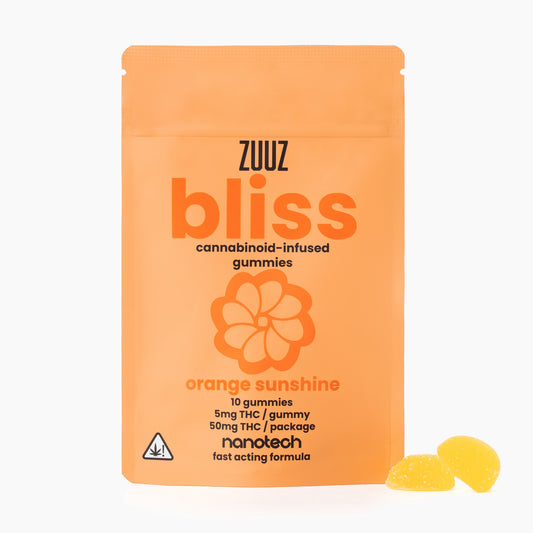
Onset of effects and duration of effects vary widely by product. Nanotech extraction methods, like the ones we use at ZUUZ, are designed to speed absorption and smooth out the curve so the effect arrives faster and more predictably.
| Product Form | Onset | Duration | Best For |
|---|---|---|---|
| Melatonin tablet | 30-60 min | 4-6 hours | Circadian shifting |
| THC gummy (standard) | 60-90 min | 4-8 hours | Occasional relaxation |
| THC gummy (nanotech) | 20-45 min | 4-6 hours | Consistent, faster onset |
| CBD tincture | 15-45 min | 3-5 hours | Relaxation without psychoactive effects |
Melatonin and THC Interaction: Can You Take Them Together?
Combining melatonin and THC is not inherently dangerous for most healthy adults, but it's not a smart default either.
More importantly, melatonin interacts with several medications, including blood thinners, immunosuppressants, and some antidepressants.
The FDA consumer guidance on dietary supplements notes that supplements like melatonin are not reviewed for safety or effectiveness before they hit shelves, so product quality varies widely.
THC Every Night for Sleep: Tolerance, Dependence, and Stopping
Daily THC use for sleep is where most people run into trouble, and it's the topic most comparison articles skip. Tolerance develops quickly, meaning the same dose stops producing the same effect. Dependence can follow, where you feel you can't sleep without it. Melatonin behaves very differently on both fronts, which is one of the clearest practical distinctions between the two.
Tolerance: THC vs. Melatonin
- THC: Tolerance to the sedative effects can develop within days to a few weeks of nightly use. As tolerance builds, users often escalate dose, which increases next-day impairment and anxiety risk without restoring the original sleep benefit.
- Melatonin: Does not produce classic tolerance in the same way. It's a timing signal, not a sedative, so the body doesn't "adapt" to it the way it adapts to THC. That said, long-term nightly use in healthy adults hasn't been studied extensively, and it isn't intended as a permanent sleep solution.
Dependence and Withdrawal
THC dependence is a recognized clinical concern, particularly with daily use. Stopping after long-term nightly use often causes:
- Rebound insomnia, sleep that's worse than before you started, typically for several nights
- Irritability and low mood
- Intense or vivid dreams as REM sleep rebounds
These symptoms usually peak within the first week and ease over one to two weeks, but the timeline varies with dose, duration, and individual factors. Melatonin discontinuation is not associated with a comparable withdrawal syndrome, though some people report a temporary return of their original sleep problem, which is simply the underlying issue re-emerging, not a withdrawal effect.
A Practical Taper Framework
If you've been using THC nightly and want to stop, abrupt cessation is the most common reason people relapse. A gradual approach tends to work better:
- Reduce dose first, then frequency. Cut your nightly dose by roughly 25% each week before you start skipping nights.
- Drop to every other night. Once you're at a low dose, alternate nights with non-drug wind-down routines.
- Replace, don't just remove. A consistent bedtime, dim light in the evening, and a wind-down ritual give your body a new signal to replace the old one.
- Expect a rough week. Rebound insomnia is normal and temporary. Knowing it's coming makes it easier to ride out.
A Lower-Risk Pattern for Occasional Use
If you want to keep THC in your toolkit without drifting into nightly dependence, many practitioners suggest:
- Limit THC to 2-3 nights per week
- Rotate in non-drug strategies on off nights
- Keep a sleep log to track what actually helps
- Taper gradually if you decide to stop
If you want a lower-dose, sugar-free option to keep occasional use gentle, our sleep gummies are formulated for smoother, more consistent effects.
![[gift] sleep gummies](https://cdn.shopify.com/s/files/1/0774/9081/5285/files/sleepmain_15509190-4ece-4896-b941-c6c3cfd1d2ef.jpg?v=1740696342)
Which One Fits Your Sleep Problem?
The right choice depends entirely on what's keeping you up. Melatonin is the better fit if your problem is timing: you can't fall asleep at a reasonable hour, you're jet-lagged, or your schedule has shifted. THC is the better fit if your problem is wind-down: you're physically tense, your mind won't quiet, and you need help relaxing into sleep.
Here's a simple decision framework:
| Your Sleep Problem | Better First Choice | Why |
|---|---|---|
| Can't fall asleep until 2 a.m. | Melatonin | Shifts circadian timing |
| Mind racing at bedtime | THC (low dose) | Promotes relaxation |
| Waking at 3 a.m. | Neither alone | Address stress, caffeine, environment |
| Jet lag | Melatonin | Proven for phase shifting |
| Occasional stress-related insomnia | THC (occasional) | Short-term wind-down support |
For most people dealing with stress-driven sleep issues, we'd start with the lowest effective THC dose and reserve melatonin for schedule disruptions.
Frequently Asked Questions
Is it bad to take THC every night for sleep?
Daily THC use for sleep raises tolerance, so the same dose stops working as well within weeks. Some people also notice rebound insomnia and irritability when they stop. Clinical evidence on long-term nightly use is limited, and surveys suggest heavy users report worse sleep quality over time. If you use THC every night, track your dose and take planned breaks to see whether it is still helping.
Can you take melatonin and THC together?
There is no well-studied interaction that makes the combination dangerous for most healthy adults, but both compounds can cause drowsiness, so stacking them increases sedation and next-day grogginess. Start with one at a time to see how your body responds. If you take prescription sleep aids, antidepressants, or blood thinners, talk to your doctor first, because THC can interact with how those drugs are processed.
How long do THC edibles last when used for sleep?
Edible THC typically takes 30 to 90 minutes to kick in and effects last 4 to 8 hours, though this varies by dose, body weight, and whether you ate beforehand. A gummy taken at 9 p.m. can still affect you at 5 a.m., which is why some users wake up groggy. Products made with nanotech extraction are designed for faster onset and a smoother curve, which can reduce next-day fog.
How does THC affect sleep compared with melatonin?
Melatonin works with your circadian rhythm to signal that it is time to sleep, and clinical evidence shows it shortens the time it takes to fall asleep, especially when timed correctly. THC acts on the endocannabinoid system and may help you relax and fall asleep faster, but it can reduce REM sleep and lead to tolerance. Melatonin has a stronger safety record; THC carries more variability and dependence risk.
Sleep problems rarely have a single fix, and neither melatonin nor THC is a cure-all. If you're tired of guessing whether your edible will hit too hard or not at all, ZUUZ makes lab-tested THC gummies with nanotech extraction for faster, more consistent effects, sugar-free options, and a 60-day money-back guarantee. Get started with ZUUZ and find a wind-down routine you can actually rely on.