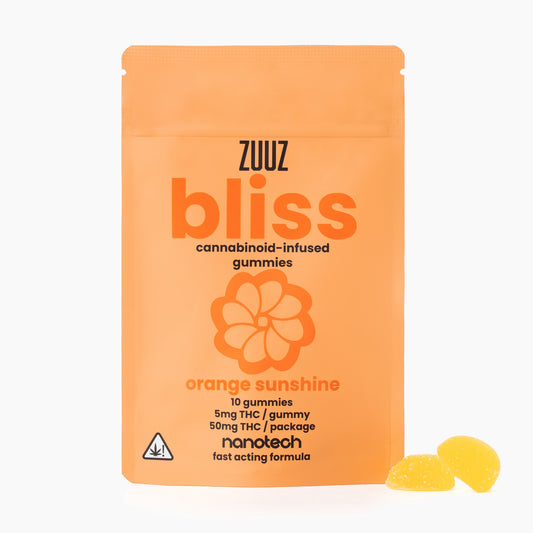

THC Gummies 60 Day Guarantee: What It Really Covers
Table of Contents
- What a 60 Day Guarantee on THC Gummies Actually Covers
- THC Gummy Return Policy: Eligibility, Friction, and Fine Print
- Why Lab-Tested THC Gummies Rarely Need a Refund
- Nanotech THC Edibles Benefits: Consistency You Can Rely On
- Dosage, Potency, and the 0.3% THC Legal Line
- Shipping, State Rules, and What Voids a Guarantee
- How to File a Refund Request Without the Runaround
- Conclusion
- Frequently Asked Questions
Last Updated: September 15, 2026
What a 60 Day Guarantee on THC Gummies Actually Covers
A thc gummies 60 day guarantee is a written promise letting you request a refund, replacement, or store credit within 60 days of purchase if the product fails to meet stated expectations. For ZUUZ customers, that window exists because edibles are personal: what works for one person may not work for another.
But not all guarantees are equal. Some cover unopened products only; others require a doctor's note. Read the terms before checkout.
Guarantee Types: Full Refund, Replacement, and Store Credit
Three guarantee structures dominate the market. A full refund returns your money to the original payment method, usually after a claim is approved. A replacement sends a new batch or different potency. Store credit keeps the money with the seller and is the easiest to issue, which is why it's most common.
The type matters because your goal may not be money back: if you want a formula that hits differently, a replacement is faster; if edibles aren't for you, insist on a refund. Ask which type applies before you buy.
THC Gummy Return Policy: Eligibility, Friction, and Fine Print
Most THC gummy return policies hinge on one question: did you open the package? That detail decides whether you get a full refund, a partial one, or nothing. But the deciding factor is rarely the policy itself, it's the friction baked into the process. A form, a photo, a shipping label, an unanswered ticket: each step is where a legitimate claim dies. Navigating these administrative hurdles requires a discerning eye for checking return policy quality before committing to a purchase.
Opened vs. Unopened: What Most Policies Require
Unopened products almost always qualify for a full refund. Opened products are where policies diverge:
- No opened returns, period. The strictest tier. Common with brands that sell through retail shelves and can't verify storage conditions.
- Opened returns with a partial refund. Typically 50-75% of the purchase price, minus shipping.
- Opened returns with a full refund, no return required. The most consumer-friendly tier. The seller asks for a photo of the jar and a one-line description, then issues the refund and tells you to keep or discard the product.
- Replacement-only for opened products. You get a new batch or a different potency instead of money back. Good if the formula missed, bad if you've decided edibles aren't for you.
A seller can't resell a jar you've dipped into, so the best policies absorb that loss as a cost of doing business. Look for language like "no return required" or "keep the product."
The Friction Checklist: Five Questions to Ask Before You Buy
A return policy is only as good as the steps required to use it. Before checkout, answer these five questions. If a brand can't answer them clearly on its policy page, assume the worst.
- What's the contact channel? A returns form or support email is fine. "DM us on social" is not, it leaves no paper trail.
- What proof is required? Order number is standard; a photo is common. A doctor's note or notarized statement is a red flag.
- Who pays return shipping? On a $40 jar, a $9 return label eats nearly a quarter of the refund. Brands that cover shipping or waive the return are signaling confidence.
- How long does the refund take to post? "Within 5 business days" is excellent; "as soon as possible" usually means weeks.
- Is there a restocking fee? A 10-20% fee on a consumable is a soft way of saying "we'd rather you didn't return this."
The Fine Print That Voids Coverage
Even a generous policy has exclusions, most commonly:
- Shipping to a restricted state. If your state prohibits the product, the seller can't legally replace or refund it.
- Missing the window. Day 61 is day 61. Set a calendar reminder when your order arrives.
- No proof of purchase. Most policies require an order number or receipt.
- Tampering or resale. Products bought for resale or visibly altered fall outside personal-use guarantees.
- Ignoring dosage guidance. Some policies exclude claims where the user exceeded the recommended serving.
Satisfaction Guarantee vs. Money-Back Guarantee: Not the Same Thing
This is the distinction most buyers miss. A satisfaction guarantee is a marketing promise, the seller commits to making you happy, but the remedy is at their discretion: replacement, store credit, or partial refund. A money-back guarantee is enforceable: you get your money back to your original payment method if the stated conditions are met.
When a product page says "60-day satisfaction guarantee," read the policy page to find out which one you're getting. If it doesn't name the remedy, the remedy is whatever the seller decides. If it says "full refund to original payment method," you have something concrete to hold them to.
FTC guidance on refunds and returns explains that sellers must honor the return and refund terms they advertise, so keep a copy of the policy page at the time of purchase. If a seller stalls, that documentation is your leverage.
Why Lab-Tested THC Gummies Rarely Need a Refund
Lab-tested THC gummies are edibles whose cannabinoid content has been verified by an independent laboratory, with results published in a certificate of analysis. When potency and purity are confirmed batch by batch, the most common reasons for a refund, "it didn't work" or "it hit too hard," shrink dramatically.
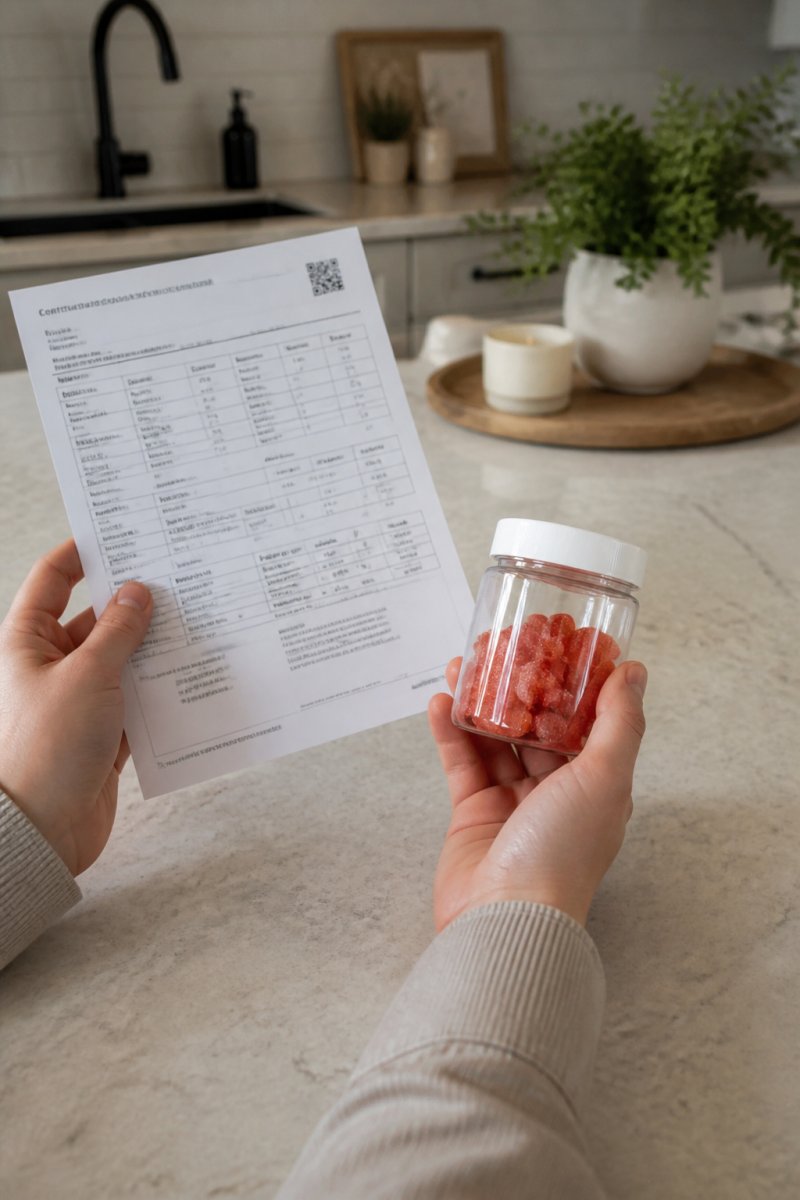
That's the real value of testing: it keeps a guarantee a safety net rather than a routine expense.
Reading a Certificate of Analysis Before You Buy
A certificate of analysis (COA) is a lab report listing the cannabinoids in a specific batch, their concentrations, and whether contaminants like pesticides, heavy metals, or residual solvents were detected. Every COA should carry a batch number matching your package.
Here's what to check:
- Batch match: Does the COA number match your jar? If not, the report may be for a different run.
- Potency per gummy: Look for milligrams of delta-9 THC per piece, not per jar.
- Contaminant panel: A real panel tests for more than potency. Purity claims need residue testing to mean anything.
- Lab name and date: A recent date from a named, accredited lab is the minimum.
A COA with no batch number is decoration: it proves a lab tested something once, not what's in your hand.
Nanotech THC Edibles Benefits: Consistency You Can Rely On
Nanotech THC edibles benefits come down to particle size. Standard edibles rely on your liver to process the cannabinoid, so effects can take an hour or more and vary wildly between people. Nanotech extraction breaks the cannabinoid into smaller particles the body absorbs more readily, producing faster onset and a smoother curve with less of the spike-then-crash pattern that gives edibles a bad reputation.
ZUUZ builds its entire line around this method.
Dosage, Potency, and the 0.3% THC Legal Line
The 0.3% THC federal legal limit separates hemp-derived products from marijuana under federal law: hemp is cannabis containing no more than 0.3% delta-9 THC by dry weight. Products above that line fall under different rules that vary by state.
This is where dosage gets confusing. A gummy can weigh several grams and still stay under 0.3% by weight while delivering a meaningful dose per piece.
Shipping, State Rules, and What Voids a Guarantee
How to File a Refund Request Without the Runaround
The Documentation Packet
The Step-by-Step Process
What to Do When the Process Stalls
What a Clean Process Looks Like
The guarantee is only as good as the seller's follow-through. A policy that reads well but takes three weeks to process isn't risk-free, it's delayed risk. Ask how long refunds typically take before you buy, and screenshot the answer.
Conclusion
Frequently Asked Questions
What does a 60-day money-back guarantee cover for THC gummies?
Most 60-day guarantees cover the purchase price of the product if you are unsatisfied, but terms vary widely. Some brands require unopened packaging, others accept opened jars. Check whether shipping costs are refunded, whether you must return the product, and whether the guarantee applies to sale items. A strong policy states the window clearly, offers a simple refund request form, and does not bury conditions in fine print.
Can I return opened THC gummies if they don't meet my expectations?
It depends on the brand's THC gummy return policy. Some companies only accept unopened, sealed containers, which makes it nearly impossible to test a product and still get your money back. Others, including ZUUZ, honor the 60-day guarantee even after you have tried the gummies, because the point is to let you judge how they actually feel. Always read the return eligibility section before ordering.
Do lab-tested THC gummies offer better return policies?
Not automatically, but the two often go together. Brands that publish third-party lab results and certificates of analysis tend to be more transparent across the board, including their refund terms. Lab testing verifies potency, purity, and that hemp-derived products stay within the 0.3% THC federal legal limit. When a company shares that data openly, it usually also states its guarantee in plain language.
How do I verify the quality of THC gummies before purchasing?
Look for a certificate of analysis from an independent lab, a clear potency listing in milligrams per gummy, and a stated extraction method. Check whether the brand names the specific cannabinoids used, such as full spectrum or broad spectrum, and whether it discloses the federal legal limit of 0.3% delta-9 THC. A published 60-day guarantee is a useful signal too, since it shifts the risk of a bad batch onto the seller.