
Benefits of Nanotech THC Extraction: A 2026 Guide
Table of Contents
- What Is Nanotech in Edibles?
- How Nanotech Extraction Improves Bioavailability
- How Long Does Nano THC Take to Kick In?
- Nanoemulsion vs Traditional Edibles: Key Differences
- Pharmacokinetics: How Your Body Processes Nano THC
- Potential Side Effects and Contraindications
- Home-Made vs Commercial Nanotech Production
- Conclusion
- Frequently Asked Questions
Last Updated: September 14, 2026
What Is Nanotech in Edibles?
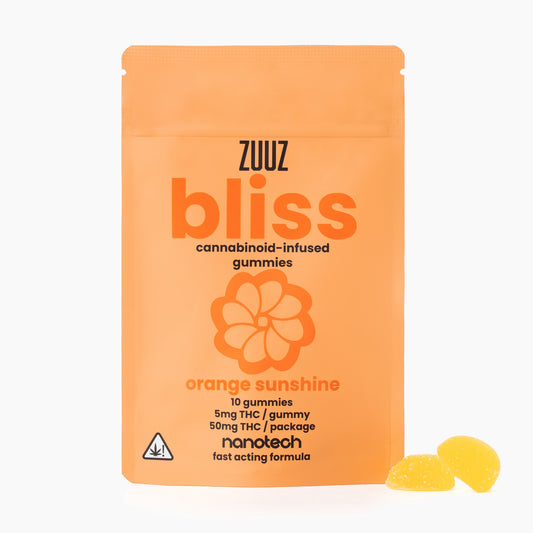
Nanotech in edibles is the use of nano-emulsification to break THC oil into microscopic droplets, typically under 100 nanometers, so the cannabinoid dissolves in water instead of separating from it. This guide from ZUUZ explains how that process changes absorption, onset, and consistency compared with standard infusions.
Traditional edibles rely on oil-based THC that your digestive system handles slowly and unpredictably. Nanotech THC changes the delivery mechanism, not the molecule itself.
The benefits of nanotech THC extraction start with particle size. Smaller droplets mean more surface area, faster absorption, and a more predictable curve.
How Nanotech Extraction Improves Bioavailability
Bioavailability is the share of a dose that actually reaches your bloodstream and produces an effect. Standard oral THC lands somewhere in the single-digit to low-double-digit range for many users, largely because lipophilic cannabinoids resist mixing with the water-based fluids in your gut and get chewed up by first-pass metabolism in the liver (pubmed.ncbi.nlm.nih.gov). Nano-emulsification raises that share by converting lipophilic THC into water-soluble droplets your body can absorb through mucous membranes and the gastrointestinal tract.
The mechanism has three moving parts, and most guides only describe the first.
1. Droplet size reduction. High-shear mixing, microfluidization, or ultrasonication forces THC oil into droplets measured in nanometers. Surface area scales with the square of the radius, so shrinking a droplet from roughly 1,000 nanometers to 50 nanometers exposes hundreds of times more cannabinoid surface to the surrounding fluid. More surface area means more contact with absorption sites in the mouth, stomach, and small intestine.
2. Surfactant encapsulation. Raw THC will not stay dispersed in water no matter how hard you shear it. A surfactant, typically a food-grade emulsifier such as polysorbate 80, a modified starch, or a phospholipid like lecithin, coats each droplet and forms a micelle. The hydrophilic head of the surfactant faces the water; the lipophilic tail anchors into the THC. That shell is what makes the particle behave like a water-soluble compound and what lets it cross mucous membranes instead of pooling in fat.
3. Emulsion stability. This is the step that separates a real nano product from a marketing claim. Droplets that are small but unstable will collide, merge, and revert to large oil globules within days. Stability depends on surfactant-to-oil ratio, processing temperature, and the ionic environment of the final product. A stable nanoemulsion holds its droplet-size distribution for the shelf life of the product; an unstable one looks fine on day one and separates by week four.
What most guides miss is that the extraction method matters less than the emulsification step. You can start with clean THC distillate and still get poor results if the emulsion is unstable. Particle size reduction only helps when the droplets stay small and evenly distributed. Achieving this level of consistency often requires moving beyond basic mechanical shearing toward the precision offered by thermal extraction technology, which remains a critical consideration for those evaluating the hardware necessary to maintain such delicate molecular stability.
How Long Does Nano THC Take to Kick In?
Nano THC typically takes effect within 10 to 20 minutes, compared with 45 to 90 minutes for traditional edibles (pubmed.ncbi.nlm.nih.gov). The faster onset comes from sublingual absorption and early uptake in the gastrointestinal tract, bypassing much of the delay caused by first-pass metabolism.

That timing window matters for beginners. With standard edibles, you wait an hour, feel nothing, eat more, and then get hit twice as hard. Nano THC shortens the feedback loop, so you can gauge your response before adding another dose.
Onset still varies by person. Body weight, recent meals, and individual metabolic pathway differences all shift the timeline. A common mistake is treating "fast-acting" as "instant." It is faster, not immediate.
Nanoemulsion vs Traditional Edibles: Key Differences
Nanoemulsion edibles differ from traditional edibles in particle size, absorption route, onset speed, and dosing consistency. The table below summarizes the practical differences.
| Factor | Nanoemulsion Edibles | Traditional Edibles |
|---|---|---|
| Particle size | Under 100 nanometers | Larger oil droplets |
| Solubility | Water-soluble | Lipophilic |
| Typical onset | 10-20 minutes | 45-90 minutes |
| Absorption route | Sublingual and GI tract | Primarily hepatic metabolism |
| Dosing consistency | Higher | Variable |
| Peak plasma concentration | Earlier, lower peak | Later, higher peak |
The dosing consistency difference is the one people notice most. Traditional edibles depend on how much fat you ate and how fast your liver processes the THC. Nanoemulsion reduces that variability because absorption starts before the liver gets involved.
Pharmacokinetics: How Your Body Processes Nano THC
Pharmacokinetics describes how a substance is absorbed, distributed, metabolized, and cleared. The field uses four shorthand terms worth knowing, because they are the vocabulary that separates a marketing claim from a measurable one:
- Tmax, the time it takes to reach peak concentration in the blood.
- Cmax, the highest concentration reached.
- AUC, total drug exposure over time, essentially the area under the concentration curve.
- Half-life, how long it takes for circulating levels to drop by half.
With nano THC, absorption begins in the mouth and gastrointestinal tract, which reduces reliance on first-pass metabolism in the liver. Standard edibles send THC through the digestive tract to the liver, where hepatic metabolism converts it into 11-hydroxy-THC, a more potent metabolite (pubmed.ncbi.nlm.nih.gov). That conversion is why traditional edibles feel heavier and last longer. Nanoemulsion delivers more THC directly into circulation, so the metabolic pathway produces a different, often gentler profile.
The practical pattern most users and clinicians describe looks like this: nano THC tends to reach Tmax faster, often in the range of 15 to 45 minutes depending on the product and the person, while traditional edibles typically peak somewhere between 90 minutes and three hours. Nano THC also tends to produce a lower Cmax with a broader, flatter curve, whereas traditional edibles spike higher and stay elevated longer. Total AUC can end up similar between the two, which is why nano THC is often described as feeling 'lighter' rather than 'stronger', the same dose is delivered, but the shape of the curve is different.
This is the pharmacokinetics comparison most marketing skips. Faster onset does not automatically mean stronger effects. A lower peak with a smoother curve is why users report fewer harsh comedowns and less of the 'I ate too much and now I'm stuck on the couch for four hours' experience.
The terpene trade-off nobody mentions
There is a real cost to nano-emulsification that promotional content tends to leave out: terpenes are volatile, lipophilic, and easily lost or altered during high-shear processing and heat exposure. A distillate-based nano product is often a stripped-down cannabinoid delivery system, efficient, consistent, and largely devoid of the minor cannabinoids and terpenes that contribute to what the industry calls the entourage effect.
That is not automatically bad. If your goal is predictable, fast-acting THC with a clean flavor profile, a terpene-light nanoemulsion is exactly the right tool. If your goal is a full-spectrum experience with the aromatic and potentially modulating contributions of terpenes, a nano product may feel flatter than a whole-plant infusion, even at the same THC dose. Some manufacturers attempt to reintroduce terpenes after emulsification, but the result depends heavily on the terpene blend and the stability of the final emulsion.
The honest framing is that nano-emulsification optimizes for absorption and consistency, and it does so partly by sacrificing the complexity that whole-plant extracts provide. Knowing which trade-off you want is more useful than assuming one delivery method is universally better.
Potential Side Effects and Contraindications
Nano THC carries the same side effects as any THC product, including dry mouth, elevated heart rate, and temporary impairment. The delivery method changes timing and intensity, not the underlying pharmacology.
Contraindications deserve honest attention. Avoid THC if you are pregnant, breastfeeding, under 21, or taking medications that interact with cannabinoids. Anyone with a history of psychosis or heart conditions should talk to a physician first.
The FDA does not approve THC edibles as drugs, and dosing guidance varies by state. Check your state's cannabis regulations before purchasing.
Home-Made vs Commercial Nanotech Production
Home-made nano THC is difficult to produce reliably. Commercial nano-emulsification uses industrial equipment to control droplet size, surfactant ratios, and emulsion stability, which home kitchens cannot replicate.
A home cook can infuse butter or oil, but creating a stable nanoemulsion requires high-shear mixing and consistent temperature control. Without those, droplets clump, the emulsion separates, and absorption becomes unpredictable.
Commercial production also allows for standardization. Reputable brands test each batch for potency, particle size, and contaminants. That is the difference between a product that works the same way every time and one that varies from batch to batch.
ZUUZ uses nanotech extraction across its sugar-free tarts, with 5mg of nanotech THC per tart and third-party lab testing on every batch. The Tarts Starter Pack offers a low-commitment way to test onset and dosing before buying a full-size product.

Conclusion
Getting consistent, fast-acting effects from an edible is harder than it should be, and the extraction method is usually the reason. Standard infusions absorb slowly and unpredictably, which is why so many people either feel nothing or feel too much.
ZUUZ built its lineup around nanotech extraction for exactly that problem. Every tart delivers 5mg of nanotech THC, comes sugar-free with no aftertaste, and is backed by third-party lab testing and a 60-day money-back guarantee. Start with the Wild Cherry or Blue Razz tart to see how fast, smooth absorption feels for you.


Get started with ZUUZ and experience edibles that work the same way every time.
Frequently Asked Questions
Is nano THC stronger than regular THC?
Nano THC is not necessarily stronger, but it can feel more potent because more of the cannabinoid reaches your bloodstream. Traditional THC edibles lose a significant portion to first-pass metabolism in the liver. Nanotech extraction wraps THC molecules in tiny micelles that bypass some of that breakdown, so a 5mg dose may feel closer to 8-10mg of a standard edible. Start low and wait at least 30 minutes before taking more.
How long does nano THC take to kick in compared to traditional edibles?
Most people feel nano THC within 10-20 minutes, while traditional edibles can take 45-90 minutes or longer. The difference comes down to particle size. Nanotech THC particles are small enough to absorb through sublingual tissue and the gastrointestinal tract quickly. Traditional edibles rely on hepatic metabolism, which adds a long delay before you feel anything. Faster onset means easier dosing and fewer accidental overconsumption moments.
What is nanotech in edibles and how does it work?
Nanotech in edibles refers to reducing THC particles to nanometer scale, typically under 100 nanometers, using emulsification. THC is lipophilic, meaning it repels water. Nanoemulsion surrounds each THC molecule with a hydrophilic shell called a micelle, making it water-soluble. Your body absorbs water-soluble compounds faster and more completely. This process, called molecular encapsulation, is why nano THC edibles hit faster and more consistently than oil-based alternatives.
Does nano THC wear off faster?
Yes, nano THC tends to wear off sooner than traditional edibles. Because it enters the bloodstream quickly and bypasses much of the liver's metabolic pathway, peak plasma concentration arrives faster and declines faster. Most users report effects lasting 2-4 hours compared to 4-6 hours for standard edibles. That shorter window appeals to people who want relief without feeling groggy the next morning or committing to an all-day experience.
What are the potential side effects of nano THC?
Common side effects include dry mouth, red eyes, and occasional dizziness, similar to any THC product. Because nano THC absorbs faster, taking too much too quickly can lead to anxiety or an uncomfortable high. The key difference is that nano THC's shorter duration means any discomfort passes sooner. If you are new to THC, start with 2.5-5mg and wait 30 minutes before considering more. Always check with your doctor if you take prescription medications.