
What to Do With Ineffective Cannabis Edibles?
Last Updated: October 29, 2026
Quick Summary
Wait at least two hours before deciding an ineffective cannabis edibles product has failed, since slow onset is normal. Then check the label and your dose, avoid redosing too early, and consider lab testing or a different format if it still falls short.
- Edibles can take 30 minutes to two hours to start working, and the peak can come later.
- Redosing too early is a common cause of an unexpectedly strong experience.
- Confirm the THC amount per piece and follow the listed serving size rather than guessing.
- Start with a conservative 2.5 mg to 5 mg test dose if you are new or returning after a break.
- Look for a current batch-specific certificate of analysis from an independent lab.
Table of Contents
- Why Your Cannabis Edibles May Not Be Working
- Why Edibles Don't Work for Everyone
- Cannabis Edible Bioavailability Explained
- Step-by-Step: What to Do When Edibles Don't Work
- How to Verify Product Quality and Lab Testing
- Common Mistakes to Avoid With Edibles
- Choosing Your Next Edible With Confidence
- Frequently Asked Questions
Ineffective cannabis edibles are one of the most common frustrations new and experienced users face. You take a gummy, wait, and nothing happens. Or the effect shows up hours later than expected.
Edibles are different from smoking or vaping. Because edibles work through the digestive system, their effects follow a different timeline and can vary far more from person to person.
Why Your Cannabis Edibles May Not Be Working
Edibles that seem to do nothing usually have a simple explanation. The body processes them more slowly than other methods, and several factors change how strong and how quick the effect feels.
Delayed onset and the waiting game
Edibles take time to act. Once swallowed, the product must be digested and absorbed before the cannabinoids reach the bloodstream. For many people that takes 30 minutes to two hours, and the peak can come later still.
This delay is the main reason people take a second dose too soon. The first gummy feels inactive, so they take another, and then both doses hit at once.
Dose, tolerance and how you measure a dose
Dose matters as much as timing. Labeled potency is only a guide, and a gummy cut unevenly can contain more or less THC than the piece you bite. Tolerance also plays a role. Regular users often need more THC to feel the same effect, while people new to cannabis may feel strong effects from a dose that seems small.
Why Edibles Don't Work for Everyone
Two people can eat the same gummy and get very different results. Sometimes the difference is dose or tolerance, but often it comes down to biology, specifically how each person's liver and digestive tract handle the cannabinoid. Understanding the mechanism helps you tell whether the problem is you, the product, or the way you took it.
Metabolism and first-pass liver processing
After you swallow an edible, THC travels from the gut to the liver before it reaches the rest of the body. This is called first-pass metabolism.
The catch is that enzyme activity varies widely from person to person. Genetic differences, age, liver health, and even regular alcohol use can shift how quickly your body converts THC.
A related factor is tolerance. Regular users often need more THC to feel the same effect.
Food, fat digestion and timing
Cannabinoids are fat-soluble, so what is in your stomach when you take the edible changes absorption (A high-fat meal significantly impacts the bioavailability and biphasic absorption of...). A meal that contains some fat, eggs, avocado, nut butter, a normal dinner, gives the cannabinoid something to bind to and can improve uptake. Taking an edible on a completely empty stomach can make the onset feel less predictable.
Gut health and digestion speed matter too.
Product quality vs. user error
Before you blame your metabolism, rule out the simpler explanations. Two categories account for most 'ineffective' edibles:
- Product problems. Uneven dosing in a homemade or poorly manufactured gummy, inaccurate labeling, or an expired product with degraded cannabinoids can all make an edible feel weak. A certificate of analysis from a third-party lab is the best way to confirm the label matches the contents.
- User error. Cutting a gummy unevenly, guessing at the serving size, taking a second dose too soon, or expecting a 5 mg piece to feel like a 50 mg piece are all common. These are fixable with a scale, a label, and patience.
A useful diagnostic: if the same product works for a friend but not for you, suspect metabolism or tolerance. If it fails for both of you, suspect the product. If it works sometimes and not others, suspect timing and food.
Cannabis Edible Bioavailability Explained
Bioavailability describes how much of a substance actually enters your bloodstream and becomes active. For edibles, bioavailability is often low and uneven, which is why the same product can produce unpredictable results.
Formulation changes this. Results still vary from person to person, so treat any formulation as one factor among several.
Step-by-Step: What to Do When Edibles Don't Work
When an edible seems ineffective, work through these steps in order. Most people find that the first two steps alone solve the problem, and the later steps help you decide whether to change products or change your approach.
Step 1: Wait the full two hours before redosing
Give the edible at least two hours before deciding it did nothing. Many people feel the effect later than they expect. Redosing too early is the single most common cause of an unexpectedly strong experience, because the second dose stacks on top of the first before the first has finished arriving.
- Set a timer when you take the edible, and note the time on your phone.
- Avoid a second dose until the timer ends, even if you feel nothing.
- If you must do something, drink water and eat a small snack with some fat, it can help absorption without adding THC.
Step 2: Check the label and dose accurately
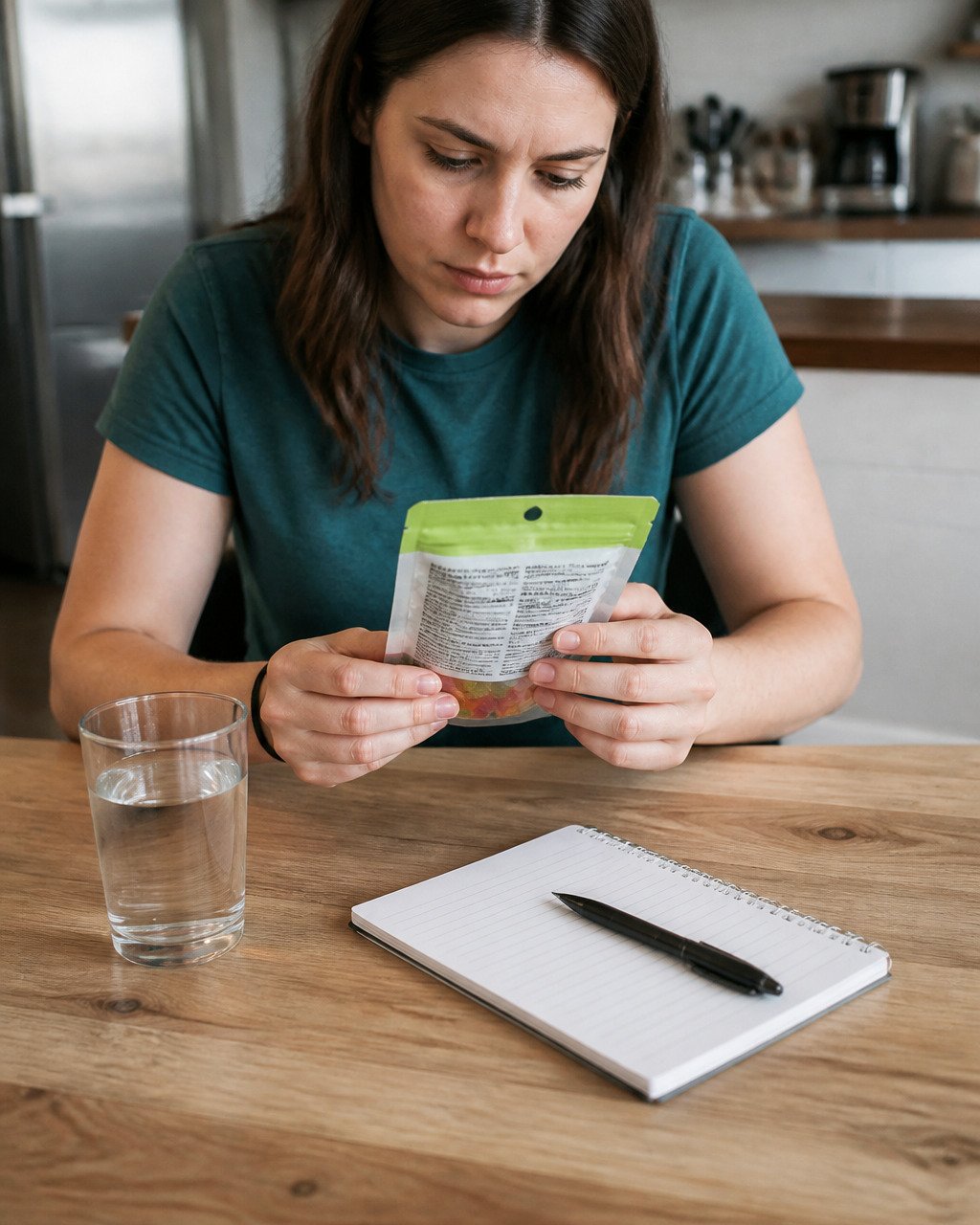
Read the label to confirm the THC amount per piece and the serving size. A gummy labeled 10 mg per piece is not the same as a gummy labeled 10 mg per package with five pieces. Cut gummies or tarts evenly, and if the piece is scored, follow the score line rather than eyeballing it.
- Confirm the THC content per piece, not per package.
- Take the serving size listed, not a guess.
- If you are new or returning after a break, start at 2.5 mg to 5 mg and treat that as a full test dose.
Step 3: Rule out product failure with a lab test
If a product fails for you and for someone else in your household, the product is the likely culprit. Look for a batch-specific certificate of analysis from an independent lab. A current COA can help confirm cannabinoid content and screen for contaminants, so you can check whether the label matches what is inside.
Step 4: Adjust the format or the timing
If a standard edible keeps falling short after a fair wait and an accurate dose, the format may not suit your body. Water-soluble and nano-emulsified products are formulated to improve absorption and can produce a faster, more consistent onset. Taking the edible with a meal that contains some fat, rather than on an empty stomach, is a low-cost change worth trying before you buy a new product.
Step 5: Talk to a healthcare provider if nothing works
If multiple products from multiple brands fail at accurate doses over several tries, bring it up with a healthcare provider. They can review medications that may interfere with cannabinoid metabolism, some prescription drugs affect the same liver enzymes, and help you decide whether edibles are the right delivery method for you.
The steps below summarise what to do when an edible seems ineffective, with the timing each one calls for.
| Step | What to do | Time or frequency |
|---|---|---|
| Wait before redosing | Give the edible time before deciding it did nothing | At least two hours |
| Check the label | Confirm THC per piece and the listed serving size | Before every dose |
| Start low | Begin with a conservative test dose if new or returning | 2.5 mg to 5 mg |
| Keep a log | Record product, dose, time, food and effect | Check at 1, 2 and 4 hours |
| Verify quality | Look for a current batch-specific certificate of analysis | Before reordering |
| Adjust format or timing | Take with a meal containing some fat, or try another format | After a fair wait and accurate dose |
| Consult a provider | Review medication interactions if nothing works | After repeated failed tries |
How to Verify Product Quality and Lab Testing
A product can be weak for reasons other than your body. Quality problems, such as inaccurate labeling or uneven dosing, can make an edible seem ineffective.
Third-party lab testing is the best check you can make. An independent lab can confirm cannabinoid content and screen for contaminants, so the label is more likely to match what is inside.
Review any guarantee's terms before you buy, so you know how returns work.
Common Mistakes to Avoid With Edibles
Most problems with ineffective edibles come from a handful of avoidable errors. Watch out for these:
- Redosing before the first dose has had time to work
- Guessing the dose instead of following the labeled serving size
- Cutting gummies unevenly and assuming each piece is the same
Choosing Your Next Edible With Confidence
Once you understand why an edible failed, choosing the next one becomes easier.
Many people find that a steady routine works best: a consistent serving, a fair wait, and a note of how it went.
Frequently Asked Questions
How long should I wait before deciding an edible isn't working? Wait at least two hours, since many edibles take 30 minutes to two hours to start and can peak later. Redosing too early is one of the most common causes of an unexpectedly strong experience.
Why does the same edible affect people differently? Metabolism, first-pass liver processing, food intake and tolerance all change how strongly and how quickly an edible works.
Can a bad product be the reason an edible feels weak? Yes. Uneven dosing or inaccurate labeling can make an edible seem ineffective.
Frequently Asked Questions
Why is my edible taking so long to kick in?
Edibles are absorbed through the digestive tract and then processed by the liver, which means onset commonly takes 30 minutes to 2 hours and sometimes longer. Food in the stomach can slow or change absorption, and a full meal may delay effects further. The most important step is patience: waiting at least two hours before deciding a dose has failed prevents the common mistake of taking a second dose that stacks with the first. If you have eaten recently, expect onset to be slower than usual.
Why do edibles work on some people but not others?
Individual differences in metabolism, body weight, liver enzyme activity, tolerance and how much fat is consumed with the edible all affect how cannabinoids are absorbed and converted. Individual differences in how the body processes THC can make effects feel stronger for some people and weaker for others. Because these factors vary, the same product can feel strong for one person and weak for another. Starting with a low dose and keeping a simple log of what you took and how you felt helps you learn your own response.
What should I do if my cannabis edibles have no effect?
First, confirm the dose: check the label for milligrams of THC per serving and make sure you took a full serving rather than a fraction. Then wait at least two hours before taking anything more, since redosing too soon is the most common cause of overconsumption. If still nothing happens after a full wait, try the same product with a small meal containing some fat, or try a different format such as a tincture taken sublingually. If a product consistently fails to work, contact the manufacturer and keep the packaging and lot number for reference.
How can I tell if my cannabis edibles are expired or low quality?
Look for a batch or lot number, a manufacture or expiration date, and a certificate of analysis from a licensed lab that confirms THC and cannabinoid content. Check that the package is sealed, the product looks and smells normal, and storage conditions were cool and dry. Products with no testing information, mismatched labels or visible mold, separation or off odors should not be used. Verified lab documentation is the most reliable way to judge whether a product's stated potency is accurate.