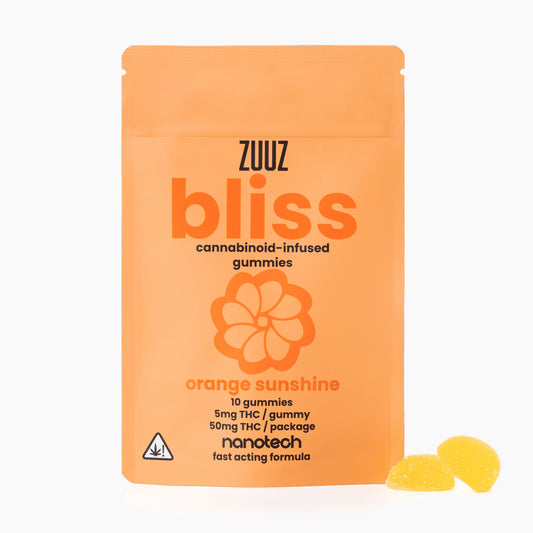

Are Fast-Acting Gummies Worth It for Sleep?
Table of Contents
- Are Fast-Acting Gummies Worth It for Sleep? The Honest Answer
- Fast-Acting Edibles vs. Regular Edibles: What Actually Changes
- How Long Do THC Gummies Take to Work for Sleep?
- THC Edible Dosage for Sleep: Finding Your Starting Point
- THC Gummies Side Effects and Safety: What to Know Before Bed
- Cost, Consistency, and What to Do When a Gummy Does Not Work
- Conclusion: Who Should Choose Fast-Acting Gummies for Sleep
- Frequently Asked Questions
Last Updated: October 9, 2026
Are Fast-Acting Gummies Worth It for Sleep? The Honest Answer
Fast-acting gummies are worth it for sleep only if you value speed and predictability over cost.
At ZUUZ, our nanotech extraction method is designed to support faster, more consistent absorption, which matters most when you are trying to fall asleep on schedule.
Here is the honest trade-off: you pay more per serving for faster onset and better consistency. For some people, that is a clear win.
Fast-Acting Edibles vs. Regular Edibles: What Actually Changes
The difference between fast-acting edibles and regular edibles comes down to absorption, not potency. A standard edible is processed through your digestive system and liver, which is why onset is slow and variable.
That distinction matters because the active compounds in cannabis, called cannabinoids, behave differently depending on how they enter your body. THC, CBD, and CBN are the three most relevant to sleep, and each interacts with your system in its own way.
How Nanotech and Formulation Speed Up Onset
Manufacturers use several approaches to shorten onset time. Emulsification breaks cannabinoids into tiny droplets that mix more easily with water in the body. Nanotechnology goes a step further by shrinking particles to a size that absorbs faster through the mouth and digestive tract.
The practical result is a shorter wait and a more predictable curve. What most guides miss is that consistency matters more than raw speed.
How Long Do THC Gummies Take to Work for Sleep?
Most THC gummies take 30 to 120 minutes to take effect, depending on the product and the person.

Several factors shape how quickly and how strongly a gummy affects you:
- Formulation: Fast-acting products are designed for quicker absorption than traditional edibles.
- Dose and potency: A higher dose does not necessarily hit faster, but it does hit harder.
- Food in your stomach: A heavy meal can slow absorption.
- Individual response: Metabolism, body weight, and tolerance all play a role.
- Frequency of use: Regular use can shift how your body responds over time.
Onset and Duration by Product Type
The table below summarizes how the main edible formats tend to compare on timing and how long effects last. Ranges vary by person and product, so treat these as general expectations rather than fixed rules.
| Product Type | Typical Onset | Duration of Effects | Best For |
|---|---|---|---|
| Traditional edible | 60-120 minutes | 4-8 hours | Unhurried evenings |
| Fast-acting gummy | 15-45 minutes | 3-6 hours | Timing a bedtime dose |
| Sublingual tincture | 15-30 minutes | 2-4 hours | Faster wind-down |
| Beverage | 15-30 minutes | 2-4 hours | Light, short sessions |
For sleep specifically, the goal is usually a gentle onset that lines up with your wind-down routine and fades before morning. A fast-acting gummy with a moderate duration fits that pattern better than a long-lasting edible that leaves you groggy at 7 a.m.
THC Edible Dosage for Sleep: Finding Your Starting Point
Start low and go slow, even with a fast-acting product. A common starting point for beginners is a small dose, often in the 2.5 to 5 milligram range, taken 30 to 60 minutes before bed.
Dosage is where most people get into trouble. Taking too much does not help you sleep better; it tends to increase the chance of unwanted effects like a racing mind or next-day grogginess.
A few practical rules for finding your dose:
- Begin at the low end and wait at least two hours before adding more.
- Keep a simple log of dose, timing, and how you slept.
- Adjust by small increments, not big jumps.
- Avoid mixing with alcohol, which can amplify impairment.
THC Gummies Side Effects and Safety: What to Know Before Bed
The most common side effects of THC gummies include drowsiness, dry mouth, impaired coordination, short-term memory effects, and, in some people, anxiety or a racing mind rather than calm. For sleep use specifically, the concerns that matter most are next-day impairment, interactions with other substances, and who should not use them at all.
What the Evidence Actually Shows
It helps to separate three things that often get blurred together: user reports, short-term effects, and long-term sleep outcomes.
- User reports are abundant and mixed. Some people say THC helps them fall asleep faster; others say it helps them fall asleep but leaves them groggy or disrupts sleep quality over time.
- Short-term effects on sleep onset are the most commonly reported benefit, but they are not the same as improved sleep quality.
- Long-term outcomes are where the research is thinnest. The evidence base on chronic cannabis use and sleep architecture is limited and does not support strong claims in either direction.
That is worth saying plainly rather than overselling the benefit. A gummy that helps you fall asleep is not automatically a gummy that improves your sleep.
Interactions and Contraindications
If you take prescription medication, especially anything that affects the liver or the central nervous system, talk to a healthcare provider before using THC edibles.
Alcohol is the most common interaction people underestimate. Mixing THC with alcohol can amplify impairment well beyond what either would cause alone. Avoid combining them, especially on a night when you need to function the next morning.
People who should be especially cautious or avoid THC edibles include:
- Anyone who is pregnant or breastfeeding.
- Anyone with a history of psychosis or severe anxiety disorders.
- Anyone under the legal age for cannabis in their state.
- Anyone driving or operating machinery, including the morning after a high dose.
Next-Day Impairment
Next-day impairment is the safety issue most relevant to sleep use, because the whole point is to take it at night. A long-lasting edible can still be active when your alarm goes off. Fast-acting formats with shorter durations can reduce that risk, but they do not eliminate it. If you feel groggy, slow, or unsteady in the morning, do not drive. Treat that as a signal to lower your dose or shift your timing earlier in the evening.
Responsible Use
Keep doses low, store edibles securely away from children and pets, and respect your own limits. If a product makes you anxious rather than calm, that is a signal to lower your dose or try a different formulation or ratio of cannabinoids. If you are using THC nightly for sleep and finding you cannot sleep without it, that is a conversation to have with a healthcare provider rather than a reason to increase the dose.
Cost, Consistency, and What to Do When a Gummy Does Not Work
This is the section most guides skip, and it is the one that actually answers whether fast-acting gummies are worth it. The keyword is a value question, so treat it like one: compare what you pay per serving against what you get in onset speed, duration, and predictability.
Cost Per Serving: The Real Comparison
Fast-acting gummies typically carry a premium over conventional edibles, and that premium is usually paid at the formulation level, emulsification, nano-emulsification, and water-soluble delivery systems cost more to produce than a standard infused gummy.
To compare fairly, calculate cost per milligram rather than cost per package:
- Divide the package price by the total milligrams of THC in the package. That gives you cost per milligram.
- Divide that by your typical dose in milligrams. That gives you cost per serving.
- Multiply cost per serving by the number of nights you use it per month. That gives you a monthly cost.
A worked example with placeholder numbers: a 100 mg package at $30 is $0.30 per milligram. A 5 mg serving costs $1.50. Used five nights a week, that is roughly $30 a month.
The Trade-Off, Stated Plainly
Paying more for a fast-acting gummy buys you three things:
- Shorter onset. You spend less time guessing when the effect will arrive.
- Better timing control. A predictable onset lets you align the dose with your wind-down routine instead of your bedtime.
- Tighter duration. Many fast-acting formats clear faster, which can reduce next-day grogginess.
What it does not buy you is a stronger effect, a better sleep architecture, or a guarantee that THC will help you sleep at all. If your main goal is cost efficiency and you do not mind waiting an hour or more, a conventional edible remains the cheaper path. If your main goal is a dose that lands when you need it, the premium is the point.
When a Gummy Does Not Work
Work through the variables before blaming the product:
- Dose. Too little can feel like nothing. Confirm you are at or above your effective threshold.
- Food timing. A heavy, high-fat meal can delay or blunt onset. An empty stomach can speed it up.
- Timing. Some products simply take longer than the label suggests. Give it a full two hours before adding more.
- Tolerance. Frequent use can dull the effect at the same dose.
- Night-to-night variation. Individual response varies. One bad night is not a pattern.
If a product consistently underdelivers across multiple nights at a dose you know works for you, that is a formulation or quality issue. Look for third-party lab testing, clear milligram labeling, and transparent sourcing. Those are the signals that separate a reliable product from a marketing claim.
Conclusion: Who Should Choose Fast-Acting Gummies for Sleep
Fast-acting gummies make the most sense for people who need a reliable, well-timed dose before bed: busy parents, professionals winding down after high-pressure days, and anyone who has been frustrated by the slow, uneven onset of traditional edibles.
For everyone else, the trade-off is straightforward. At ZUUZ, our nanotech extraction method is designed to deliver exactly that, with sugar-free tart options and formulas designed to avoid anxiety and harsh comedowns.
Get started with ZUUZ and find a sleep routine you can actually rely on.
Frequently Asked Questions
Are fast-acting gummies better than regular edibles for sleep?
Fast-acting gummies can be better if you want predictable timing. Standard edibles often take 30 to 120 minutes to kick in, which makes bedtime dosing tricky. Fast-acting formulas using nanotech absorption may begin working in 15 to 30 minutes. However, if you do not mind waiting and want a longer, slower-building effect, regular edibles still work well. The right choice depends on your routine, not on which is objectively superior.
How long do THC gummies last when used for sleep?
Most THC gummies last 4 to 8 hours depending on dose, potency, and individual metabolism. Fast-acting versions may peak sooner but do not necessarily wear off faster. If you take a gummy at 9 p.m., you may still feel mild effects at 3 a.m. For sleep, a moderate dose taken 30 to 60 minutes before bed usually covers a full night without heavy next-day grogginess.
Can THC gummies cause next-day grogginess?
Yes, especially at high doses or with long-lasting formulas. THC metabolites can remain in your system and affect morning alertness. Fast-acting gummies with lower doses and shorter peak windows may reduce this risk, but individual response varies. Start with a low dose, track how you feel the next morning, and adjust. If grogginess persists, reduce your dose or try a formula with more CBD or CBN relative to THC.
Is it safe to take THC gummies every night for sleep?
Short-term use is generally well tolerated, but nightly use can build tolerance and may lead to dependence for some people. The research on long-term sleep outcomes is limited. If you use THC gummies nightly, take breaks, keep your dose low, and watch for signs that you need more to get the same effect. Talk to a healthcare provider if you take other medications or have underlying health conditions.