
How to Choose Gentle THC Edibles: A 2026 Guide
Table of Contents
- Why Gentle THC Edibles Are Different
- Understanding Edible Dosage for New Users
- How Long Do THC Edibles Take to Kick In?
- Benefits of Nanotech THC Extraction
- Terpene Profiles for a Gentler Experience
- Check Interactions with Common Medications
- Micro-Dosing Protocols for Anxiety Management
- Choosing Between Sativa, Indica, and Hybrid Effects
- Conclusion
- Frequently Asked Questions
Last Updated: September 17, 2026
Why Gentle THC Edibles Are Different
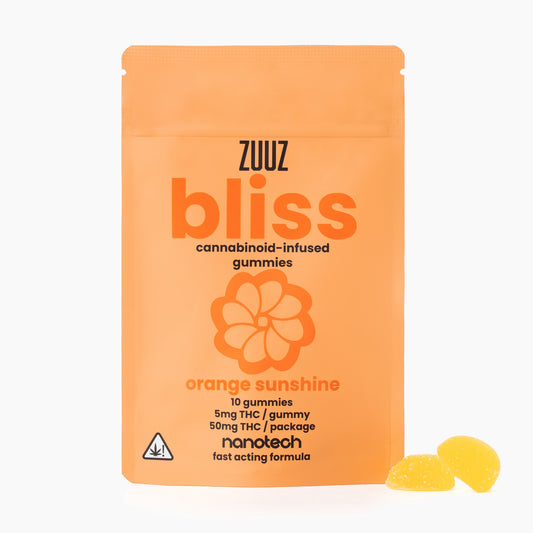
Gentle THC edibles are low-dose cannabis products formulated to deliver a mild, controlled experience rather than an overwhelming high. The key difference comes down to dose precision and how the cannabinoids are processed. At ZUUZ, we built our entire product line around that principle: 5mg of nanotech THC per tart, designed to be subtle enough for a first-timer and stackable for someone with more tolerance.
Most unpleasant edible stories trace back to one problem: the product was too strong, absorbed unpredictably, or both. A gentle edible solves that by keeping each serving small and making the onset curve smoother. According to the CDC's guidance on cannabis and public health, edibles carry a higher risk of overconsumption than inhaled cannabis because effects are delayed and harder to self-regulate. That delay is exactly why choosing the right product matters before you ever open the package.
Below, we'll walk through dosage, timing, extraction methods, terpenes, medication interactions, and micro-dosing so you can pick a gentle edible with confidence.
Understanding Edible Dosage for New Users
The right starting dose for a new edible user is 2.5mg to 5mg of THC, taken once and then left alone for at least two hours. That range is deliberately conservative because edible THC is processed differently than inhaled THC.
When you eat cannabis, the THC passes through your digestive system and liver before reaching your bloodstream, a process called first-pass metabolism. Your liver converts THC into 11-hydroxy-THC, a more potent metabolite that contributes to the stronger, longer-lasting effects people associate with edibles. This is also why gastrointestinal absorption is slower and less predictable than sublingual absorption, where cannabinoids enter the bloodstream through tissues under the tongue.
A few practical rules for beginners:
- Start at 2.5mg if you are sensitive to cannabis or new to it entirely
- Choose 5mg if you have some tolerance or want a more noticeable effect
- Wait a full two hours before considering more
- Keep a written log of dose, time, and how you felt

The 2.5mg to 5mg Starting Range
Think of 2.5mg as your baseline test dose and 5mg as your standard beginner dose. If 2.5mg produces nothing after two hours, 5mg is a reasonable next attempt on a different day. If 5mg feels too strong, cut back to 2.5mg and stay there. The goal is finding your therapeutic window, the dose range where you get the benefit you want without unwanted psychoactive effects.
How Long Do THC Edibles Take to Kick In?
THC edibles typically take 30 minutes to two hours to kick in, depending on your metabolism, whether you ate beforehand, and the formulation of the product. Peak effects usually arrive around the two to three hour mark and can last four to six hours.
That onset time is the single biggest source of bad first experiences. People feel nothing after 45 minutes, eat more, and then get hit by both doses at once. The fix is simple: set a timer and commit to waiting.
Nanotech-formulated edibles can shorten that window. ZUUZ uses a nanotech extraction method that reduces cannabinoid particle size, which supports faster and smoother absorption than traditional oil-based edibles. This matters for beginners because a shorter, more predictable onset leaves less room for the "it's not working, let me eat another" mistake.
Benefits of Nanotech THC Extraction
Nanotech THC extraction breaks cannabinoids into tiny particles that your body can absorb more efficiently. Smaller particles mean faster uptake and a more consistent effect from one serving to the next, which is the opposite of the unpredictable hit-or-miss experience many people have with standard edibles.
The practical benefits for anyone learning how to choose gentle THC edibles are straightforward:
- Faster onset compared to traditional oil-based products
- More consistent effects across servings
- Lower risk of the harsh comedown some users report
- Better dose control because each serving behaves predictably
ZUUZ builds every product around this method, and the results show up in how the experience feels: smoother, shorter, and easier to plan around. For a busy parent or a professional who needs to unwind on a schedule, predictability is worth more than raw potency.
Terpene Profiles for a Gentler Experience
Terpenes are the aromatic compounds that give cannabis its smell, and they also influence how a strain's effects feel. This is where most beginner guides stop short. They tell you to pick sativa, indica, or hybrid, but the terpene profile often matters more for whether an experience feels gentle or edgy.
Broadly speaking:
- Myrcene, common in indica-leaning strains, is associated with sedating, relaxing effects
- Linalool, also found in lavender, is linked to calm and stress relief
- Limonene tends toward uplifting, mood-brightening effects
- Pinene is associated with alertness and clear-headedness
If your goal is a gentle experience, look for products that lean on myrcene and linalool rather than high-stimulation profiles. Full-spectrum products preserve more of the plant's natural terpenes, while distillate and isolate products strip them out in favor of pure THC. Neither is inherently better, but full-spectrum formulas tend to produce a rounder, less abrupt effect.
Check Interactions with Common Medications
THC can interact with several common medication classes, so anyone taking prescription drugs should check with their doctor or pharmacist before adding edibles to their routine. This is the step most guides skip entirely, and it is the one most likely to matter for anyone on a daily prescription.
Cannabis is processed by the same liver enzymes that break down many prescription medications, particularly the CYP450 family.
The interaction can run in either direction:
-
Amplified drug effect, if THC slows the breakdown of a medication, that medication can accumulate and hit harder than intended
-
Reduced drug effect, if a medication speeds up THC clearance, the edible may feel weaker or shorter than expected
-
Additive sedation, THC and central nervous system depressants can stack, even when neither is taken at a high dose
-
Blood thinners such as warfarin, where small changes in metabolism can shift bleeding risk
-
Anti-anxiety and antidepressant medications, including SSRIs and benzodiazepines
-
Sleep aids and sedatives, which can compound THC's drowsiness
-
Blood pressure medications, since THC can cause a temporary drop in blood pressure
-
Certain seizure medications, many of which are CYP450 substrates
-
Antifungals and some antibiotics, which are potent CYP3A4 inhibitors and can raise THC blood levels
If you take any daily medication, a five-minute conversation with your pharmacist is the cheapest safety check available. Bring the package label if you have it, the cannabinoid ratio and any added terpenes or minor cannabinoids are part of the picture, not just the THC number.
Micro-Dosing Protocols for Anxiety Management
Start below the threshold, not at it. The goal is the lowest dose that produces a noticeable calming effect without psychoactivity. For most people that lands between 1mg and 2.5mg of THC. If you feel high, you have overshot the micro-dose window, that is a signal to drop down, not to push through.
- Begin with 1mg to 2.5mg in the morning or early afternoon
- Keep the dose and timing identical for three to four days before changing anything
- Track mood, sleep, and anxiety levels in a short daily note, a 1-to-10 rating is enough
- Increase by no more than 1mg at a time, and only after a full week at the current dose
- If a dose feels too strong, drop back to the previous level for at least a week before trying again
Choosing Between Sativa, Indica, and Hybrid Effects
Sativa, indica, and hybrid labels describe general effect tendencies, not strict rules. Sativa-leaning products are commonly described as energizing and uplifting, indica-leaning products as calming and sedating, and hybrids as a blend of both.
Conclusion
Choosing a gentle THC edible comes down to dose control, onset predictability, and knowing your own body. Get those three right and the experience stops being a gamble.
Frequently Asked Questions
What makes a THC edible considered 'gentle'?
A gentle THC edible typically has a low dose, often 2.5mg to 5mg per serving, and uses a delivery method that ensures smooth absorption. Nanotech extraction, for example, breaks THC into tiny particles for faster, more consistent effects without a harsh comedown. Gentle edibles also avoid excessive sugar and may include terpenes that promote relaxation. ZUUZ tarts offer 5mg nanotech THC per piece, making them easy to titrate for a gentle experience.
Is a 10 mg edible too much for a beginner?
For most beginners, 10mg is too high and can lead to anxiety or discomfort. The recommended starting dose is 2.5mg to 5mg, especially for those new to THC. ZUUZ tarts contain 5mg per piece, so you can start with half a tart (2.5mg) and wait to see how you feel. Always start low and go slow, as edibles can take up to two hours to kick in.
How do nanotech-infused edibles differ from traditional ones?
Nanotech-infused edibles use advanced extraction to reduce THC particles to nano size, which increases bioavailability and speeds up onset. Traditional edibles rely on gastrointestinal absorption and first-pass metabolism, often taking 1-2 hours to feel effects and sometimes causing unpredictable highs. Nanotech edibles like ZUUZ tarts provide a faster, smoother experience with more consistent effects and fewer harsh comedowns.
What should I look for on a lab-tested certificate of analysis?
A certificate of analysis (COA) should confirm the potency of THC and CBD, test for pesticides, heavy metals, and microbials, and verify that the product is free from contaminants. Look for a COA from an independent third-party lab, with batch numbers matching your product. ZUUZ provides lab-tested products, ensuring safety and consistency. Always check the COA before buying any THC edible.