
How to Choose a Mushroom Supplement for Relaxation
Quick Summary
To choose the right mushroom supplement for relaxation, check the mushroom form, the extraction method, and the other ingredients on the label. Look for a stated beta-glucan percentage, third-party testing, and a clear amount per serving, then start at the lowest suggested dose.
- Check whether the product uses fruiting body, mycelium on grain, or a blend.
- Look for a stated beta-glucan percentage rather than a vague wellness claim.
- Dual extracts capture both beta-glucans and triterpenes in one product.
- Ask for a certificate of analysis from third-party testing before buying.
- Start at the low end of the suggested dose and stay consistent for several weeks.
Table of Contents
- Why Relaxation Mushroom Supplements Vary So Much
- Fruiting Body vs Mycelium Supplements: What the Difference Means for Calm
- Extraction, Beta-Glucans and Full-Spectrum vs Pure Extract
- How to Read Mushroom Supplement Labels
- Third-Party Testing and Certificates of Analysis
- Mushroom Supplement Dosage for Stress: Starting Points and Timing
- Choosing Your Relaxation Mushroom Supplement and Next Step
- Frequently Asked Questions
Why Relaxation Mushroom Supplements Vary So Much
Last Updated: November 5, 2026
Walk down any supplement aisle and you will find many mushroom products that promise calm. Some are capsules, some are teas, and many are gummies. The prices and labels can look similar, but the products may be very different inside. Learning how to choose the right mushroom supplement for relaxation starts with knowing why these differences exist.
Mushroom supplements are not all made the same way. The mushroom part can come from the fruiting body, the mycelium grown on grain, or a mix of both. The extraction method changes what ends up in the bottle. And the other ingredients, like L-theanine or valerian, change how the product might feel.
The evidence is also mixed. Research on mushroom blends has reported possible benefits for some people, but effects are often modest. That means a product can sound promising and still deliver a modest effect.
So when you compare options, keep these points in mind:
- Mushroom source: fruiting body and mycelium products are not interchangeable
- Extraction: how the mushroom is processed affects what you get
- Added ingredients: calming herbs change the overall experience
- Realistic expectations: most mushroom supplements offer gentle support, not dramatic results
The best choice starts with reading labels closely rather than trusting the front of the package. The sections below walk through each detail step by step.
Fruiting Body vs Mycelium Supplements: What the Difference Means for Calm
Fruiting body and mycelium supplements come from different parts of the fungus. The fruiting body is the mushroom you can see above ground. Mycelium is the root-like network that grows through grain or other material.
A fruiting body supplement is usually made from the mushroom cap and stem. A mycelium supplement is grown on a grain base, and the grain can make up a large part of the final product. Check the label for which one you are buying, because the two are often sold with similar names.
For relaxation, the difference matters because the compounds in each part can vary. Mushroom research describes many bioactive compounds, but it does not clearly show which form works better for calm, so no clear winner can be named.
Here is a simple way to think about it:
- Fruiting body: closer to the whole mushroom, often a common choice for reishi-based products
- Mycelium on grain: grown on a base, so check how much of the product is grain
- Blends: may combine both, so read the label to see which parts are used
Watch out: do not assume a bigger number on the front means a stronger product. Always check the ingredient list for the mushroom form.
Extraction, Beta-Glucans and Full-Spectrum vs Pure Extract
Extraction is the process of pulling useful compounds out of the mushroom and into a form your body can absorb. The method matters more than most shoppers realize, because different solvents pull out different molecules, and the label rarely tells you which method was used unless you know what to look for.
Hot water vs alcohol extraction
Many quality products use both methods in sequence, which is called dual extraction. A dual extract captures the water-soluble beta-glucans and the alcohol-soluble triterpenes in one product. A water-only extract will be rich in beta-glucans but low in triterpenes; an alcohol-only tincture is the reverse. For a relaxation-focused product, a dual extract is the more complete starting point because it preserves both compound families.
Why beta-glucans are the number to check
Beta-glucans are a type of polysaccharide found in mushroom cell walls and are the most commonly used marker for mushroom content on a supplement label. A beta-glucan percentage tells you how much of the product is actual mushroom polysaccharide rather than filler, grain, or starch. A product that lists "500 mg reishi extract" but no beta-glucan figure could be mostly maltodextrin or myceliated grain.
When you compare labels, look for a specific beta-glucan percentage (for example, "20% beta-glucans" or "beta-glucan 250 mg per serving") rather than a vague claim like "supports wellness." A stated percentage lets you do the math: 1,000 mg of a 30% beta-glucan extract delivers about 300 mg of beta-glucans, while 1,000 mg of an unstandardized powder may deliver far less. If a label shows no beta-glucan number at all, treat the potency claim as unverified.
Full-spectrum vs pure extract
| Type | What It Means | Best For |
|---|---|---|
| Full-spectrum | Includes a wider range of compounds from the mushroom, often the whole fruiting body or a dual extract | Shoppers who want the whole compound profile, including triterpenes |
| Pure extract | Focuses on specific isolated compounds, often standardized to a beta-glucan percentage | Shoppers who want a narrower, measurable dose |
Neither type is automatically better. Full-spectrum products may contain more of the mushroom's natural compounds, including the triterpenes that alcohol extraction captures. Pure extracts may be more focused and easier to standardize, but they can leave behind compounds that were not the target of the extraction. Our recommendation is to match the type to what you want: if you want a broad blend of mushroom compounds for a wind-down routine, look at full-spectrum dual extracts; if you prefer a simpler, measurable label, a standardized extract with a clear beta-glucan percentage may suit you better.
Watch out: a high milligram number on the front of the bottle means little without a beta-glucan percentage and an extraction method on the back. A 2,000 mg capsule of ground myceliated grain can contain less usable mushroom compound than a 500 mg dual extract.
How to Read Mushroom Supplement Labels
Reading a label is the most useful skill you can build when comparing mushroom products. The supplement facts panel and the ingredient list tell you what is inside, how much, and how to take it.
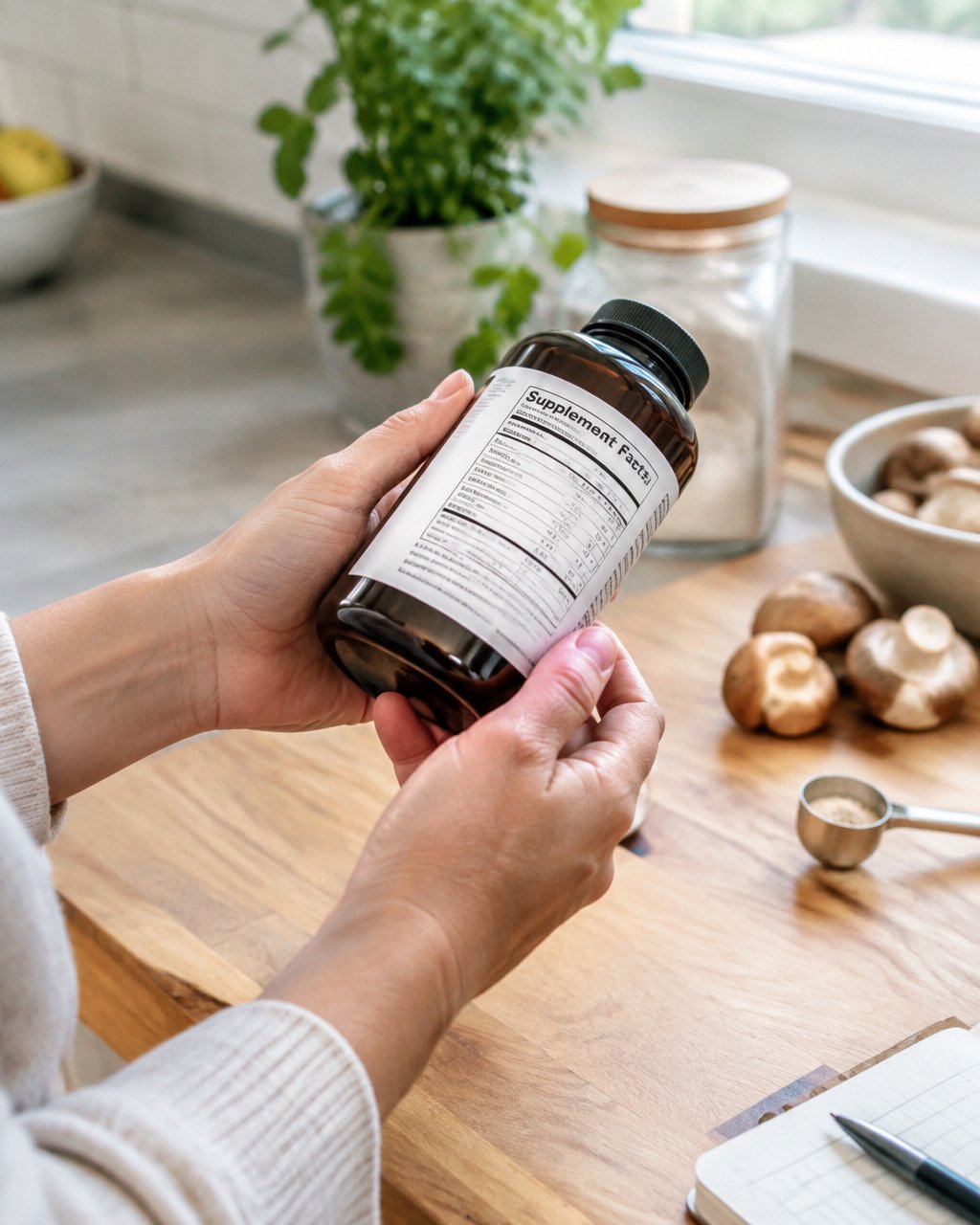
Start with these items on the label:
- Mushroom name and form: fruiting body, mycelium, or blend
- Amount per serving: the milligrams of each ingredient
- Other ingredients: herbs, sweeteners, flavorings, and fillers
- Suggested use: how many gummies or capsules to take each day
- Warning statement: who should talk to a doctor first
Look at the order of the ingredients too. For a deeper walkthrough, see how to choose mushroom gummies for relaxation, which covers what to look for on the label. Ingredients are usually listed from largest to smallest amount. If sugar or starch appears near the top, the mushroom part may be a smaller share of the product.
Here is an example of how to read one product. A reishi gummy from ZUUZ lists reishi extract at 200 mg, L-theanine at 25 mg, lemon balm at 25 mg, passion flower at 25 mg, and valerian root at 25 mg. Those amounts tell you exactly what each serving contains, which makes comparing products much easier.
Third-Party Testing and Certificates of Analysis
Third-party testing means an independent lab checks a product. A certificate of analysis, often called a COA, is the lab report that shows the results.
When you see a claim of third-party testing, ask for the COA. You can review the actual lab certificates behind potency and purity claims to check the results yourself. Look for the product name, batch number, test dates, and the lab's name. Check that the results match what the label says. Our guide on how to verify third party lab results explains a method for confirming a result is genuine and independently verified.
If a company does not share a COA, that is a reason to be cautious. Check for an easy-to-find lab report before you buy.
Mushroom Supplement Dosage for Stress: Starting Points and Timing
Most guides stop at "follow the label." The more useful question for relaxation is when to take a mushroom supplement, and why the timing changes what you feel. This is the part competitors skip, and it is where a relaxation-focused routine is won or lost.
Start with the label, then adjust
Dosage depends on the product, so always follow the label first. A common starting point is the lowest suggested amount on the package. For example, one reishi gummy product lists a daily use of one to two gummies and warns not to exceed the recommended dose. Start at the low end for the first one to two weeks, then adjust only if the label allows it.
Why timing matters for relaxation
That said, the time of day you take it shapes the experience:
Consistency beats intensity
Give the product time before deciding whether it works for you. Consistent use over several weeks is a reasonable way to judge results. Keep a simple note of when you took it and how you felt, and change only one variable at a time, dose or timing, not both.
Mushroom supplements are not a replacement for medical care. Talk to a doctor first if you are pregnant, nursing, under 18, or have a medical condition, and if stress or anxiety is affecting your daily life, a healthcare professional can help you find the right support.
Choosing Your Relaxation Mushroom Supplement and Next Step
Choosing a mushroom supplement for relaxation comes down to a few clear checks. Look at the mushroom form, the extraction method, the other ingredients, and the third-party testing. Then compare the dosage to your own needs.
ZUUZ's chill. Reishi Relax Gummies are one option. Each serving pairs 200 mg reishi extract with 25 mg each of L-theanine, lemon balm, passion flower, and valerian root, and the label lists each amount. At $39.00, the product is a convenient, chewable option for a busy routine.
If you want to compare more options first, read our guide on best functional mushroom gummies for daily stress. For a wider set of picks, see best mushroom gummy gifts for wellness enthusiasts. Once you know what to look for, you can choose with confidence.
Frequently Asked Questions
Which mushroom supplement is best for anxiety?
No single mushroom is proven best for anxiety, and research is still limited. Research on mushroom blends has reported modest benefits for some people, but effects are often small. When choosing, look for a clear fruiting body extract, a stated beta-glucan level, and third-party testing. If anxiety is significant or persistent, talk with a doctor before starting any supplement.
What should I look for on a mushroom supplement label?
Start with the species name, the part of the mushroom used, and the amount per serving. Look for terms such as fruiting body extract or standardized extract, and check whether the label lists fillers like starch or grain. Confirm whether the product is third-party tested and whether a certificate of analysis is available. Use the supplement facts panel to compare doses across brands, not the marketing front of the package.
What is the difference between mycelium and fruiting body in supplements?
Fruiting body extracts come from the mushroom cap and stem. Mycelium is the root-like network often grown on grain. Check the label to see which part is used, and whether the product states its beta-glucan content, since that figure indicates how much active material is present.
How long does it take to feel the effects of relaxation mushrooms?
Effects vary by person, product and dose, and most products do not publish timing data specific to relaxation. Many people use mushroom supplements daily for several weeks before judging results, rather than expecting an immediate effect. Consider keeping a simple log of dose, timing and how you feel.