
How to Choose the Right Mushroom Gummy Dosage
Last Updated: October 31, 2026
Quick Summary
Mushroom gummy dosage has no universal right answer, because it depends on the mushroom type, the concentration of active compounds, and your own tolerance. Check the label for total milligrams and extract ratio, calculate the amount per serving, and start with a small serving if you are new.
- Confirm whether the product is a functional mushroom gummy or a psilocybin product before dosing, since they are handled differently.
- Check the label for total milligrams, extract ratio, species, extraction method, and third-party testing.
- Calculate the amount per serving by multiplying milligrams per gummy by gummies per serving.
- Do not compare products using gummy counts alone, because concentration changes how strong each gummy is.
- Start with one gummy, wait the full time the label suggests, and adjust slowly, changing only one thing at a time.
Table of Contents
- Why There Is No Universal Mushroom Gummy Dose
- Start by Identifying Your Product Type
- Step 1: Read the Label for Milligrams and Extract Ratio
- Step 2: Calculate the Amount per Gummy and per Serving
- Step 3: Start With a Small Serving if You Are New
- How Long Mushroom Gummies Take to Work and When to Adjust
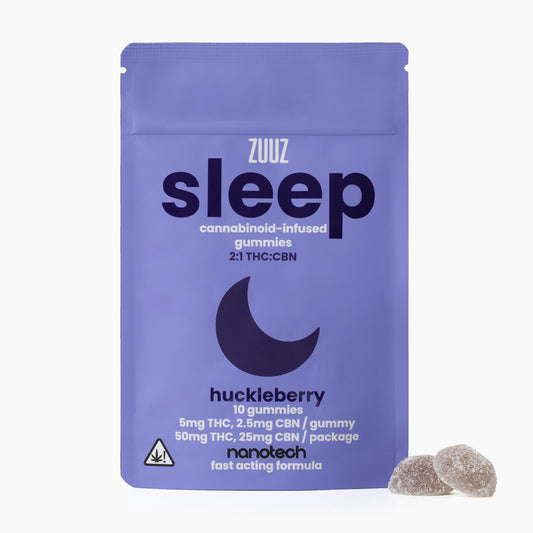
- Booking Your Next Step: Choosing a Starter Gummy From ZUUZ
- Frequently Asked Questions
Why There Is No Universal Mushroom Gummy Dose
Mushroom gummy dosage does not have a single right answer, and anyone who tells you otherwise is oversimplifying. At ZUUZ, we think the first step is accepting that.
A Cornbread Hemp guide from 2026 makes this point directly. It says dosage varies with mushroom type, active-compound concentration, and individual tolerance, so a general dose range should not be treated as universally appropriate (Cornbread Hemp's 2026 guide on mushroom gummy daily dosage).
Many shoppers look for a simple number, such as "one gummy" or "two gummies." That number may be a starting point on one label, but it does not transfer across products, so mushroom gummy dosage should always be checked against each label. A typical serving on one brand may contain very different amounts of active ingredient than a serving on another.
Here is the core idea. A dose is not just a count of gummies. It depends on what is inside each gummy and how much of it you take. The sections below show you how to check both.
Start by Identifying Your Product Type
Before you look at any number on a label, confirm what kind of product you are holding. Not all mushroom gummies are the same, and the category changes how you should think about dosing. This is the step most dosage guides skip, and it is the one that matters most for your safety.
Functional mushroom gummies vs. psilocybin products
Functional mushroom gummies typically contain extracts of species like lion's mane, reishi, chaga, or cordyceps, sold for everyday wellness uses. Psilocybin products contain a psychoactive compound and fall into a very different legal and clinical category.
- Functional mushroom gummies: Usually sold as dietary supplements. Check the label for the extract type and the amount per serving. These products are not intended to produce intoxication.
- Psilocybin products: Contain a psychoactive substance. Clinical dosing research exists, but it is not a consumer gummy dosing guide.
Clinical research on psilocybin often references a fixed 25 mg dose in depression trials. That information describes study design, not a recommendation for any consumer gummy (Garcia-Romeu et al. review on optimal dosing for psilocybin pharmacotherapy). Do not assume a store-bought gummy matches those trial doses.
How to tell which category you have
If you are unsure what you bought, check these signals before you take anything:
- Label language: Functional products usually list mushroom species and extract ratios. Psilocybin products may use terms like "magic," "psilocybe," "shrooms," or avoid naming the compound outright.
- Intended effect: Functional gummies are marketed for focus, calm, or sleep. Psilocybin products are marketed for perceptual or psychedelic effects.
- Where you bought it: Licensed dispensaries and mainstream retailers typically sell functional products. Psilocybin products are sold through unregulated channels in most places, which also means no quality control.
- Price and packaging: Extremely low prices or packaging that mimics candy without a supplement facts panel are red flags for unregulated products.
Why the distinction changes your dose
For functional mushroom gummies, dosing is about finding the amount that supports your goal without digestive upset, typically a gradual, self-experimented process. For psilocybin products, dosing is about managing perceptual and psychological effects, and the consequences of getting it wrong are much greater. The rest of this guide focuses on functional mushroom gummies, because that is where consumer dosing guidance is both appropriate and possible.
Step 1: Read the Label for Milligrams and Extract Ratio
Start with the label. Look for two things: the total milligrams listed and the extract ratio. Then look for a third: evidence that the product was tested.
Total milligrams tell you the amount of material. A 500 mg dose of a 20:1 extract can deliver more active compound than 1,000 mg of a 5:1 extract, so a bigger number does not always mean a stronger dose (Plastic Surgery Key's 2026 mushroom gummy selection guide).
Check these items on the label:
- Total milligrams per gummy: The full weight of the gummy.
- Extract ratio: Such as 5:1 or 20:1. A higher first number usually means a more concentrated extract.
- Mushroom species: Different species contain different active compounds.
- Extraction method: How the extract was made affects potency.
- Third-party testing: A certificate of analysis (COA) or a batch number you can verify.
A product-selection guide from 2026 calls raw milligrams the least reliable single metric for potency. It points to extract concentration, species, and extraction method as equally important (Plastic Surgery Key's 2026 potency factors article). Read the full label, not just the milligram number.
A worked example: from label to dose
Here is how the numbers fit together. Suppose a label reads:
- Serving size: 2 gummies
- Mushroom extract blend: 500 mg per serving
- Extract ratio: 10:1
- Species: Lion's mane
That means each gummy contains 250 mg of extract (500 mg ÷ 2). If you take one gummy, you take 250 mg of extract.
Now compare a second product:
- Serving size: 1 gummy
- Mushroom extract blend: 300 mg per serving
- Extract ratio: 20:1
One gummy of the second product delivers 300 mg of a more concentrated extract. Even though the milligram number is lower than the first product's 500 mg per serving, the concentration is higher.
Verify the testing behind the label
A label is only as good as the testing behind it. Look for a certificate of analysis (COA) from a third-party lab. The COA should confirm:
- Identity: That the mushroom species listed is actually in the product.
- Quantity: That the amount of extract per serving matches the label.
- Contaminants: That the product is free of heavy metals, mold, and pesticides at levels of concern.
- Batch matching: That the COA corresponds to the batch number on your package.
Testing information is worth requesting from any brand before you buy.
Watch out: Do not compare two products using only their gummy counts. One gummy from a high-concentration product can be far stronger than one from a low-concentration product. And do not assume a label number is accurate without testing evidence, the supplement market has a long history of products that did not match their labels.
Step 2: Calculate the Amount per Gummy and per Serving
Once you know the label details, do the math. This gives you the amount you actually take.
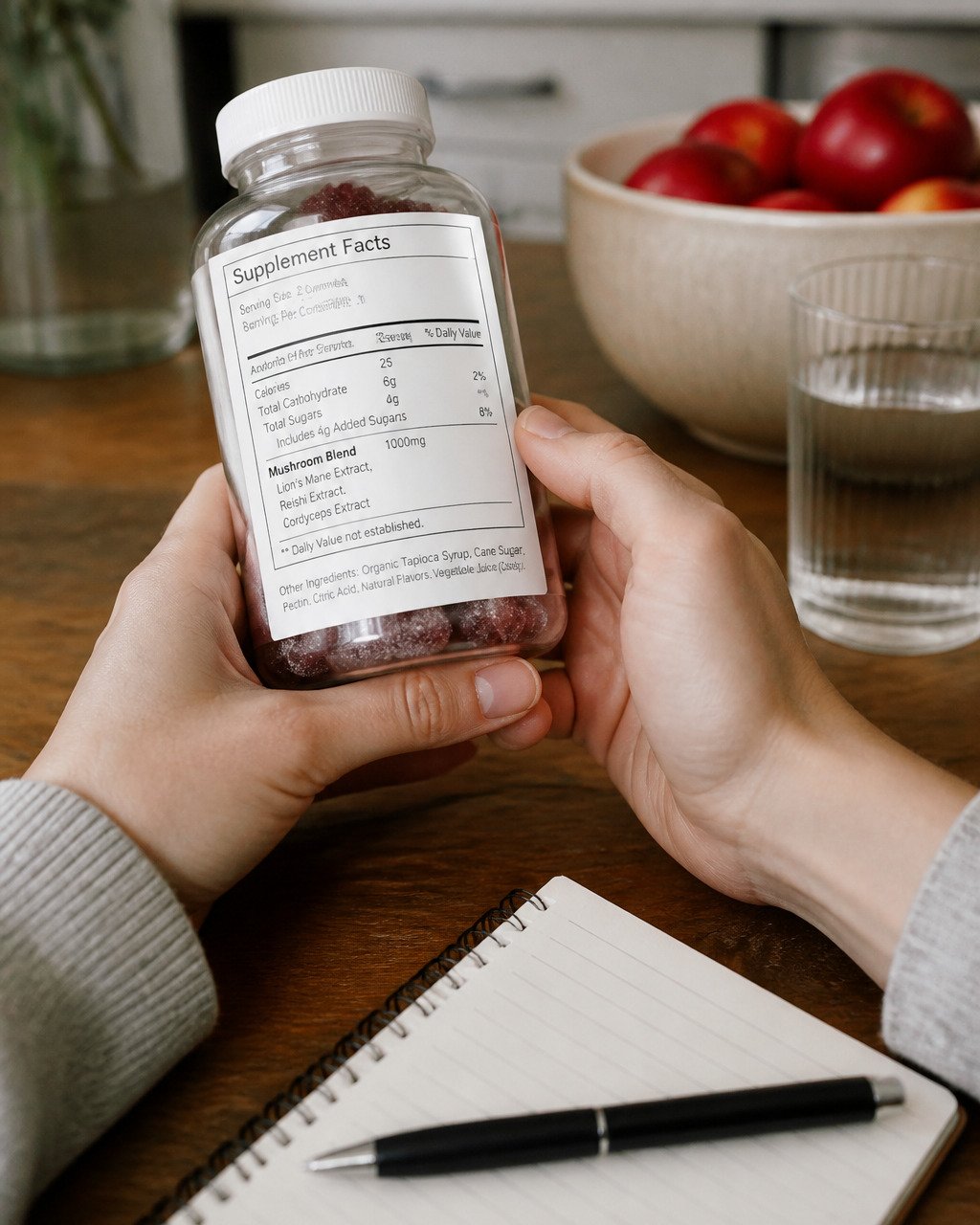
Use this simple formula:
Amount per serving = Milligrams per gummy x Number of gummies per serving
For example, if a gummy lists 20 mg of total extract and the serving size is two gummies, one serving is 40 mg of total extract. Remember that this is total extract, not necessarily active compound.
Next, write the numbers down on a notepad or in your phone so you can track them. Many people find a simple chart helpful:
| Item | Where to Find It | Example |
|---|---|---|
| Milligrams per gummy | Supplement facts panel | 20 mg |
| Gummies per serving | Serving size line | 2 |
| Total per serving | Your calculation | 40 mg |
| Extract ratio | Ingredient list or label | 5:1 |
Keep in mind that serving sizes differ widely between brands. A source on functional-mushroom gummies notes that typical servings are often one or two gummies, but it advises checking each product's label rather than relying on a general rule (Cornbread Hemp's guidance on typical serving sizes).
Watch out: Do not compare two products using only their gummy counts. One gummy from a high-concentration product can be far stronger than one from a low-concentration product.
Step 3: Start With a Small Serving if You Are New
If you are new to mushroom gummies, start low. Take one gummy, or less if the product allows it, and wait before you change anything.
Starting small can help you learn how your body responds to a product.
- You learn how your body responds to the product.
- You reduce the chance of an uncomfortable experience.
- You can adjust gradually instead of guessing.
Give it time before deciding whether the dose is right. Wait at least the full time the label suggests before taking more.
If you feel unwell, stop taking the product.
For more on choosing a gentle first product, read our guide on safe THC gummies for beginners. Our THC gummies 60-day guarantee explains our money-back terms.
How Long Mushroom Gummies Take to Work and When to Adjust
Timing varies by product, by person, and by what you ate that day. Many users notice effects over a period that the product label describes, but individual experience differs.
Adjust slowly. Change only one thing at a time, and only after you have given the current dose enough time to act.
Watch for these signs that you should adjust downward or stop:
- Digestive discomfort that does not settle
- Feeling more anxious or unwell than expected
- Unusual drowsiness during the day
- Any reaction that worries you
Do not double a dose to catch up on a missed serving. Skip the missed one and return to your usual routine.
Booking Your Next Step: Choosing a Starter Gummy From ZUUZ
Once you know what to look for on a label, the next step is choosing a product.
ZUUZ's sugar-free green apple and lemonade tarts are an alternative if you prefer that format, and are listed at $32.00 on our site.
Choose the pack that fits your comfort level and start with a single serving. Use the calculations you learned above to track what you take.
Frequently Asked Questions
How do you choose the right mushroom gummy dosage?
Start with the product label rather than a generic dose. Check the milligrams per gummy, the serving size and the extract ratio, since a 500 mg dose of a 20:1 extract can deliver more active compound than 1,000 mg of a 5:1 extract. Choose the lowest serving that matches your goal, wait to see how you respond, and only increase gradually. If the label is unclear or missing, do not guess. Contact the manufacturer or choose a product that lists its dosing clearly.
How many mushroom gummies should a beginner take?
Serving sizes differ between products, so check each label rather than relying on a general rule. Beginners should begin with a single gummy at the lowest labeled serving, follow the label directions and avoid taking more than the label recommends. Dosage depends on mushroom type, active-compound concentration and individual tolerance, so the same serving can feel different from person to person.
How long do mushroom gummies take to work?
Onset and duration vary by product, formulation and the individual, and the research supplied for this article does not establish a verified timeline for consumer gummies. Give a product time to take effect before deciding whether to adjust, and never take an extra serving because the first one seems slow. If effects are unexpected or uncomfortable, stop use and speak with a healthcare professional.
Are mushroom gummy dosages the same across brands?
No. Brands differ in mushroom species, extract concentration, extraction method and gummy weight, so a 10 mg label on one product may not equal 10 mg on another. Compare the active-ingredient content and serving directions rather than raw milligrams alone, and treat any dose written for one brand as specific to that product.
Mushroom gummy dosing depends on product type, label details, and your own tolerance. Read the full label, do the math, start small, and adjust slowly. Our team at ZUUZ is happy to help you pick a starting point that fits your needs.