

How to Improve Sleep Quality Without Morning Grogginess
Table of Contents
- Why Better Sleep Quality Shouldn't Mean Morning Grogginess
- Morning Grogginess Causes: What's Really Making You Wake Up Groggy
- Sleep Hygiene Tips That Support Deep, Restorative Sleep
- How to Build a Consistent Sleep Schedule That Works
- How to Stay Asleep Through the Night Without Waking Up
- Choosing Sleep Support That Won't Leave You Groggy
- When to Talk to a Doctor About Persistent Grogginess
- Conclusion
- Frequently Asked Questions
Last Updated: October 17, 2026
Why Better Sleep Quality Shouldn't Mean Morning Grogginess
You can do everything right at night and still wake up foggy. That's the frustrating truth about sleep quality: it's not just about falling asleep fast. It's about waking up clear.
This guide from ZUUZ covers how to improve sleep quality without morning grogginess in 2026, and the core idea is simple. Good sleep should leave you refreshed, not wrecked.
Sleep quality is how well you move through the stages of sleep and wake up feeling restored, not just how many hours you log. A full eight hours of broken, light sleep can leave you worse off than six solid ones.
Here's what most guides get wrong. They treat "sleep better" and "wake up fresh" as the same goal. They're not. You can chase deep sleep with the wrong tools and still drag yourself out of bed.
Below, we'll walk through the real causes of grogginess, the habits that fix it, and how to pick sleep support that won't leave you heavy the next day.
Morning Grogginess Causes: What's Really Making You Wake Up Groggy
Morning grogginess usually comes from one of four things: waking mid-deep-sleep, too little total sleep, a sedative still in your system, or a disrupted body clock. Most people blame the mattress. The clock is the real culprit.
The medical term is sleep inertia, the groggy window right after waking. It's normal for a few minutes. When it lasts an hour or more, something in your routine is off.
Sleep inertia is driven by how you exit sleep, not just how you slept. Waking out of deep slow-wave sleep, the stage that dominates the first half of the night, produces a heavier, slower start than waking out of lighter sleep. That's why two people with the same total sleep time can feel completely different at 7 a.m.
Common causes we see again and again:
- Waking at the wrong point in a sleep cycle, which jolts you out of deep sleep
- Alcohol close to bedtime, which fragments the second half of the night and pushes you into lighter, less restorative sleep
- Sleep aids that linger, especially longer-acting medications and supplements with long half-lives
- Inconsistent wake times, which keeps your body clock guessing and makes wake time feel like a surprise to your brain
- Caffeine too late in the day, which thins out deep sleep even if you fall asleep fine
- Sleep debt, which increases deep-sleep pressure early in the night and makes the back half lighter and more fragmented
A common mistake is chasing more sleep when the issue is sleep timing. Two extra hours in bed won't fix a body clock that's out of sync. In fact, sleeping in can push your clock later and make the next morning worse.
How much sleep you actually need
There is no universal number, but most adults function best on seven to nine hours. The useful test isn't a sleep-cycle calculator, it's your own pattern. If you wake at the same time every day and still feel foggy after seven hours, try adding 30 minutes for two weeks. If you feel sharp on seven and a half, don't force eight. Individual sleep need is real, and it shifts with age, activity, stress, and illness.
Wake timing without the gimmicks
Sleep-cycle apps and calculators promise to wake you between cycles, but the evidence for precise cycle timing is thin. A more reliable approach is boring: keep a fixed wake time, get bright light within an hour of waking, and give yourself 10 to 15 minutes of low-demand activity, water, light stretching, daylight, before you judge how you feel. Sleep inertia fades faster with light and movement than with another snooze cycle.
Sleep Hygiene Tips That Support Deep, Restorative Sleep
The best sleep hygiene tips are boring and they work. Keep the bedroom cool, dark, and quiet. Build a relaxing routine. Cut caffeine early. These basics support deep sleep, the stage that actually restores you.
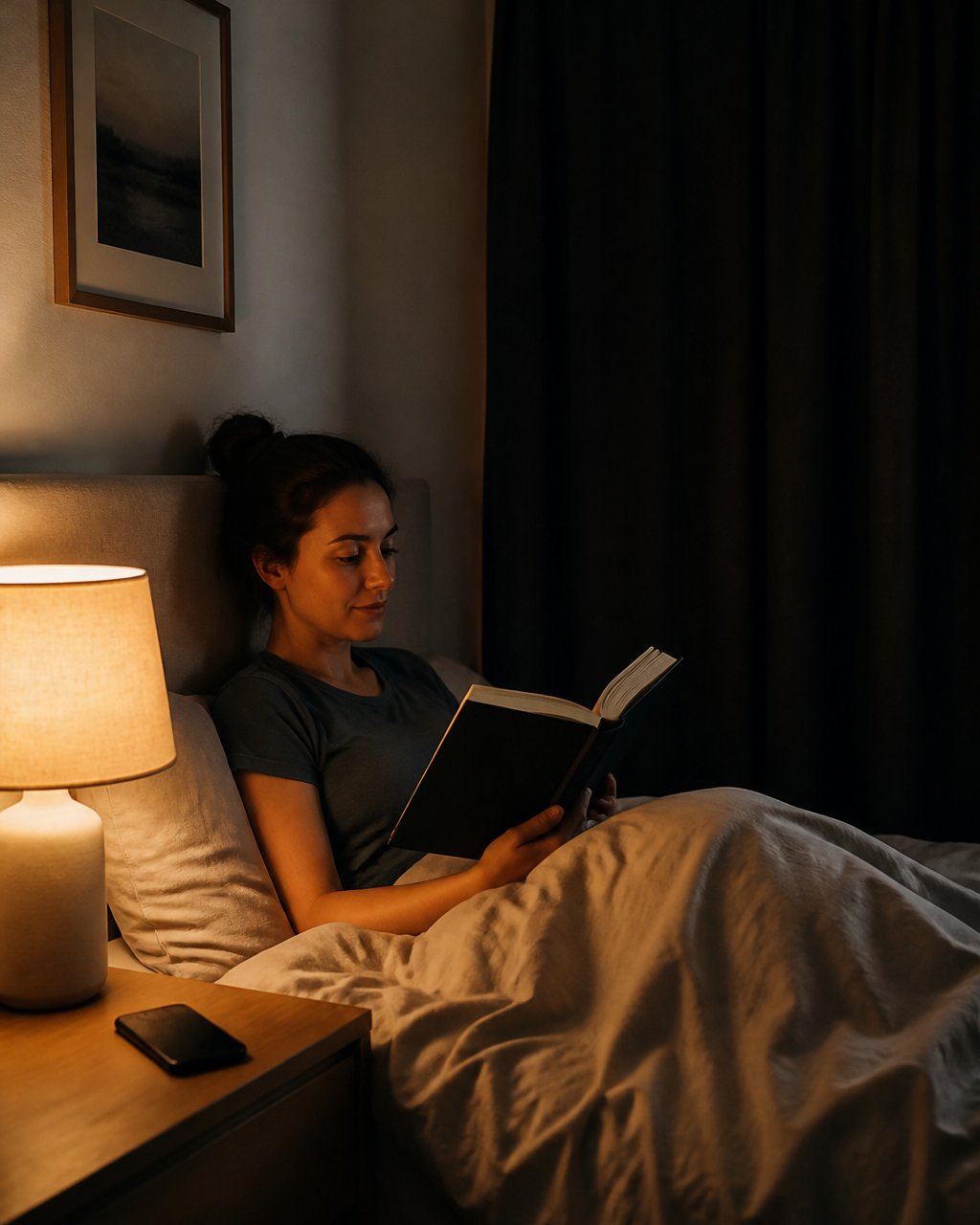
Start with the room. A quiet bedroom and a dark bedroom set the stage. A comfortable temperature matters more than most people think. Cooler rooms help your body drop into deeper sleep.
Then build a relaxing routine. A warm shower, soft music, or caffeine-free tea signals your body that wind-down has begun. Keep it short and repeatable.
Watch your intake:
- Caffeine timing: cut it off by early afternoon
- Alcohol: it helps you fall asleep and wrecks the back half of the night
- Nicotine: a stimulant that disrupts sleep onset and nighttime waking
- Heavy meals and excess fluids: keep both away from bedtime
The CDC sleep and sleep disorders guidance backs the same fundamentals: consistent schedules, a calm environment, and limiting stimulants.
How to Build a Consistent Sleep Schedule That Works
A consistent sleep schedule means going to bed and waking up at the same times every day, including weekends. That single habit does more for morning alertness than almost anything else, because it trains your body clock to expect sleep and wake at set points.
Here's how to build one that sticks:
- Pick a wake time you can keep seven days a week
- Count back the hours you need and set your bedtime
- Get bright light within an hour of waking
- Dim the lights an hour before bed
- Hold the schedule for two weeks before judging it
That last step matters. Your body clock adjusts slowly. Give it time before you decide it isn't working.
How to Stay Asleep Through the Night Without Waking Up
Staying asleep through the night comes down to removing the small disruptions that pull you into light sleep. Nighttime waking is often caused by temperature swings, late fluids, alcohol, stress, or a room that isn't dark enough. Fix those and most 3 a.m. wake-ups fade.
If you do wake up, keep the lights off and stay in bed. Checking your phone resets your brain and makes it harder to fall back asleep.
Stress is the sneaky one. Racing thoughts at 2 a.m. keep you in light sleep and wreck sleep efficiency, the share of your time in bed you actually spend asleep. A short relaxation practice before bed helps more than most people expect.
Choosing Sleep Support That Won't Leave You Groggy
The right sleep support helps you wind down without a next-day hangover. That's the whole game. Many traditional sleep aids knock you out and leave a residue that causes next-day drowsiness. The goal is natural sleep support that works with your body, not against it.
Next-day grogginess from sleep aids usually comes down to three things: how long the ingredient stays active (its half-life), how close to bedtime you take it, and how much you take. A long-acting sedative taken at 11 p.m. is still circulating at 7 a.m. A short-acting botanical taken an hour before bed is mostly cleared by morning. Same goal, very different morning.
This is where format and dose matter. Fast-acting, consistent products let you dial in an amount that helps you relax without overdoing it. Products built to avoid harsh comedowns and next-day heaviness fit that brief better than heavy sedatives.
A quick way to compare your options:
| Support Type | Onset | Next-Day Risk | Best For |
|---|---|---|---|
| Prescription sleep medication | Fast | Higher, especially longer-acting types | Short-term, doctor-guided use |
| Melatonin | Varies | Moderate for some, dose-dependent | Shifting your body clock |
| Calming botanicals (reishi, L-theanine) | Gentle | Lower | Winding down without heaviness |
| Heavy sedating aids | Fast | Higher | Not ideal for daily use |
Timing and dose rules that actually help
- Take calming support 30 to 60 minutes before bed, not right as you get into bed. You want the effect to peak as you're winding down, not after you're already asleep.
- Start with the lowest effective amount. More is not better with sedating ingredients; it's the fastest route to a foggy morning.
- Avoid stacking. Combining alcohol, melatonin, and a sedating supplement multiplies next-day risk.
- Check the half-life. If a product's effect lasts longer than your sleep window, you'll feel it at wake time.
At ZUUZ, our approach centers on a nanotech extraction method designed for faster, smoother absorption and more consistent effects. Our National Center for Complementary and Integrative Health overview of sleep supplements research aligns with a simple rule: start low, go slow, and pick products that are third-party lab tested.
[Our chill. Reishi Relax Gummies](/products/chill) combine reishi, L-theanine, lemon balm, passion flower, and valerian root in a blackberry gummy. They're built for winding down after a long day, not for knocking you out.

When to Talk to a Doctor About Persistent Grogginess
Talk to a doctor if grogginess lasts most of the morning for weeks, if you snore heavily or gasp in sleep, or if you're exhausted despite enough time in bed. Those signs point to issues a routine change won't fix, like sleep apnea or a medication side effect.
Bring a two-week sleep log. Note your bedtime, wake time, nighttime waking, and how you feel in the morning. That record helps a clinician spot patterns fast.
Persistent symptoms deserve a real evaluation, not another supplement. The American Academy of Sleep Medicine maintains a directory of accredited sleep centers if you need a specialist.
Conclusion
The real challenge isn't falling asleep. It's waking up clear, and that takes timing, routine, and the right support. If grogginess keeps winning your mornings, ZUUZ can help you wind down without the next-day fog. Our lab-tested formulas use nanotech extraction for fast, smooth, consistent effects, come in sugar-free options, and are backed by a 60-day money-back guarantee. Get started with ZUUZ and wake up feeling like yourself again.
Frequently Asked Questions
How can I improve sleep quality without feeling groggy in the morning?
Focus on sleep hygiene tips that protect your sleep drive and circadian rhythm: keep a consistent sleep schedule, limit caffeine after early afternoon, avoid alcohol close to bedtime, and make your bedroom dark and quiet. Also aim for a full 7 to 9 hours in bed so your body completes its sleep cycles. Waking mid-cycle or after too little sleep is a leading cause of morning grogginess, so timing matters as much as duration.
Can a consistent sleep schedule reduce morning grogginess?
Yes. Going to bed and waking at the same time every day, including weekends, trains your circadian rhythm to expect sleep at the right times. That makes it easier to fall asleep, stay asleep, and wake up feeling refreshed. A consistent sleep schedule also reduces sleep inertia, the groggy feeling that can last 15 to 60 minutes after waking. Keep changes gradual, shifting by 15 to 30 minutes at a time.
What are the most common morning grogginess causes?
The most common morning grogginess causes include waking in the middle of deep sleep, not getting enough total sleep, dehydration, caffeine or alcohol the night before, and an inconsistent sleep schedule. Sleep disorders like sleep apnea and certain medications can also play a role. If you wake up groggy most days despite 7 to 9 hours in bed, it's worth tracking your habits and talking to a doctor.
When should I talk to a doctor about poor sleep or morning grogginess?
Talk to a doctor if grogginess lasts for weeks, interferes with work or driving, or comes with loud snoring, gasping during sleep, or daytime sleepiness that doesn't improve with better habits. These can be signs of sleep apnea or another sleep disorder. A doctor can also review medications and supplements that may be affecting your morning alertness.