
Long Term Effects of Nightly THC Use on Sleep and Health
Last Updated: November 2, 2026
Quick Summary
Nightly THC use is linked to poorer objective sleep quality, disrupted slow-wave sleep, and greater nocturnal wakefulness, even though many users report feeling helped at first. Over months, tolerance and dependence can develop, so sleep without cannabis may eventually feel worse than before use began.
- A 2026 cohort study of 1,266 middle-aged adults linked greater lifetime cannabis exposure to poorer objective sleep quality.
- Long-term daily cannabis use was associated with greater nocturnal wakefulness in a 2026 study in SLEEP.
- THC suppresses REM sleep during use, so stopping can trigger rebound insomnia and vivid dreams within 24 to 72 hours.
- Nightly use leaves less time between doses, making tolerance and dependence more likely than with weekend use.
- By roughly week six off THC, many regular users report sleep at or near their pre-cannabis baseline.
Table of Contents
- What Research Shows About Nightly THC Use and Sleep
- How Cannabis and Sleep Quality Change With Regular Use
- THC Tolerance and Dependence: When Nightly Use Stops Working
- Cannabis Withdrawal and Sleep: What Happens When You Stop
- Dose, Potency, and Route: Why Not All Nightly Use Is the Same
- Long-Term Effects of Marijuana on Adults: Memory, Mood, and Mental Health
- How Strong Is the Evidence, and Who Faces Greater Risk
- Choosing a Lower-Risk Evening Routine With ZUUZ
- Frequently Asked Questions
What Research Shows About Nightly THC Use and Sleep
Nightly THC use is the practice of consuming cannabis, usually as an edible or a vape, most nights of the week with the specific goal of falling asleep faster. A 2026 cohort study of 1,266 middle-aged adults from Northwestern University researchers found that greater lifetime cannabis exposure was associated with poorer objective sleep quality, measured in a lab rather than self-reported.
That gap between how people feel about cannabis and how their sleep actually measures is the heart of this topic. At ZUUZ, we sell THC edibles, so we have every reason to be enthusiastic about the category.
How Cannabis and Sleep Quality Change With Regular Use
The honest answer is that cannabis and sleep quality interact differently at week one than at year three. Early on, many users report faster sleep onset and a pleasant drowsiness. Over months of regular use, the picture shifts, and the shift is where the long term effects of nightly thc use start to show.
Sleep Architecture, Slow-Wave Sleep, and REM
Sleep architecture is the structure of a night's sleep across its stages, including light sleep, slow-wave sleep, and REM. THC appears to disturb that structure rather than improve it. As one researcher quoted in University of Texas at Dallas coverage put it:
"Typically, long-term cannabis use impacts slow-wave sleep which, outside the context of cannabis, affects hippocampal function."
Slow-wave sleep is the deep stage tied to physical restoration and memory consolidation. Hippocampal function, in turn, underpins how well you form and recall memories. Losing depth in that stage is not a cosmetic problem.
Nocturnal Wakefulness and Self-Reported Sleep
Nocturnal wakefulness means time spent awake during the night after sleep begins. A 2026 study of sleep-clinic patients published in the journal SLEEP associated long-term daily cannabis use with greater nocturnal wakefulness, and most participants already had moderate-to-severe sleep-related conditions.
Self-reported sleep tells a messier story. An American Academy of Sleep Medicine survey found roughly one-third of adults said marijuana improved their sleep slightly or significantly, while 19% reported a negative effect. For a closer look at how the two cannabinoids differ, our THC vs CBD sleep quality comparison breaks down the mechanisms.
Here is how regular cannabis use shifts sleep quality over time, according to the research cited.
| Measure | Finding | Source |
|---|---|---|
| Objective sleep quality | Greater lifetime cannabis exposure linked to poorer objective sleep | 2026 cohort study, 1,266 middle-aged adults |
| Slow-wave sleep | Long-term cannabis use impacts slow-wave sleep | University of Texas at Dallas researcher |
| Nocturnal wakefulness | Long-term daily use linked to greater nocturnal wakefulness | 2026 study in SLEEP |
| Self-reported sleep | About one-third of adults said marijuana improved sleep | American Academy of Sleep Medicine survey |
| Negative effect | 19% reported a negative effect on sleep | American Academy of Sleep Medicine survey |
THC Tolerance and Dependence: When Nightly Use Stops Working
THC tolerance and dependence are the two mechanisms that quietly convert an occasional sleep aid into a nightly requirement. Tolerance means the same dose produces less effect over time, so the dose creeps up. Dependence means your body has adapted to the presence of THC and reacts when it is absent.
The progression is predictable enough to describe plainly:
- Weeks 1-4: Sleep onset feels easier, dreams may fade because THC suppresses REM.
- Months 1-6: The dose that worked at first feels weaker; users often increase potency or frequency.
- Beyond six months: Sleep without cannabis can feel worse than it did before use began.
That third stage is the trap. A 2020 review by E. A. Winiger and colleagues in Cannabis Use and Sleep: Expectations, Outcomes, and the Role of Age describes how expecting cannabis to aid sleep may itself drive longer-term use, which can then produce negative sleep effects.
Cannabis Withdrawal and Sleep: What Happens When You Stop
Cannabis withdrawal and sleep disruption arrive together for most heavy users who quit, and the sleep piece is usually the most stubborn. The American Academy of Sleep Medicine lists sleep disruption, daytime sleepiness, and physical dependence among the recognized risks of regular marijuana use. What that looks like night by night is where most guides stay vague, so here is the progression clinicians commonly describe, with the caveat that individual experiences vary widely.
The First Week: Rebound Insomnia and REM Rebound
Within 24 to 72 hours of stopping nightly THC, most heavy users notice the first wave: difficulty falling asleep, fragmented sleep, night sweats, and irritability. The mechanism is straightforward.
Watch out: if you have been using nightly for years and stop abruptly, the first week can feel like proof that you "need" it. That feeling is withdrawal, not a permanent verdict on your sleep.
Weeks Two Through Four: Gradual Improvement
For most people, the acute phase eases over the second and third week. Sleep onset gets easier, night sweats fade, and the dream intensity settles. This is also when daytime irritability and low mood, if they appear, tend to peak and then decline. A common pattern is two steps forward and one back: a good night followed by a worse one, which can be discouraging but is normal.
Beyond One Month: Return to Baseline and the Honest Caveat
By roughly week six, many regular users report sleep at or near their pre-cannabis baseline. The caveat is that "baseline" may itself have been poor sleep, which is often why nightly use started in the first place. That is the loop worth naming: untreated insomnia drives use, use creates dependence, and stopping temporarily worsens the original problem before it improves.
Tapering Versus Stopping Cold
Readers considering a change in their use may wish to discuss a tapering plan with a healthcare provider.
What the Evidence Does and Does Not Show
Cannabis withdrawal is discussed in the clinical literature, and sleep disruption is commonly described as one of its features. What remains uncertain is how long it lasts for any given person and how much of the sleep complaint is withdrawal versus the return of an untreated sleep disorder. That uncertainty is not a reason to dismiss the experience; it is a reason to treat the first month as a transition to be managed rather than a verdict to be feared.
Dose, Potency, and Route: Why Not All Nightly Use Is the Same
Not all nightly use carries the same risk profile. Dose, potency, and route of administration change both the experience and the long-term trajectory, which is why lumping all cannabis use together produces misleading conclusions. Because dose and route shape cannabis’s effects, separating THC’s sleep risks from CBD’s use for pain calls for a cbd dosage guide grounded in the same attention to individual differences.
Dose: The Difference Between a Sleep Aid and a Problem
Low doses are more forgiving; high doses are more likely to produce anxiety, tachycardia, and next-day fog. Dose matters: higher doses are more likely to produce anxiety or racing thoughts for some people. A common pattern is dose creep, where the amount that once worked stops working and the user increases rather than pauses.
Potency: Why Today's Products Are Not What Was Studied
Today's concentrates and vape products deliver far more THC per hit than the flower studied in older research. Products vary widely in THC content, and long-term data may not cover every exposure level. Higher potency also raises the risk of anxiety, paranoia, and dependence, which are the effects most likely to undermine sleep over time rather than support it.
Route: Inhaled Versus Edible Changes the Overnight Curve
Smoked and vaped THC peaks fast and fades fast; edibles arrive later and last longer, which affects overnight awakenings. An inhaled dose taken at bedtime clears within a few hours, so it may help with sleep onset but wear off before morning, contributing to the 3 a.m. wake-up many nightly users describe. An edible taken too late can still be active at wake time, producing next-day grogginess and a hungover feel.
THC-to-CBD Composition
Products differ in their THC-to-CBD ratio, and the research on how CBD interacts with THC for sleep is still limited. A high-THC, low-CBD product is not the same exposure as a balanced one, and the research rarely separates them. For a closer look at how the two cannabinoids differ, our THC vs CBD sleep quality comparison breaks down the mechanisms.
Frequency: Nightly Is Its Own Category
Nightly use sits in a different risk category than weekend use, and the research increasingly separates the two. The key distinction is that nightly use leaves less time between doses, and tolerance and dependence are more likely to develop under that pattern. That is why the long term effects of nightly thc use are not simply the effects of cannabis multiplied by frequency; the nightly pattern itself is the risk factor.
Long-Term Effects of Marijuana on Adults: Memory, Mood, and Mental Health
The long-term effects of marijuana on adults extend well beyond sleep. A 2014 review by National Institute on Drug Abuse researchers, published in PMC, noted that 6.5% of grade 12 students used marijuana daily or near-daily, a pattern that matters because adolescent-onset use is associated with different long-term outcomes than adult-onset use.
Mood and mental health deserve their own mention. Anxiety and depression risks are elevated in heavy users, though causation is genuinely hard to untangle: people often use cannabis to manage symptoms that then persist or worsen. Psychosis is among the serious concerns discussed in the research, particularly for people with certain vulnerabilities.
How Strong Is the Evidence, and Who Faces Greater Risk
The evidence on nightly THC use is stronger on association than on causation, and that distinction matters. Most human studies are observational: they compare people who use cannabis with people who do not, which cannot fully separate cannabis from everything else that differs between those groups.
Some groups may face greater risk:
- People with a personal or family history of psychosis or bipolar disorder
- Adults using high-potency products daily for years
- Anyone with existing sleep disorders such as sleep apnea, where cannabis can mask symptoms
For everyone else, the calculus is more about dose, frequency, and honesty with yourself about whether it is still working.
Choosing a Lower-Risk Evening Routine With ZUUZ
A lower-risk evening routine means treating THC as one tool among several, not the foundation of your sleep. That starts with the basics: consistent wake times, dim light in the hour before bed, caffeine cut off by early afternoon, and a cool, dark room.
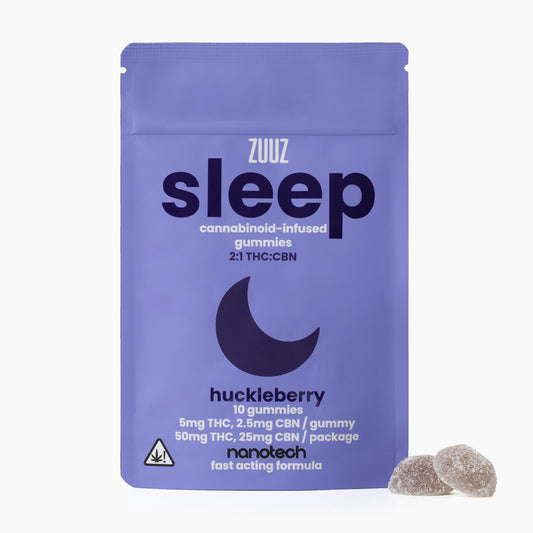
When you do want a product, choose one you can dose precisely and trust. That is where ZUUZ fits.
Frequently Asked Questions
Can using THC every night affect sleep quality over time?
Research suggests it can. Research suggests that greater lifetime cannabis exposure is associated with poorer objective sleep quality, and that long-term daily use is linked to greater nocturnal wakefulness. Self-reported effects are mixed, with some adults reporting improved sleep and others reporting worse sleep. Nightly use is not the same as occasional use, and the evidence does not show that THC reliably improves sleep long term.
Can nightly THC use lead to tolerance or dependence?
Yes, that is a recognized risk. THC tolerance and dependence develop as the body adapts to repeated exposure, which is why some nightly users find the same dose stops producing the same effect and start using more. Physical dependence and withdrawal symptoms, including sleep disruption, are recognized concerns with regular marijuana use. If you need a higher dose to get the same result, or you use it to avoid feeling worse, that is worth discussing with a healthcare provider.
What happens to sleep when you stop using THC?
Cannabis withdrawal and sleep are closely linked. Withdrawal symptoms from regular marijuana use can include sleep disruption, along with daytime sleepiness and irritability. Published research has examined how expectations that cannabis aids sleep may relate to longer-term use. If you stop after nightly use, expect a transition period and give your sleep schedule a few weeks to reset before judging the results.
What are the long-term effects of marijuana on adults?
The long-term effects of marijuana on adults include possible changes to sleep quality, memory and hippocampal function, attention, and mental health risks such as anxiety and depression. Some research suggests that long-term cannabis use may affect slow-wave sleep, which is linked to hippocampal function. Daytime sleepiness, impaired driving performance, and physical dependence are commonly discussed risks of regular use. Evidence quality varies, and most findings show association rather than proven causation.
The hardest part of nightly THC use is being honest with yourself about whether it is still helping. If you are ready to build an evening routine you can actually trust, get started with ZUUZ and find a dose and product that supports rest without the guesswork.