
Consistent, Reliable Effects for Functional Beverages
Last Updated: October 22, 2026
Quick Summary
Consistent, reliable effects for functional beverages come from controlling four variables: ingredient dosing, absorption, serving size, and storage. Brands achieve this through written ingredient specifications, defined dosing tolerances, lot-matched certificates of analysis, third-party lab testing of every batch, and stability testing that protects potency through shelf life.
- Most products lose consistency in ingredient dosing, absorption, serving control, and storage.
- A certificate of analysis without a batch number you can match to your package is decoration.
- Third-party lab testing should prove the product matches the label, contains nothing harmful, and matches the previous batch.
- Pre-measured formats like single-serve cans and pre-dosed gummies remove serving-size guesswork.
- Check for a lot-matched CoA, independent lab testing, clear dose per serving, a stability-backed best-by date, and storage guidance.
Table of Contents
- Why Consistent, Reliable Effects for Functional Beverages Are So Hard to Deliver
- How to Read a Certificate of Analysis Before You Buy
- What Third-Party Lab Testing for Beverages Should Prove
- Dose, Bioavailability, and Why the Same Product Hits People Differently
- Functional Beverage Serving Size: The Variable Most People Ignore
- Functional Beverage Shelf Life and Storage: Protecting Potency After Purchase
- Batch Consistency and Formulation Choices That Hold Up in Practice
- What to Look For Before You Buy
- Frequently Asked Questions
Why Consistent, Reliable Effects for Functional Beverages Are So Hard to Deliver
Getting consistent, reliable effects for functional beverages is harder than it looks. A drink can taste great and still deliver a different experience every time.
The category is growing fast. Future Market Insights forecasts the global market climbing from USD 192.8 billion in 2026 to USD 326.5 billion by 2036. Meanwhile, the National Restaurant Association lists functional beverages among its top beverage trends for 2026. Demand is not the issue. Consistency is.
At ZUUZ, we build products around one idea: you should know how you will feel before you open the package. Here is where consistency breaks and how to spot a product that holds up.
Where Most Products Lose Consistency
Most products lose consistency in four places: ingredient dosing, absorption, serving control, and storage. Any one turns a reliable formula into a guessing game.
First, active ingredients vary. A botanical extract is not one compound; potency shifts with harvest, supplier, and extraction method.
Second, bioavailability varies. Two drinks with the same label dose can land differently.
Third, serving size varies. A splash more or less changes the dose.
Fourth, storage varies.
The Brewers Association notes that functional-beverage development can involve substances that react differently from traditional ingredients.
How to Read a Certificate of Analysis Before You Buy
A certificate of analysis, or CoA, is a lab document reporting what a batch actually contains, the most useful proof a functional beverage brand can publish.
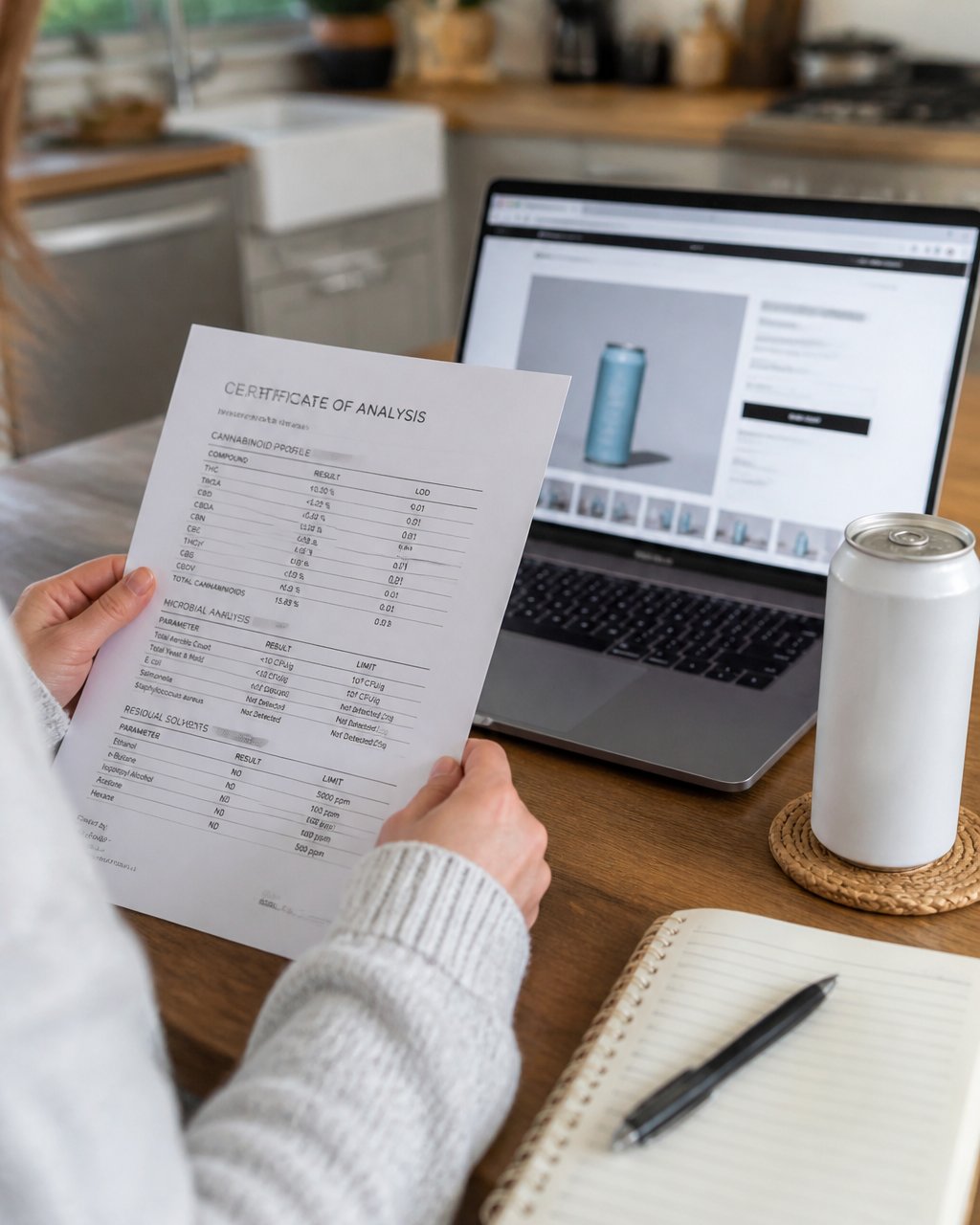
Most shoppers never open one. That is a mistake. A CoA tells you whether the label matches the liquid.
The Fields That Actually Matter
Skip the cover page and go straight to these fields:
- Batch or lot number that matches your package
- Active ingredient assay showing measured potency, not just "present"
- Testing lab name and accreditation
A CoA without a batch number is decoration. A CoA with a batch number you can match to your can is proof.
What Third-Party Lab Testing for Beverages Should Prove
Third-party lab testing for beverages should prove three things: the product contains what the label claims, contains nothing harmful, and matches the previous batch.
That third point is the one most brands skip. Anyone can test one perfect batch. Consistency means testing every batch and publishing the results.
Look for a lab independent of the manufacturer, in-house testing is not third-party verification, and accredited to a recognized standard.
What should the report cover?
- Potency of each active ingredient
- Heavy metals such as lead and arsenic
- Microbial safety, including mold and bacteria
If a brand says "lab tested" but shows no report, treat that as a marketing line, not a quality claim.
Dose, Bioavailability, and Why the Same Product Hits People Differently
Dose and bioavailability explain most of the variation people feel from the same product. Dose is how much you take; bioavailability is how much reaches your bloodstream in a usable form.
A drink can list 10 mg of an ingredient and deliver far less.
But the bigger problem sits upstream: most labels do not tell you whether the dose was chosen from evidence or from a flavor-and-cost spreadsheet.
Start With the Evidence, Not the Label
A clinically supported dose is the amount that produced a measurable effect in a controlled study, not the amount that fits the flavor profile or price target. For many ingredients, the gap is wide.
A practical way to check:
- Find the studied form. Research on one form of an ingredient does not automatically transfer to another. A study on a specific branded extract, a specific probiotic strain, or a specific chelated mineral applies to that form, not to the category.
- Match the dose and the delivery route. A dose studied in a capsule taken with food may not behave the same in a carbonated, low-pH beverage consumed on an empty stomach.
- Check the study size and endpoint. A small pilot study measuring a biomarker is weaker evidence than a larger trial measuring a felt outcome.
If a brand cannot tell you the studied form and the studied dose behind its label number, treat the claim as marketing until proven otherwise.
The Beverage Matrix Changes Everything
A beverage is not a neutral delivery vehicle. Water activity, pH, temperature, minerals, and other actives all affect how an ingredient survives the can and how it is absorbed.
Common matrix effects to watch for:
- pH and acid stability. Some actives degrade quickly in acidic, carbonated environments. A formula that tests well in a neutral lab sample may lose potency in a low-pH finished drink.
- Solubility and suspension. Oils and lipophilic actives do not dissolve in water. Without emulsification or another delivery system, they can separate, settle, or coat the can, and the dose you pour is not the dose on the label.
- Interaction with other ingredients. Minerals can bind to other compounds and reduce absorption. Caffeine and other stimulants can mask or amplify perceived effects. Fiber and thickeners can slow gastric emptying and change timing.
This is where delivery technology matters. Breaking actives into far smaller particles, nanotech or micronized extraction, increases surface area, speeds dissolution, and smooths the absorption curve so the effect arrives faster and fades more gently.
A Simple Framework for Judging a Dose Claim
When you compare two products with the same active, ask:
- What form is it? Is the label specific enough to match to a studied ingredient?
- How much per serving? Is the amount disclosed, or hidden in a blend?
- How is it delivered? Is there a stated delivery system, or is it simply mixed in?
- What is the evidence? Does the brand cite the studied dose, or only the benefit?
A product that answers all four is making a verifiable dose claim. A product that answers none is making a wish.
Belief in a benefit drives repeat buying, and belief only survives if the effect shows up. Evidence-based dosing makes that happen on purpose.
Functional Beverage Serving Size: The Variable Most People Ignore
Functional beverage serving size is the variable most people ignore, and it is often why a product feels inconsistent.
Pour a little extra and you have changed the dose.
The fix is packaging that controls the serving for you. Pre-measured formats remove the guesswork.
- Single-serve cans lock the dose
- Pre-dosed gummies remove pouring error entirely
- Clear dosing instructions tell you what one serving actually is
If a product leaves serving size to your judgment, your results will vary. That is not your fault.
Functional Beverage Shelf Life and Storage: Protecting Potency After Purchase
Functional beverage shelf life and storage decide whether the product you bought in March works the same in August. Potency is not fixed at the factory. It decays.
Heat, light, and oxygen are the main threats. Sensitive actives like probiotics and some botanicals lose strength faster under those conditions. A can stored in a hot car is not the same product as one kept cool and dark.
What to check before you buy:
- A printed best-by date tied to stability testing
- Storage instructions on the label
- Packaging that blocks light, such as opaque cans
Batch Consistency and Formulation Choices That Hold Up in Practice
Batch consistency comes from control at every step: sourcing, dosing, mixing, filling, and testing. A formula is only as reliable as its weakest step, and the difference between achieving it and hoping for it is whether those controls are written down, measured, and repeated.
Lock the Specification Before You Lock the Formula
Consistency starts with a written ingredient specification, a document that defines what "acceptable" means for every incoming lot. A specification typically covers:
- Identity, the ingredient is what the supplier says it is
- Assay or potency range, the active content, with an acceptable minimum and maximum
- Marker compounds, the specific chemicals used to verify potency for botanical extracts
A botanical that varies 20% in potency between shipments will vary in the finished drink too. A tight specification with a tested assay range stops that variation at the door: lock a supplier and a specification, then test every incoming lot against it.
Set Dosing Tolerances and Measure Against Them
A label dose is a target, not a guarantee.
Define a tolerance as a percentage of the target dose and test finished product at multiple points in the run.
Automated mixing and filling reduce human error, but only if the setpoints are verified. Advanced filtration and precise processing keep the formula stable from run to run, provided process parameters are recorded and compared batch to batch.
Test Every Batch and Compare It to the Last
Every batch should get the same analytical checks, and results should be compared to the batch before it. Drift shows up early when you look for it.
A practical batch-testing protocol includes:
- Identity and potency of each active ingredient
- pH and water activity of the finished product
- Microbial safety, including mold and bacteria
Record every result against the lot number. A trend line across ten batches tells you more than any single certificate.
Design Stability Testing Around the Real Threats
Potency is not fixed at the factory. It decays. Stability testing is how you find out how fast, and under what conditions, before your customer does.
A practical stability protocol stresses the product under the conditions it will actually face:
- Heat, elevated temperature storage to accelerate degradation
- Light, exposure to UV and visible light, especially for clear packaging
- Oxygen, headspace oxygen and dissolved oxygen in the liquid
Test the finished product, not just the raw ingredient, because the matrix changes how an active behaves. Sensitive actives like probiotics and some botanicals lose strength faster under heat and light, so they need the tightest protection and the most frequent pull points.
The Sensory Trade-Off Nobody Talks About
Delivering a meaningful active dose often means adding ingredients that taste bitter, astringent, or metallic. Masking those notes without masking the active is one of the hardest formulation problems in the category.
Common trade-offs:
- Sweeteners and acids can cover bitterness but may change pH and destabilize sensitive actives
- Emulsifiers keep oils suspended but can affect mouthfeel and, in some cases, absorption
- Flavor systems can mask off-notes but may fade faster than the active, so the product tastes different late in shelf life
A formulation that holds up in practice balances all of these against the dose. That is why formulation and batch control cannot be separated: the choices that make the effect reliable are often the same choices that make the product harder to stabilize.
What to Look For Before You Buy
Before you buy any functional beverage, check five things: a lot-matched CoA, independent lab testing, a clear dose per serving, a stability-backed best-by date, and storage guidance. If a brand shows all five, you have real evidence. If it shows none, you have a label.
Here is the short version:
| What to Check | Why It Matters | Red Flag |
|---|---|---|
| Lot-matched CoA | Proves this batch matches the label | No batch number |
| Third-party lab report | Confirms purity and potency | "Lab tested" with no report |
| Dose per serving | Sets a predictable effect | Vague serving guidance |
| Best-by and stability data | Shows potency holds over time | No storage instructions |
| Batch-to-batch testing | Proves repeatability | Only one sample CoA |
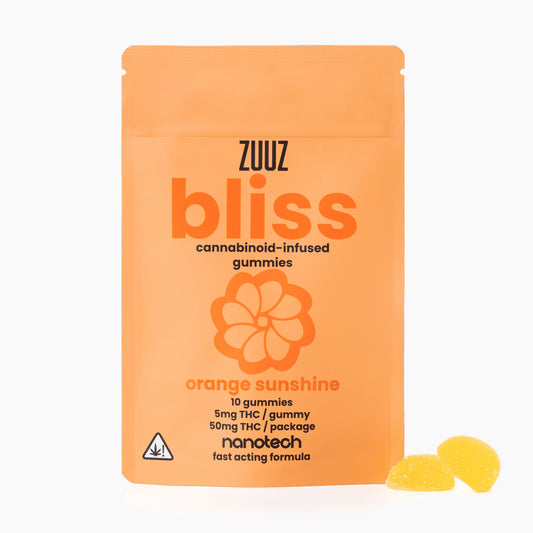
This is the standard we hold ourselves to at ZUUZ. Our Gummy Starter Pack uses 5 mg of fast-acting nanotech THC per gummy, with pre-measured servings that remove pouring error. Our Chill Reishi Relax Gummies pair reishi extract with L-theanine, lemon balm, passion flower, and valerian root for a calm, repeatable routine.


Both are science-backed and third-party lab tested, and both come with a 60-day money-back guarantee. Consistent, reliable effects for functional beverages start with proof you can check. That is the bar we build to.
Frequently Asked Questions
What makes the effects of a functional beverage consistent?
Consistency comes from three things working together: a precise, evidence-based dose of each active ingredient, a delivery method that absorbs predictably, and batch controls that keep potency within a tight range. A certificate of analysis from an independent lab confirms what is actually in the product. Serving size discipline matters too, since the same drink can feel very different at half a bottle versus a full one. When any of these steps is loose, effects vary from person to person and from bottle to bottle.
How can you verify the ingredients in a functional beverage?
Ask for a certificate of analysis from an accredited third-party lab, not an in-house report. Check that the document matches the lot number on your package, lists the specific actives and their measured amounts, and includes contaminant screening. Third-party lab testing for beverages should also cover heavy metals, microbials, and residual solvents where relevant. If a brand cannot produce a lot-specific report on request, treat the ingredient list as a marketing claim rather than a verified fact.
How do serving size and ingredient concentration affect a beverage's effects?
Functional beverage serving size sets the dose you actually receive. A 12-ounce can and a 2-ounce shot with the same concentration deliver very different amounts of active ingredients. Concentration also shifts with storage and shaking, since some actives settle or degrade. Start with the label's stated serving, measure it, and change only one variable at a time. People who feel inconsistent effects often discover they were pouring slightly different amounts each time.
How should functional beverages be stored to preserve quality?
Keep beverages cool, dark, and sealed. Heat and light break down many active ingredients, and oxygen speeds degradation once a container is opened. Check the label for refrigeration requirements and honor the printed shelf life rather than guessing. For gummy and tart formats, reseal the package tightly and keep it away from humidity. If a product changes color, texture, or smell before its date, discard it, because potency and flavor both degrade together.
The hardest part of buying functional beverages is trusting that today's can works like last week's. We built ZUUZ to close that gap, with nanotech extraction for faster, smoother absorption, third-party lab testing on every formula, and pre-measured servings that take the guesswork out of dosing. Start with the Gummy Starter Pack or Chill Reishi Relax Gummies, and see what a predictable effect actually feels like.