
Sleep Better vs Stress Less: Verified Potency Guide
Table of Contents
- Sleep Better vs Stress Less: What Verified Potency Actually Means
- Ingredient-by-Ingredient Dose Comparison: Sleep Better vs Stress Less
- How to Read a Cannabis Lab Report Before You Buy
- What a THC Edible Certificate of Analysis Verifies
- THC Gummy Dosage Consistency: Why It Matters for Sleep and Stress
- How Long Do THC Edibles Last? Timing Your Sleep and Stress Support
- Safety, Interactions, and Who Should Choose Each Option
- Frequently Asked Questions
Last Updated: October 21, 2026
Sleep Better vs Stress Less: What Verified Potency Actually Means
Verified potency is the practice of confirming, through independent third-party laboratory testing, that an edible contains the amount of active cannabinoids stated on its label.
A gummy that claims 10 mg and delivers 6 mg will not help you sleep or unwind consistently. The two goals pull in different directions: sleep support leans on ingredients that slow the nervous system, while stress support leans on compounds that soften the body's response to pressure.
Here is what most buying guides get wrong. They compare marketing claims instead of lab data. Below, we walk through dose-by-dose comparisons, how to read a certificate of analysis, and how to match a product to your actual need.
Ingredient-by-Ingredient Dose Comparison: Sleep Better vs Stress Less
Dose is where sleep and stress formulas diverge most, and it is the one thing a marketing page cannot fake. A sleep product typically pairs magnesium and L-theanine with chamomile, while a stress product leans on adaptogens such as ashwagandha to support the body's stress response.
The table below shows the dose ranges most commonly studied in human research, so you can judge whether a label is in the conversation or just borrowing the ingredient name. These are evidence-informed ranges, not recommendations for any individual.
| Ingredient | Typical studied dose | What the evidence supports | Label red flags |
|---|---|---|---|
| Magnesium glycinate | Roughly 200-400 mg elemental magnesium per day | Muscle relaxation and general calming; sleep evidence is mixed and strongest in people with low intake | Listing "magnesium blend" without elemental content; doses under 100 mg elemental |
| L-theanine | About 100-200 mg per dose, sometimes up to 400 mg | Calm alertness without sedation; modest sleep-quality effects in small trials | Single-digit milligram inclusions used only for label appeal |
| Chamomile extract | Standardized extracts in the low hundreds of milligrams | Traditional calming botanical; human sleep trials are small and short | Whole-flower powder with no standardization stated |
| Ashwagandha (root extract) | Roughly 250-600 mg of a standardized root extract per day | Gradual stress and cortisol support over weeks, not acute sedation | Proprietary blends that hide the extract amount |
| THC (in an edible) | State-regulated serving sizes are typically 5-10 mg per serving | Predictable onset and duration when dose is consistent | No per-serving cannabinoid figure on the label |
Sleep-Focused Ingredients: Magnesium, L-Theanine, and Chamomile
Magnesium supports muscle relaxation and is commonly sold as magnesium glycinate, a form chosen for gentler digestion.
L-theanine is an amino acid found in tea that many people use for calm without drowsiness. The studied range sits in the hundreds of milligrams, so a formula listing 5 mg is decorative.
Chamomile is a traditional calming botanical, usually included as an extract or tea.
Stress-Focused Ingredients: Adaptogens and Cortisol Support
Adaptogens are botanicals marketed to help the body manage stress over time rather than in a single dose. Ashwagandha is the best-known example, and formulas built around it usually target cortisol, the hormone tied to the body's stress response.
The honest caveat is timing. Adaptogens work gradually, so they suit a daily routine rather than a fast unwind. If you want something for acute stress in the evening, an adaptogen-forward formula may feel underwhelming at first.
Where the Two Formulas Overlap
L-theanine appears in both categories, which is why combined formulas exist. The overlap is real but narrow: L-theanine handles the near-term calm, while adaptogens and magnesium do their work over days and weeks. A combined product is only worth it if both halves are dosed at meaningful levels; otherwise you are paying for two underdosed ingredients instead of one.
| Formula Type | Lead Ingredients | Best For | Onset Expectation |
|---|---|---|---|
| Sleep-focused | Magnesium glycinate, L-theanine, chamomile | Sleep onset, winding down | Same evening |
| Stress-focused | Ashwagandha, adaptogen blends | Daily stress support | Weeks of consistent use |
| Combined | L-theanine plus adaptogens | Evening calm and long-term stress | Mixed |
How to Read a Cannabis Lab Report Before You Buy
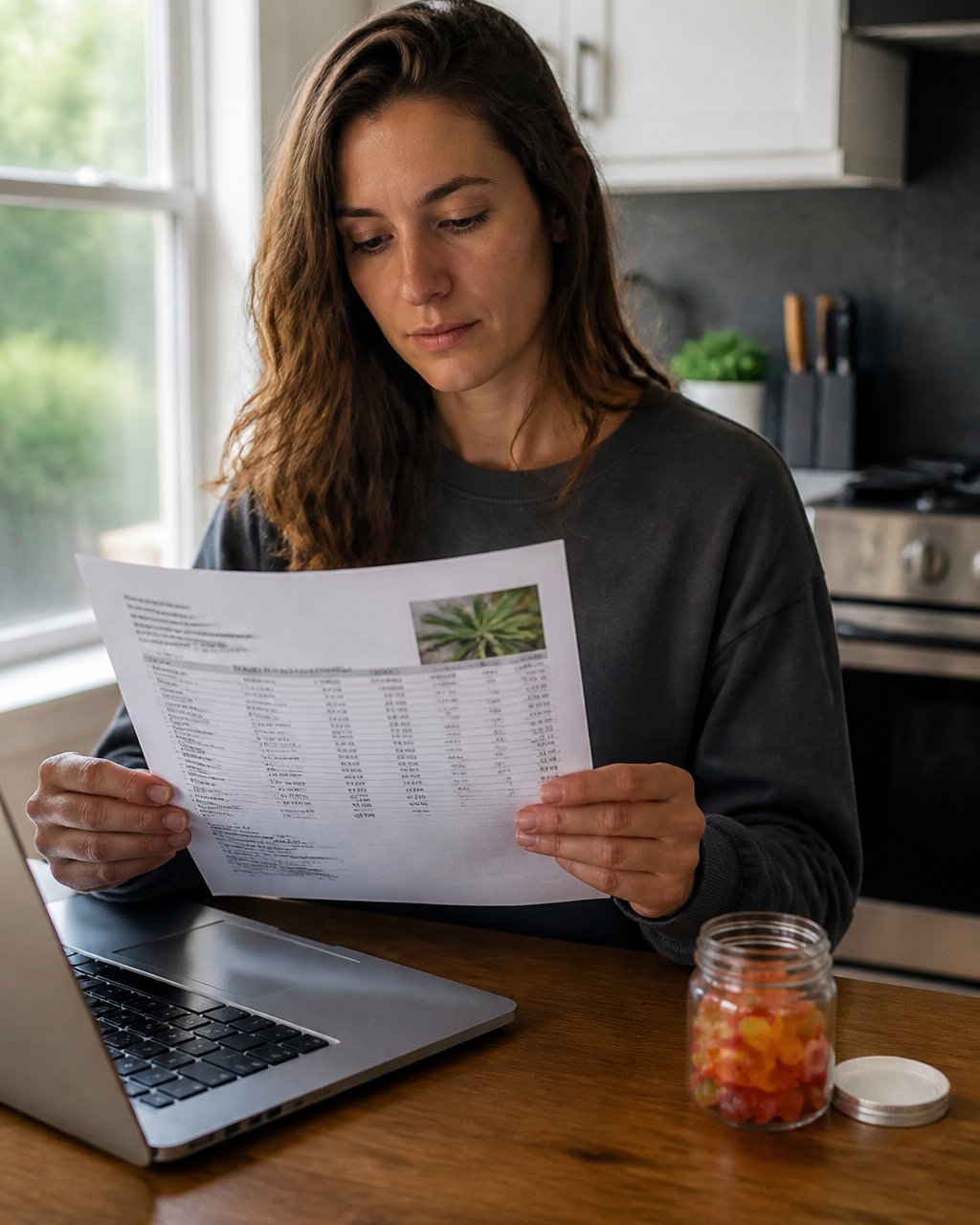
Start with the cannabinoid panel, then check the batch number and test date. A cannabis lab report, also called a certificate of analysis, is an independent laboratory document listing what a specific batch actually contains.
Work through it in this order:
- Match the batch number on the report to the number on your package. A report for a different batch proves nothing.
- Check the test date. Cannabinoid content can shift over time, so an old report is weak evidence.
- Read the cannabinoid panel for THC and CBD amounts per serving, not per container.
- Look for contaminant screening covering pesticides, heavy metals, mold, and residual solvents.
- Confirm the lab is independent of the brand. In-house testing is not verification.
What a THC Edible Certificate of Analysis Verifies
A THC edible certificate of analysis verifies three things: cannabinoid content per serving, the absence of harmful contaminants, and, on better reports, consistency across a production batch.
That distinction matters when you compare a sleep product with a stress product. Two formulas can both pass testing and still suit completely different people.
What most shoppers miss is the potency variance line. Some reports show how much individual servings varied within a batch.
THC Gummy Dosage Consistency: Why It Matters for Sleep and Stress
Dosage consistency decides whether an edible is a tool or a gamble.
Inconsistent dosing creates two problems. Take too much and you get the anxiety and heavy comedown that give edibles a bad reputation.
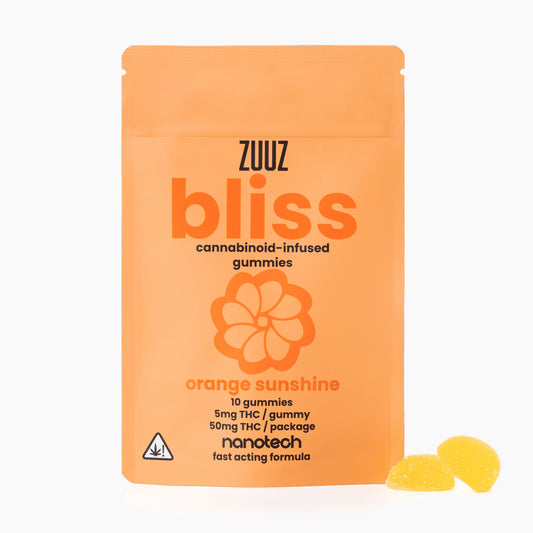
This is where manufacturing method earns its keep. ZUUZ uses a nanotech extraction method designed for faster, smoother absorption, and every batch is third-party lab tested so the label matches the gummy.
How Long Do THC Edibles Last? Timing Your Sleep and Stress Support
THC edibles typically begin taking effect within 30 to 90 minutes and can last several hours, though the exact window varies by dose, formula, metabolism, and whether you ate beforehand.
For sleep support, take your dose 60 to 90 minutes before bed. That window lets the effect arrive as you are winding down rather than after you have already fallen asleep.
If you are new to edibles, start low and wait a full two hours before taking more.
Safety, Interactions, and Who Should Choose Each Option
Most guides stop at "talk to your doctor." That is good advice, but it is not guidance. The useful version separates the decision into two questions: which formula fits your pattern, and what could go wrong with your specific health profile.
Who Should Choose Sleep Better
Choose a sleep-focused formula if your main complaint is falling asleep or staying asleep, and your evenings are otherwise calm. Signs this fits:
- You lie awake with a quiet mind but a body that will not settle.
- You wake in the middle of the night and struggle to drift back.
- Your stress is manageable during the day and spikes mainly at bedtime.
A sleep formula is the better match when the problem is timing and physical wind-down, not a constant background of tension.
Who Should Choose Stress Less
Choose a stress-focused formula if your evenings are dominated by tension and a racing mind, and sleep is a downstream casualty. Signs this fits:
- Your mind is loudest at night, replaying the day.
- You feel wired but tired, with a clenched jaw or tight shoulders.
- Your sleep improves on lower-stress days without any product at all.
A stress formula is the better match when the root issue is the stress response itself, because calming that response tends to improve sleep as a side effect.
When the Answer Is Neither
If stress or insomnia is persistent, treat any edible as support, not treatment. A product that masks a sleep problem without addressing it can delay the care that would actually help. Persistent insomnia, chronic anxiety, and daytime impairment are reasons to see a clinician first, not reasons to increase a dose.
Interactions and Contraindications to Take Seriously
THC can interact with prescription medications, including sedatives and blood thinners, and it can affect coordination and alertness. The same caution applies to the non-THC ingredients: magnesium can interfere with certain antibiotics and thyroid medications, ashwagandha is generally not recommended during pregnancy or for people with thyroid or autoimmune conditions without clinical guidance, and sedating botanicals can compound the effects of sleep medications and alcohol.
A practical checklist before you buy:
- List every prescription, over-the-counter drug, and supplement you take, then review it with a pharmacist or clinician.
- Flag any condition involving the liver, thyroid, or mental health, and any pregnancy or breastfeeding.
- Start with the lowest available serving and wait a full two hours before considering more.
- Never drive or operate machinery after consuming, and do not combine with alcohol.
- Store edibles locked away from children and pets, and follow the labeling and age requirements that apply where you live.
ZUUZ backs its formulas with a 60-day money-back guarantee, so you can test consistency against your own routine without carrying all the risk.
Frequently Asked Questions
How can I compare sleep-focused and stress-focused THC gummies?
Start with the certificate of analysis. A sleep-focused formula typically lists magnesium glycinate, L-theanine, and chamomile, while a stress-focused one leans on adaptogens like ashwagandha. Check that each active ingredient has a stated dose and that the COA shows verified potency from an independent lab. Then match the formula to your goal: winding down for restful sleep versus managing daytime acute stress. ZUUZ publishes third-party lab results so you can confirm what is actually in each product before choosing.
What does a third-party lab report verify for THC gummies?
A third-party lab report confirms cannabinoid potency (THC and CBD levels per serving), checks for contaminants like pesticides, heavy metals, and mold, and verifies that the product matches its label. For edible buyers, the potency column is the most important: it tells you whether each gummy delivers a consistent dose. Look for the lab name, testing date, batch number, and results that fall within a reasonable margin of the stated label claim. Verified potency means the numbers are independently confirmed, not just printed on the package.
How long can the effects of THC edibles last?
Edible effects typically begin within 30 to 90 minutes and can last 4 to 8 hours, depending on dose, tolerance, and formulation. Nanotech extraction, which ZUUZ uses, is designed to speed absorption and produce a smoother onset. For sleep support, take your edible 60 to 90 minutes before bed so the effects peak as you wind down. For stress support, a lower dose earlier in the evening lets you gauge how your body responds before committing to a full serving.
How can I tell whether a THC edible is consistently dosed?
Consistency shows up in two places: the certificate of analysis and your own experience across batches. A reliable COA lists potency per batch with tight variance, not a single number repeated across every product. Look for batch-specific testing dates and results that stay close to the label claim. ZUUZ's nanotech extraction is designed to deliver uniform dosing, and the brand's third-party testing lets you verify each batch. If a product has no batch-level COA, treat its dosage claims as unverified.
Matching a product to your sleep or stress pattern is only half the work; the other half is finding a brand whose labels you can trust. ZUUZ builds both sides of that equation with third-party lab testing on every batch, a nanotech extraction method for smoother absorption, and sugar-free options for anyone watching their intake. Get started with ZUUZ and build an evening routine you can actually rely on.