
Low Glycemic THC Edibles for Weight Loss: What to Know
Last Updated: October 23, 2026
Quick Summary
No low glycemic THC edibles are proven to cause weight loss, and THC is more likely to increase appetite than suppress it. Judge these products on total carbs per serving, sugar alcohol type, THC milligrams per piece, and a batch-level lab certificate rather than front-label claims.
- Glycemic index only applies to carbohydrate-containing foods, so low glycemic claims on sugar-free gummies mean little.
- Divide total carbs by servings to get carbs per piece, since front labels can mislead.
- Maltitol has a higher glycemic impact than erythritol and can cause bloating above roughly 10 to 20 g.
- Edible effects begin within 30 to 90 minutes, so wait at least two hours before redosing.
- Ask the brand for the batch certificate of analysis before you buy, not after.
Table of Contents
- Low Glycemic THC Edibles for Weight Loss: What the Evidence Shows
- How to Judge Low-Sugar THC Gummies Before You Buy
- THC Gummies and Appetite: What the Research Actually Suggests
- THC Edibles and Blood Sugar: Glycemic Index vs. Total Carbohydrate
- How Long THC Edibles Last and Why Dosing Comes First
- Mistakes to Avoid When Choosing Low Glycemic THC Edibles
- Frequently Asked Questions
Low Glycemic THC Edibles for Weight Loss: What the Evidence Shows
Search "low glycemic THC edibles" and you'll find plenty of sellers promising appetite control and weight loss. A review of cannabis and obesity research found that pure THCV reduced food intake and body weight in mice at doses as low as 3 mg/kg (Cannabis sativa as a Treatment for Obesity review(https://pmc.ncbi.nlm.nih.gov/articles/PMC9070748/)).
Below, we'll walk through what low glycemic actually means on a label, how THC affects appetite and blood sugar, and the mistakes that cost buyers money.
What Low Glycemic Actually Means on a THC Edible Label
Glycemic index is a ranking of how quickly a carbohydrate-containing food raises blood glucose compared with a reference food. A low glycemic edible uses sweeteners or formulations that produce a smaller, slower glucose response than a sugar-sweetened one.
Here's the catch most labels gloss over: glycemic index only applies to foods containing carbohydrate.
If sugar crashes are your specific concern, a guide to avoiding sugar crashes from edibles covers the practical side of timing and dose.
How to Judge Low-Sugar THC Gummies Before You Buy
Start with the nutrition panel, not the front of the package. Four numbers decide whether a low-sugar THC gummy is worth your money: total carbohydrate per serving, total sugars, THC milligrams per serving, and servings per container.
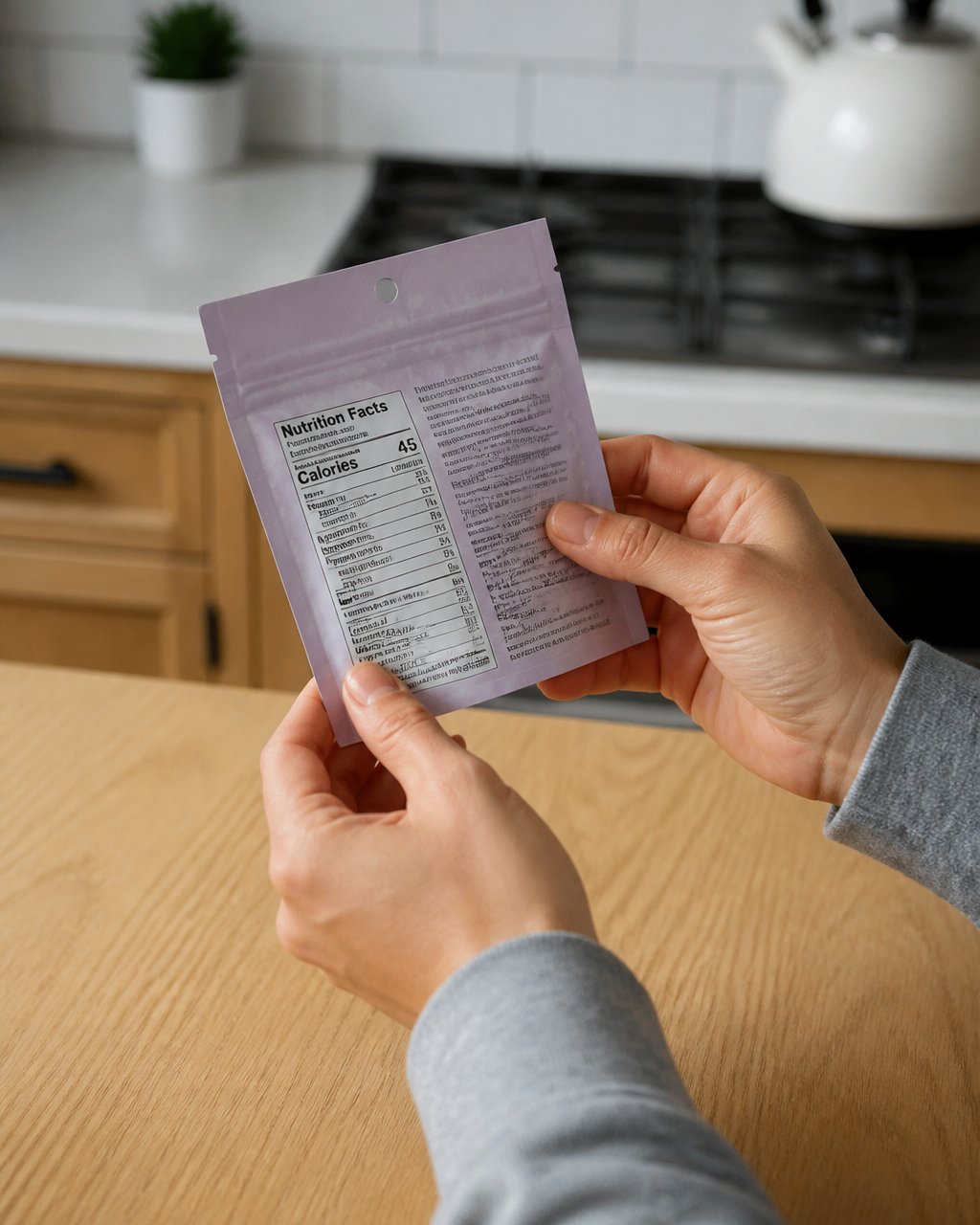
Do the label math before you trust the claim
A package that says "low sugar" tells you almost nothing until you divide by servings. Here is the arithmetic that separates a genuinely low-glycemic edible from a marketing label:
- Carbs per piece, not per package. If a bag holds 10 gummies and lists 12 g total carbohydrate per serving of two pieces, each piece carries about 6 g of carbohydrate. Eat four pieces and you have taken in roughly 24 g of carbohydrate, more than a slice of bread, regardless of what the front label says.
- Sugar alcohol load. Erythritol, maltitol, xylitol, and sorbitol are counted as carbohydrate on the panel but are not fully absorbed. Maltitol in particular has a higher glycemic impact than erythritol and is a common cause of bloating and laxative effects at doses above roughly 10-20 g in a sitting for many people. A gummy with 8 g of maltitol per serving is not the same product as one with 8 g of erythritol.
- THC per piece versus per package. A 100 mg package divided into 10 pieces is a 10 mg-per-piece product. A 100 mg package sold as a single large square is a 100 mg dose in one bite. The potency number that matters is the one you can actually portion.
Why glycemic index alone is an incomplete tool
Glycemic index ranks how quickly a carbohydrate-containing food raises blood glucose compared with a reference food, usually glucose or white bread. It is measured on a fixed portion of available carbohydrate, not on the portion you actually eat. That creates two blind spots:
- A low-GI food eaten in a large portion can still raise blood glucose more than a small portion of a higher-GI food. Glycemic load, glycemic index multiplied by the grams of available carbohydrate in a serving, is the more useful number, and almost no edible label prints it.
- Sugar-free products have little or no glycemic index to speak of, because the index only applies to carbohydrate that digests to glucose. "Low glycemic" on an erythritol-sweetened gummy is close to meaningless as a differentiator. What matters is total carbohydrate per serving, the type of sugar alcohol, and your own response.
Individual response varies. Two people can eat the same gummy and see different glucose curves depending on their insulin sensitivity, what else they ate, and how recently they exercised. A continuous glucose monitor, if you use one, will tell you more about your response to a specific product than any front-of-package claim.
The verification checklist
| What to Check | Why It Matters | Red Flag |
|---|---|---|
| Total carbs per serving | Drives glycemic response more than "low sugar" claims | Carbs listed but serving size vague |
| Sugar alcohol type and grams | Maltitol vs. erythritol changes both glucose impact and digestion | "Sugar alcohol" with no type named |
| THC mg per piece | Determines dose and overconsumption risk | Potency stated per package, not per piece |
| Calories per serving | Matters if you are tracking total intake | No nutrition panel at all |
| Lab certificate with batch number | Verifies potency and purity | "Lab tested" with no COA available |
Third-party lab testing is the other non-negotiable. Anyone can print "lab tested" on a label; a certificate of analysis with a batch number is the proof.
Shoppers managing diabetes have extra reason to read carefully. A breakdown of choosing sugar-free THC tarts for diabetics goes deeper on that, and if sugar crashes are your specific concern, a guide to avoiding sugar crashes from edibles covers the practical side of timing and dose.
THC Gummies and Appetite: What the Research Actually Suggests
THC is more likely to increase appetite than suppress it. That's the uncomfortable fact sitting underneath the entire "THC for weight loss" search category.
So why the weight-loss marketing? A Des Moines University summary reported average weight loss over two weeks of 17.8% in male mice and 13.8% in female mice receiving THC supplementation (Des Moines University THC and weight loss research(https://www.dmu.edu/blog/2024/09/dmu-researchers-uncover-potential-link-between-thc-and-weight-loss/)).
Why THCV Gets Mentioned in Weight-Loss Marketing
THCV is the cannabinoid brands attach to appetite-control claims, and the preclinical data is genuinely interesting. The problem is the leap from a mouse dose to a gummy on a shelf. No verified human trial shows THCV edibles producing weight loss, and a 2026 University of California, Riverside report found mice given THC alone showed no improvement in glucose regulation despite losing weight (EXTERNAL_LINK: UC Riverside cannabis compounds and metabolic health | news.ucr.edu).
THC Edibles and Blood Sugar: Glycemic Index vs. Total Carbohydrate
For blood sugar management, total carbohydrate beats glycemic index as a decision tool. Glycemic index tells you how fast a carb raises glucose; total carbs tell you how much is coming.
This is where keto and low-carb buyers get tripped up. A gummy can be sugar-free and still carry enough sugar alcohols and binders to matter in a tight daily carb budget. If you're tracking macros, a guide to taking THC gummies on a keto diet walks through the math.
How Long THC Edibles Last and Why Dosing Comes First
Edible effects typically begin within 30 to 90 minutes and can last several hours, though absorption varies by product, by whether you ate beforehand, and by your own metabolism. A 2016 review noted that inconsistent effects and delayed intoxication lead consumers to take more than intended (Tasty THC review on edible challenges(https://pmc.ncbi.nlm.nih.gov/articles/PMC5260817/)).
The overconsumption pattern is predictable: someone takes a gummy, feels nothing after 45 minutes, takes another, and then both doses peak at once an hour later. The result is a much stronger experience than intended, often with anxiety, nausea, and impaired coordination. The fix is a written protocol, not willpower.
A start-low, go-slow protocol
- Pick a starting dose below the standard serving. New Jersey's cannabis regulator caps a single serving at 10 mg of active THC, which is a useful reference point for what "one serving" is supposed to mean (EXTERNAL_LINK: New Jersey Cannabis Regulatory Commission edibles guidance | https://www.nj.gov/cannabis/documents/businesses/Business%20Resources/Edibles%20Guidance%20Document%209.15.23.pdf). Many clinicians and budtenders suggest starting at 2.5 mg or half of a 5 mg piece if you are new or sensitive.
- Wait at least two hours before redosing. The peak is usually somewhere between one and three hours after ingestion. If you feel nothing at 90 minutes, wait another 30 before considering more.
- Write down the time, dose, and product. A note on your phone is enough. Patterns are hard to see in memory and easy to see on paper.
- Do not combine with alcohol on a first trial. Alcohol and THC both impair coordination, and the combination makes dose judgment worse.
- Keep the package out of reach of children and pets. Edibles look like candy, and pediatric THC exposures are a documented reason for emergency department visits.
Medication interactions and when to ask a clinician
THC can interact with how the body processes other drugs, and the effect is not uniform. If you take any of the following, talk to a pharmacist or clinician before adding edibles:
- Blood-thinning medications such as warfarin, where cannabis can affect INR in some patients.
- Sedatives, sleep aids, and anti-anxiety medications, where the combined depressant effect can be stronger than either alone.
- Diabetes medications, including insulin and sulfonylureas, where appetite changes from THC can shift food intake and glucose control in ways that need monitoring.
This is not a complete list, and it is not medical advice. The point is that "it's just an edible" is not a safe assumption if you take prescription medication. A pharmacist can check interactions in minutes and is often easier to reach than a physician.
What to do if you take too much
Overconsumption is uncomfortable but rarely dangerous for healthy adults. Common effects include anxiety, rapid heart rate, nausea, and a sense of unreality. Most cases resolve over several hours. Stay hydrated, stay seated or lying down somewhere safe, and avoid driving or operating machinery.
A THC dosing guide for beginners covers how to build up safely over weeks, and a complete guide to THC edibles covers the basics before you spend anything.
Mistakes to Avoid When Choosing Low Glycemic THC Edibles
The most expensive mistake is buying on the front-of-package claim. "Low glycemic," "sugar-free," and "diet-friendly" are marketing language, not regulated health claims, and none of them mean the product will help you lose weight.
Other common errors:
- Treating a low-sugar label as permission to eat more than one serving
- Ignoring total THC per package and assuming each piece is a standard dose
- Skipping the lab certificate because the brand says "third-party tested"
If you're new to the category entirely, a complete guide to THC edibles covers the basics before you spend anything.
Frequently Asked Questions
Are low-glycemic THC edibles better for weight loss?
No research establishes that low glycemic THC edibles cause weight loss in people. The label claim describes sugar and carbohydrate content, not a weight-loss effect. A 2022 review reported that pure THCV reduced food intake and weight in mice at doses as low as 3 mg/kg, but that is preclinical data and does not set an effective dose for humans. A 2026 University of California, Riverside report found mice given THC alone showed no improvement in glucose regulation despite losing weight. Treat low glycemic as a label fact, not a diet claim.
Can THC edibles cause weight gain or increase appetite?
THC can stimulate appetite in some consumers, and a source discussing cannabis and blood sugar notes THC may spur overeating. That works against weight-loss goals regardless of how little sugar the edible contains. Dose and timing matter more than the sugar count alone. Start at a low dose, keep the edible away from late-night snacking windows, and track how your appetite responds over a few sessions before deciding whether edibles fit your routine at all.
Do THC edibles affect blood sugar?
Evidence is mixed and mostly indirect. One source notes THC may lower blood sugar, but results are inconsistent and more research is needed. The glycemic impact of an edible depends heavily on its total carbohydrate and sugar load, not just whether it is marketed as sugar-free. If you manage diabetes or take glucose-lowering medication, talk to your clinician before adding THC edibles, and read the full nutrition panel rather than the front-of-pack claims.
How long do THC edibles take to work, and how long do their effects last?
Edible effects are delayed and inconsistent, which a 2016 review identifies as a reason consumers take more than intended. Onset commonly runs from 30 minutes to two hours, and effects can last several hours depending on dose, tolerance and formulation. Wait at least two hours before taking more. Fast-acting formats using nanotech extraction may shorten onset, but it is still important to confirm the dose per piece and start low, especially if you are new to edibles.
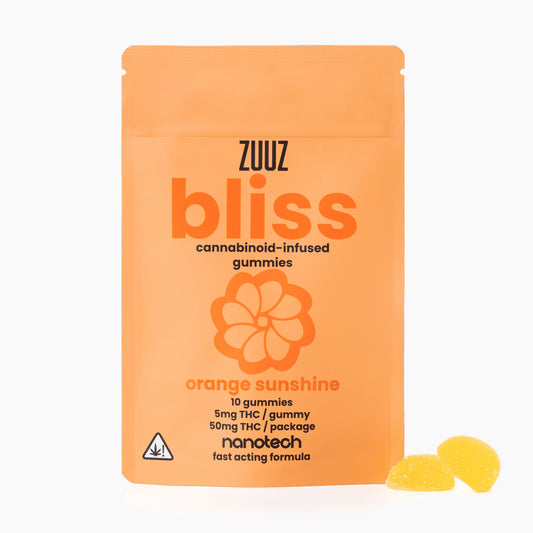
The honest challenge here is that the wellness aisle rewards bold claims and punishes nuance. ZUUZ builds edibles around consistency instead: nanotech extraction for faster, smoother absorption, third-party lab testing on every formula, and sugar-free tart options for buyers watching their sugar intake. We back it with a 60-day money-back guarantee, so you can judge the experience yourself. Get started with ZUUZ and find a dose you can actually rely on.