
The Science Behind Fast-Acting Edibles Explained
Last Updated: November 7, 2026
Quick Summary
Fast-acting edibles are cannabis products formulated to deliver THC into the bloodstream sooner than standard gummies or baked goods, often using nanoemulsion, which breaks cannabinoids into tiny droplets that disperse more readily in the gut. Research suggests they may reach peak concentration earlier, but evidence on felt onset is still developing.
- Standard edibles must pass through the digestive system and liver, and oral THC bioavailability is roughly 4%-12%.
- Nanoemulsion disperses cannabinoids into tiny droplets, creating more surface area for gut absorption.
- A 2026 Psychopharmacology study refers to an earlier peak THC concentration for a fast-acting edible.
- The size of that onset difference is not stated in the summary reviewed, so it remains unconfirmed.
- Start with a low dose and wait well beyond the expected onset before taking more.
Table of Contents
- What Fast-Acting Edibles Are and Why They Differ From Traditional Edibles
- How Digestion and Absorption Normally Shape Edible Timing
- What Is Nanotech in Edibles, and How Nanoemulsion Changes THC Delivery
- Fast-Acting Edibles vs. Regular Edibles: What the Research Shows on Onset
- How Long Do Fast-Acting Edibles Last, and What Affects Duration
- Are Fast-Acting Edibles Safe? Dosing, Harm Reduction, and Individual Response
- Choosing a Fast-Acting Edible Wisely: Checking Lab Results and Your Next Step
- Frequently Asked Questions
What Fast-Acting Edibles Are and Why They Differ From Traditional Edibles
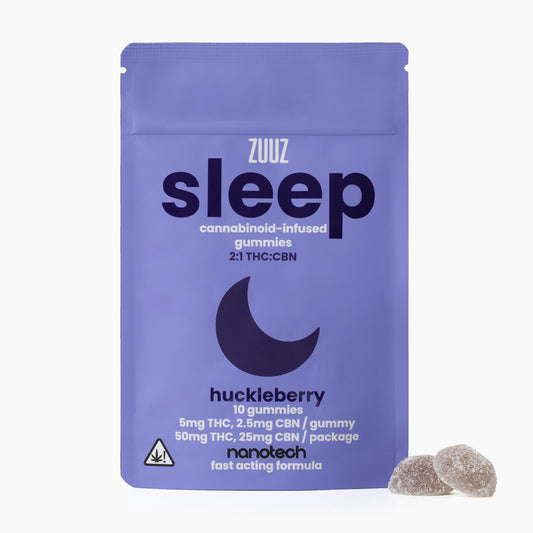
Fast-acting edibles are cannabis-infused products formulated to deliver THC into the bloodstream sooner than standard gummies or baked goods, with the goal of a quicker and more predictable onset. ZUUZ, which makes THC gummies and sugar-free tarts, uses a nanotech extraction method for its edibles.
Traditional edibles are typically slower because THC must pass through the digestive system before reaching the liver and bloodstream. A 2016 review on cannabis edibles by Barrus et al. reports that oral THC bioavailability is approximately 4%-12%, and it describes wide variability in how edibles are absorbed and felt. That variability is the core problem fast-acting formulations try to solve.
How Digestion and Absorption Normally Shape Edible Timing
When you swallow a standard edible, THC is absorbed in the gut, then processed by the liver before entering general circulation. This sequence explains much of the delay consumers notice, often stretching onset well beyond what they expect from smoking or vaping.
The same review notes that delayed intoxication can lead both new and experienced consumers to take more cannabis than intended. This is the practical reason timing matters: a slow onset can prompt a second dose before the first has taken effect.
The article explains why standard edibles take a while to take effect, and a few figures from the 2016 review make the core constraints concrete.
| Factor | Value | Note |
|---|---|---|
| Oral THC bioavailability | About 4%-12% | Per the 2016 review cited in the article |
| Absorption route | Gut, then liver | THC is processed by the liver before general circulation |
| Delayed intoxication | Long after dosing | Can prompt a second dose too early |
| Absorption variability | Wide | Differs between people and products |
What Is Nanotech in Edibles, and How Nanoemulsion Changes THC Delivery
Nanotech in edibles refers to formulation methods that break cannabinoids into extremely small particles so they disperse more readily in water-compatible carriers. The most common approach is nanoemulsion: an oil phase (the cannabinoid) is dispersed into tiny droplets within a water phase, stabilized by a surfactant or emulsifier so the droplets do not immediately recombine.
Particle Size, Sonication, and Water-Soluble Cannabinoids
Smaller particles have more surface area relative to their volume, which is the basic reason formulators pursue them. More surface area means more contact between the cannabinoid and the fluids and enzymes in the gut, which can speed dissolution and absorption.
A useful distinction: "water-soluble" is shorthand, not literal. Cannabinoids are lipid-soluble and do not truly dissolve in water. What formulators create is a stable dispersion, tiny droplets suspended in a water-compatible carrier, that behaves more like a solution in the gut than a pool of oil does.
Oil-Based THC Versus Water-Compatible Formulations
Standard edibles usually rely on oil or butter as the carrier, while water-compatible formulations aim to keep cannabinoids dispersed in a form that may move through the digestive tract differently. To see how water-soluble THC edibles affect bioavailability, you can review the details on that page. Whether that difference produces a meaningfully faster onset in everyday use is the question the research is still working to answer.
Comparing Delivery Technologies Side by Side
Formulators use several approaches, and each can and cannot change different things:
- Nanoemulsion. Breaks the cannabinoid into nano-scale droplets in a water-compatible carrier. What it can change: dispersion in the gut, potentially faster dissolution and absorption. What it cannot change: the liver's first-pass metabolism, which still processes much of the THC before it reaches general circulation.
- Microencapsulation. Coats cannabinoid particles in a protective shell (often a polymer or starch) that releases the payload at a controlled rate. What it can change: release timing and stability, and it can smooth out peak concentration. What it cannot change: it generally does not make absorption itself faster, and it can delay rather than accelerate onset depending on the shell design.
- Sonication-assisted emulsification. A processing step, not a separate delivery system, sound waves reduce droplet size in an emulsion. What it can change: droplet size and uniformity. What it cannot change: the underlying pharmacokinetics of oral THC.
- Water-compatible concentrates and beverages. Use emulsifiers to keep cannabinoids suspended in a drink. What they can change: convenience and dosing precision per serving. What they cannot change: the digestive and hepatic steps that follow swallowing.
When comparing any nano-labeled product, look for disclosure of droplet size and emulsifier type, since those details distinguish a formulation claim from a marketing one.
What the Science Does and Does Not Show
The established pharmacology is that oral THC is absorbed in the gut and undergoes extensive first-pass metabolism in the liver, which is why standard edibles are slow and variable. What human studies have not yet established is a reliable, product-independent onset advantage for any single delivery technology. Much of the supporting evidence comes from small pharmacokinetic studies and manufacturer-funded research, and results vary by formulation, dose, and the food in the stomach. Treat faster-onset claims as plausible but not guaranteed.
Fast-Acting Edibles vs. Regular Edibles: What the Research Shows on Onset
Are fast-acting edibles faster than regular edibles? A 2026 study in the Journal of Cannabis Research on fast-acting, standard and placebo edibles tested the hypothesis that fast-acting products reach peak concentration sooner, but the published excerpt available to us does not report the outcome or sample size.

A separate 2026 preliminary pharmacodynamic study in Psychopharmacology refers to an earlier study that found an earlier peak THC blood concentration for a fast-acting edible than for a standard one.
Speed of peak concentration is not the same as speed of felt effect. A 2026 study on behavioral and self-reported cognitive impairment with fast-acting and standard edibles addresses this area directly.
Separating Established Pharmacology From Product Claims
Most of what is firmly established comes from the 2016 review cited earlier: oral THC bioavailability is roughly 4%-12%, absorption is highly variable between people, and delayed intoxication is a real risk because the effect arrives long after the dose.
What is less established is a product-independent onset advantage. Human studies of fast-acting formulations tend to be small, often industry-funded, and measured in blood concentration rather than in how subjects say they feel. A formulation can lower time-to-peak concentration without producing a proportionally faster felt effect, because the liver's first-pass metabolism and individual metabolism still shape the experience.
Realistic Onset and Duration Ranges by Product Type
Exact ranges vary by formulation and dose, and no single study covers the whole market. A common pattern reported across product categories is:
- Traditional oil-based gummies and baked goods. Onset commonly reported in the range of about 30 to 120 minutes, with peak effects often later, and duration frequently extending several hours.
- Nanoemulsion and water-compatible gummies. Onset commonly reported in the range of about 15 to 45 minutes, with a shorter time to peak, though the total duration is not necessarily shorter.
- Fast-acting beverages. Onset commonly reported in the range of about 15 to 30 minutes, partly because liquids empty from the stomach faster, but duration can still be several hours depending on dose.
- Microencapsulated products. Onset can be similar to or slower than standard edibles depending on the shell design, with the goal usually being a smoother, more controlled release rather than a faster one.
Onset varies. A dose taken on an empty stomach may arrive faster, and a dose taken after a heavy meal may arrive later. Tolerance, body weight, liver enzyme activity, and frequency of use all shift the timeline. Because fast-acting products can peak sooner, taking a second dose because "nothing happened yet" carries a risk of overshooting.
What This Means for Comparing Products
When a label claims fast onset, the useful questions are: what delivery technology is used, is the droplet or particle size disclosed, is there third-party potency testing, and does the claimed onset match the published range for that technology? A product that names nanoemulsion but publishes no lab results is making a formulation claim without the transparency that would let you evaluate it. The comparison that matters is not fast versus regular in the abstract, but documented formulation versus undocumented claim.
How Long Do Fast-Acting Edibles Last, and What Affects Duration
Duration depends on dose, body weight, tolerance, food intake and individual metabolism, and the research available does not yet offer reliable duration ranges for fast-acting products specifically. Because faster onset does not automatically mean a shorter or weaker experience, no particular timeline can be promised.
Consumers should expect variability and plan accordingly, especially if they have eaten recently or are taking other medications.
Are Fast-Acting Edibles Safe? Dosing, Harm Reduction, and Individual Response
Faster absorption should not be assumed to mean stronger effects or a more predictable experience. A 2026 study was designed to test whether fast-acting products produce earlier peak concentrations, and the 2016 review identifies inconsistent effects and delayed intoxication as concerns with edibles generally. Both points argue for caution.
Practical harm-reduction steps include starting with a low dose, waiting well beyond the expected onset before taking more, and avoiding driving or operating machinery until you know how your body responds. Readers wondering whether nano THC is safe for daily use can find more on that page. For a step-by-step approach, see our beginner's THC dosing guide.
Choosing a Fast-Acting Edible Wisely: Checking Lab Results and Your Next Step
When comparing products, look for third-party lab results that confirm cannabinoid content and check for contaminants, and be skeptical of onset claims that are not backed by published data. ZUUZ describes its formulas as science-backed and third-party lab tested, and it offers a 60-day money-back guarantee.
If you want to explore our range, see the product collection on our website and read the detailed guide to nanotech THC benefits before choosing a formula.
Choosing a fast-acting edible comes down to matching the formula to your goals and starting low. Explore ZUUZ's gummies and sugar-free tarts, check the lab results for each product, and pick the option that suits your routine.
Frequently Asked Questions
Do fast-acting edibles actually work faster?
Some studies suggest they may reach peak THC blood concentration sooner than standard edibles. A 2026 pharmacokinetic study was designed to test this hypothesis, and a separate 2026 preliminary paper reported an earlier peak for a fast-acting product, though the excerpts available do not give effect sizes. Research on oral THC shows bioavailability of roughly 4% to 12%, and absorption varies widely between people and products. Faster onset is plausible but not yet firmly established, so treat claims of dramatically quicker effects with caution.
What is nanotech in edibles?
Nanotech in edibles usually refers to nanoemulsion or related techniques that break cannabinoids into very small particles dispersed in a water-compatible base. Smaller particles may disperse more readily in the digestive system, which is the proposed reason for faster absorption. Some producers describe sonication as the method for making water-soluble cannabinoids. Published evidence directly comparing these methods is limited, so the benefit is best understood as a hypothesis supported by early research rather than a settled fact.
How long do fast-acting edibles last?
Duration depends on dose, body weight, food intake, metabolism, and tolerance, so no single timeframe applies to everyone. Research on edibles has long noted that effects can be delayed and inconsistent, and a 2016 review of cannabis edibles described these variations as a reason consumers may take more than intended. The research supplied here does not establish a reliable duration difference from traditional edibles.
Are fast-acting edibles safe?
Safety depends on the dose, the product, and the person consuming it. Because faster absorption does not guarantee stronger or more predictable effects, starting with a low dose and waiting before taking more is a sound harm reduction step. Beginners, people taking other medications, and anyone with a health condition should speak with a clinician first. Look for third-party lab results that confirm potency and contaminant testing, and store products away from children and pets.